mirror of
https://github.com/langgenius/dify.git
synced 2026-02-07 20:16:01 +08:00
Compare commits
52 Commits
| Author | SHA1 | Date | |
|---|---|---|---|
| 3cc697832a | |||
| bb98f5756a | |||
| e1d2203371 | |||
| 93467cb363 | |||
| ea526d0822 | |||
| 0e627c920f | |||
| ea35f1dce1 | |||
| a5b80c9d1f | |||
| f704094a5f | |||
| 1f58f15bff | |||
| b930716745 | |||
| 9587479b76 | |||
| 3c0fbf3a6a | |||
| caa330c91f | |||
| 4a55d5729d | |||
| d6a6697891 | |||
| 778cfb37a2 | |||
| ce85ee3aa6 | |||
| b23de4affc | |||
| d8a7e894aa | |||
| d5acfaa14e | |||
| cc35d0645a | |||
| c9368925a3 | |||
| 0d9ce1bab0 | |||
| 519fb90d5a | |||
| 6768fd4d87 | |||
| d0456d0f42 | |||
| 7cda3fe85b | |||
| 5b7071e4b0 | |||
| ac3496e681 | |||
| 657334a5fd | |||
| 31195975f5 | |||
| 6717bb2b72 | |||
| 0e08526428 | |||
| 888e8c6dac | |||
| e017eff5e4 | |||
| e4dd79bbb1 | |||
| 4588831bff | |||
| a4f37220a0 | |||
| d654770732 | |||
| 19fc9e3466 | |||
| d048557bfe | |||
| 5feea0382e | |||
| 18cf7f7ed0 | |||
| cfbfd59b8f | |||
| d9336d9ae4 | |||
| 3365c4da9e | |||
| 8f2bd7663d | |||
| 8306b4373b | |||
| 149e959d09 | |||
| 54a42d08d7 | |||
| 481b083506 |

43
.github/CODE_OF_CONDUCT.md
vendored
Normal file
43
.github/CODE_OF_CONDUCT.md
vendored
Normal file
@ -0,0 +1,43 @@
|
||||
# Dify Code of Conduct
|
||||
|
||||
## Our Pledge
|
||||
|
||||
We as members, contributors, and leaders pledge to make participation in our
|
||||
community a harassment-free experience for everyone, regardless of age, body
|
||||
size, visible or invisible disability, ethnicity, sex characteristics, gender
|
||||
identity and expression, level of experience, education, socio-economic status,
|
||||
nationality, personal appearance, race, caste, color, religion, or sexual identity
|
||||
and orientation.
|
||||
|
||||
We pledge to act and interact in ways that contribute to an open, welcoming,
|
||||
diverse, inclusive, and healthy community.
|
||||
|
||||
## Our Standards
|
||||
|
||||
Examples of behavior that contributes to a positive environment for our
|
||||
community include:
|
||||
|
||||
* Demonstrating empathy and kindness toward other people
|
||||
* Being respectful of differing opinions, viewpoints, and experiences
|
||||
* Giving and gracefully accepting constructive feedback
|
||||
* Accepting responsibility and apologizing to those affected by our mistakes,
|
||||
and learning from the experience
|
||||
* Focusing on what is best not just for us as individuals, but for the
|
||||
overall community
|
||||
|
||||
Examples of unacceptable behavior include:
|
||||
|
||||
* The use of sexualized language or imagery, and sexual attention or
|
||||
advances of any kind
|
||||
* Trolling, insulting or derogatory comments, and personal or political attacks
|
||||
* Public or private harassment
|
||||
* Publishing others' private information, such as a physical or email
|
||||
address, without their explicit permission
|
||||
* Other conduct which could reasonably be considered inappropriate in a
|
||||
professional setting
|
||||
|
||||
## Language Policy
|
||||
|
||||
To facilitate clear and effective communication, all discussions, comments, documentation, and pull requests in this project should be conducted in English. This ensures that all contributors can participate and collaborate effectively.
|
||||
|
||||
|
||||
2
.github/ISSUE_TEMPLATE/bug_report.yml
vendored
2
.github/ISSUE_TEMPLATE/bug_report.yml
vendored
@ -1,5 +1,5 @@
|
||||
name: "🕷️ Bug report"
|
||||
description: Report errors or unexpected behavior
|
||||
description: Report errors or unexpected behavior [please use English :)]
|
||||
labels:
|
||||
- bug
|
||||
body:
|
||||
|
||||
2
.github/ISSUE_TEMPLATE/document_issue.yml
vendored
2
.github/ISSUE_TEMPLATE/document_issue.yml
vendored
@ -1,5 +1,5 @@
|
||||
name: "📚 Documentation Issue"
|
||||
description: Report issues in our documentation
|
||||
description: Report issues in our documentation [please use English :)]
|
||||
labels:
|
||||
- ducumentation
|
||||
body:
|
||||
|
||||
2
.github/ISSUE_TEMPLATE/feature_request.yml
vendored
2
.github/ISSUE_TEMPLATE/feature_request.yml
vendored
@ -1,5 +1,5 @@
|
||||
name: "⭐ Feature or enhancement request"
|
||||
description: Propose something new.
|
||||
description: Propose something new. [please use English :)]
|
||||
labels:
|
||||
- enhancement
|
||||
body:
|
||||
|
||||
2
.github/ISSUE_TEMPLATE/help_wanted.yml
vendored
2
.github/ISSUE_TEMPLATE/help_wanted.yml
vendored
@ -1,5 +1,5 @@
|
||||
name: "🤝 Help Wanted"
|
||||
description: "Request help from the community"
|
||||
description: "Request help from the community" [please use English :)]
|
||||
labels:
|
||||
- help-wanted
|
||||
body:
|
||||
|
||||
2
.github/ISSUE_TEMPLATE/translation_issue.yml
vendored
2
.github/ISSUE_TEMPLATE/translation_issue.yml
vendored
@ -1,5 +1,5 @@
|
||||
name: "🌐 Localization/Translation issue"
|
||||
description: Report incorrect translations.
|
||||
description: Report incorrect translations. [please use English :)]
|
||||
labels:
|
||||
- translation
|
||||
body:
|
||||
|
||||
4
.github/workflows/build-api-image.yml
vendored
4
.github/workflows/build-api-image.yml
vendored
@ -34,9 +34,7 @@ jobs:
|
||||
type=raw,value=latest,enable=${{ startsWith(github.ref, 'refs/tags/') }}
|
||||
type=ref,event=branch
|
||||
type=sha,enable=true,priority=100,prefix=,suffix=,format=long
|
||||
type=semver,pattern={{major}}.{{minor}}.{{patch}}
|
||||
type=semver,pattern={{major}}.{{minor}}
|
||||
type=semver,pattern={{major}}
|
||||
type=raw,value=${{ github.ref_name }},enable=${{ startsWith(github.ref, 'refs/tags/') }}
|
||||
|
||||
- name: Build and push
|
||||
uses: docker/build-push-action@v4
|
||||
|
||||
4
.github/workflows/build-web-image.yml
vendored
4
.github/workflows/build-web-image.yml
vendored
@ -34,9 +34,7 @@ jobs:
|
||||
type=raw,value=latest,enable=${{ startsWith(github.ref, 'refs/tags/') }}
|
||||
type=ref,event=branch
|
||||
type=sha,enable=true,priority=100,prefix=,suffix=,format=long
|
||||
type=semver,pattern={{major}}.{{minor}}.{{patch}}
|
||||
type=semver,pattern={{major}}.{{minor}}
|
||||
type=semver,pattern={{major}}
|
||||
type=raw,value=${{ github.ref_name }},enable=${{ startsWith(github.ref, 'refs/tags/') }}
|
||||
|
||||
- name: Build and push
|
||||
uses: docker/build-push-action@v4
|
||||
|
||||
4
.github/workflows/stale.yml
vendored
4
.github/workflows/stale.yml
vendored
@ -20,11 +20,11 @@ jobs:
|
||||
steps:
|
||||
- uses: actions/stale@v5
|
||||
with:
|
||||
days-before-issue-stale: 30
|
||||
days-before-issue-stale: 15
|
||||
days-before-issue-close: 3
|
||||
repo-token: ${{ secrets.GITHUB_TOKEN }}
|
||||
stale-issue-message: "Close due to it's no longer active, if you have any questions, you can reopen it."
|
||||
stale-pr-message: "Close due to it's no longer active, if you have any questions, you can reopen it."
|
||||
stale-issue-label: 'no-issue-activity'
|
||||
stale-pr-label: 'no-pr-activity'
|
||||
any-of-labels: 'duplicate,question,invalid,wontfix,no-issue-activity,no-pr-activity,enhancement'
|
||||
any-of-labels: 'duplicate,question,invalid,wontfix,no-issue-activity,no-pr-activity,enhancement,cant-reproduce,help-wanted'
|
||||
|
||||
184
README.md
184
README.md
@ -1,65 +1,67 @@
|
||||

|
||||
[](https://dify.ai)
|
||||
<p align="center">
|
||||
<a href="./README.md">English</a> |
|
||||
<a href="./README_CN.md">简体中文</a> |
|
||||
<a href="./README_JA.md">日本語</a> |
|
||||
<a href="./README_ES.md">Español</a>
|
||||
<a href="./README_ES.md">Español</a> |
|
||||
<a href="./README_KL.md">Klingon</a>
|
||||
</p>
|
||||
|
||||
#### [Website](https://dify.ai) • [Docs](https://docs.dify.ai) • [Deployment Docs](https://docs.dify.ai/getting-started/install-self-hosted) • [FAQ](https://docs.dify.ai/getting-started/faq) • [Twitter](https://twitter.com/dify_ai) • [Discord](https://discord.gg/FngNHpbcY7)
|
||||
<p align="center">
|
||||
<a href="https://dify.ai" target="_blank">
|
||||
<img alt="Static Badge" src="https://img.shields.io/badge/AI-Dify?logo=AI&logoColor=%20%23f5f5f5&label=Dify&labelColor=%20%23155EEF&color=%23EAECF0"></a>
|
||||
<a href="https://discord.gg/FngNHpbcY7" target="_blank">
|
||||
<img src="https://img.shields.io/discord/1082486657678311454?logo=discord"
|
||||
alt="chat on Discord"></a>
|
||||
<a href="https://twitter.com/intent/follow?screen_name=dify_ai" target="_blank">
|
||||
<img src="https://img.shields.io/twitter/follow/dify_ai?style=social&logo=X"
|
||||
alt="follow on Twitter"></a>
|
||||
<a href="https://hub.docker.com/u/langgenius" target="_blank">
|
||||
<img alt="Docker Pulls" src="https://img.shields.io/docker/pulls/langgenius/dify-web"></a>
|
||||
</p>
|
||||
|
||||
**Dify** is an easy-to-use LLMOps platform designed to empower more people to create sustainable, AI-native applications. With visual orchestration for various application types, Dify offers out-of-the-box, ready-to-use applications that can also serve as Backend-as-a-Service APIs. Unify your development process with one API for plugins and datasets integration, and streamline your operations using a single interface for prompt engineering, visual analytics, and continuous improvement.
|
||||
**Dify** is an LLM application development platform that has already seen over **100,000** applications built on Dify.AI. It integrates the concepts of Backend as a Service and LLMOps, covering the core tech stack required for building generative AI-native applications, including a built-in RAG engine. With Dify, **you can self-deploy capabilities similar to Assistants API and GPTs based on any LLMs.**
|
||||
|
||||
Applications created with Dify include:
|
||||
|
||||
Out-of-the-box web sites supporting form mode and chat conversation mode
|
||||
A single API encompassing plugin capabilities, context enhancement, and more, saving you backend coding effort
|
||||
Visual data analysis, log review, and annotation for applications
|
||||
|
||||
|
||||
https://github.com/langgenius/dify/assets/100913391/f6e658d5-31b3-4c16-a0af-9e191da4d0f6
|
||||
|
||||
|
||||
## Highlighted Features
|
||||
**1. LLMs support:** Choose capabilities based on different models when building your Dify AI apps. Dify is compatible with Langchain, meaning it will support various LLMs. Currently supported:
|
||||
|
||||
- [x] **OpenAI**: GPT4, GPT3.5-turbo, GPT3.5-turbo-16k, text-davinci-003
|
||||
- [x] **Azure OpenAI Service**
|
||||
- [x] **Anthropic**: Claude2, Claude-instant
|
||||
- [x] **Replicate**
|
||||
- [x] **Hugging Face Hub**
|
||||
- [x] **ChatGLM**
|
||||
- [x] **Llama2**
|
||||
- [x] **MiniMax**
|
||||
- [x] **Spark**
|
||||
- [x] **Wenxin**
|
||||
- [x] **Tongyi**
|
||||
|
||||
|
||||
We provide the following free resources for registered Dify cloud users (sign up at [dify.ai](https://dify.ai)):
|
||||
* 200 free OpenAI queries to build OpenAI-based apps
|
||||
|
||||
|
||||
**2. Visual orchestration:** Build an AI app in minutes by writing and debugging prompts visually.
|
||||
|
||||
**3. Text embedding:** Fully automated text preprocessing embeds your data as context without complex concepts. Supports PDF, TXT, and syncing data from Notion, webpages, APIs.
|
||||
|
||||
**4. API-based:** Backend-as-a-service. Access web apps directly or integrate via APIs without complex backend setup.
|
||||
|
||||
**5. Plugins:** Dify "Smart Chat" now supports first-party plugins like web browsing, Google search, Wikipedia to enable online lookup, analyzing web content, and explaining the AI's reasoning process conversationally.
|
||||
|
||||
**6. Team workspaces:** Team members can join workspaces to collaboratively edit, manage, and use team AI apps.
|
||||
|
||||
**7. Data labeling and improvement:** Visually inspect AI app logs and improve data via labeling. Observe the AI's reasoning process to continuously enhance performance. (Coming soon)
|
||||
|
||||
## Use cases
|
||||
* [Create an AI ChatBot with Business Data in Minutes.](https://docs.dify.ai/use-cases/create-an-ai-chatbot-with-business-data-in-minutes)
|
||||
* [How to Build an Notion AI Assistant Based on Your Own Notes?](https://docs.dify.ai/use-cases/build-an-notion-ai-assistant)
|
||||
* [Create a Midjoureny Prompt Bot Without Code in Just a Few Minutes.](https://docs.dify.ai/use-cases/create-a-midjoureny-prompt-bot-with-dify)
|
||||

|
||||
|
||||
## Use Cloud Services
|
||||
|
||||
Visit [Dify.ai](https://dify.ai)
|
||||
Using [Dify.AI Cloud](https://dify.ai) provides all the capabilities of the open-source version, and includes a complimentary 200 GPT trial credits.
|
||||
|
||||
## Why Dify
|
||||
|
||||
Dify features model neutrality and is a complete, engineered tech stack compared to hardcoded development libraries like LangChain. Unlike OpenAI's Assistants API, Dify allows for full local deployment of services.
|
||||
|
||||
| Feature | Dify.AI | Assistants API | LangChain |
|
||||
|---------|---------|----------------|-----------|
|
||||
| **Programming Approach** | API-oriented | API-oriented | Python Code-oriented |
|
||||
| **Ecosystem Strategy** | Open Source | Closed and Commercial | Open Source |
|
||||
| **RAG Engine** | Supported | Supported | Not Supported |
|
||||
| **Prompt IDE** | Included | Included | None |
|
||||
| **Supported LLMs** | Rich Variety | Only GPT | Rich Variety |
|
||||
| **Local Deployment** | Supported | Not Supported | Not Applicable |
|
||||
|
||||
## Features
|
||||
|
||||

|
||||
|
||||
**1. LLM Support**: Integration with OpenAI's GPT family of models, or the open-source Llama2 family models. In fact, Dify supports mainstream commercial models and open-source models (locally deployed or based on MaaS).
|
||||
|
||||
**2. Prompt IDE**: Visual orchestration of applications and services based on LLMs with your team.
|
||||
|
||||
**3. RAG Engine**: Includes various RAG capabilities based on full-text indexing or vector database embeddings, allowing direct upload of PDFs, TXTs, and other text formats.
|
||||
|
||||
**4. Agents**: A Function Calling based Agent framework that allows users to configure what they see is what they get. Dify includes basic plugin capabilities like Google Search.
|
||||
|
||||
**5. Continuous Operations**: Monitor and analyze application logs and performance, continuously improving Prompts, datasets, or models using production data.
|
||||
|
||||
## Before You Start
|
||||
|
||||
- [Website](https://dify.ai)
|
||||
- [Docs](https://docs.dify.ai)
|
||||
- [Deployment Docs](https://docs.dify.ai/getting-started/install-self-hosted)
|
||||
- [FAQ](https://docs.dify.ai/getting-started/faq)
|
||||
|
||||
|
||||
## Install the Community Edition
|
||||
|
||||
@ -88,88 +90,28 @@ You can go to https://github.com/BorisPolonsky/dify-helm for deployment informat
|
||||
|
||||
### Configuration
|
||||
|
||||
If you need to customize the configuration, please refer to the comments in our [docker-compose.yml](docker/docker-compose.yaml) file and manually set the environment configuration. After making the changes, please run 'docker-compose up -d' again.
|
||||
If you need to customize the configuration, please refer to the comments in our [docker-compose.yml](docker/docker-compose.yaml) file and manually set the environment configuration. After making the changes, please run `docker-compose up -d` again. You can see the full list of environment variables in our [docs](https://docs.dify.ai/getting-started/install-self-hosted/environments).
|
||||
|
||||
## Roadmap
|
||||
|
||||
Features under development:
|
||||
|
||||
- **Datasets**, supporting more datasets, e.g. syncing content from Notion or webpages
|
||||
We will support more datasets, including text, webpages, and even Notion content. Users can build AI applications based on their own data sources.
|
||||
- **Plugins**, introducing ChatGPT Plugin-standard plugins for applications, or using Dify-produced plugins
|
||||
We will release plugins complying with ChatGPT standard, or Dify's own plugins to enable more capabilities in applications.
|
||||
|
||||
|
||||
## Q&A
|
||||
|
||||
**Q: What can I do with Dify?**
|
||||
|
||||
A: Dify is a simple yet powerful LLM development and operations tool. You can use it to build commercial-grade applications, personal assistants. If you want to develop your own applications, LangDifyGenius can save you backend work in integrating with OpenAI and offer visual operations capabilities, allowing you to continuously improve and train your GPT model.
|
||||
|
||||
**Q: How do I use Dify to "train" my own model?**
|
||||
|
||||
A: A valuable application consists of Prompt Engineering, context enhancement, and Fine-tuning. We've created a hybrid programming approach combining Prompts with programming languages (similar to a template engine), making it easy to accomplish long-text embedding or capturing subtitles from a user-input Youtube video - all of which will be submitted as context for LLMs to process. We place great emphasis on application operability, with data generated by users during App usage available for analysis, annotation, and continuous training. Without the right tools, these steps can be time-consuming.
|
||||
|
||||
**Q: What do I need to prepare if I want to create my own application?**
|
||||
|
||||
A: We assume you already have an OpenAI API Key; if not, please register for one. If you already have some content that can serve as training context, that's great!
|
||||
|
||||
**Q: What interface languages are available?**
|
||||
|
||||
A: English and Chinese are currently supported, and you can contribute language packs to us.
|
||||
|
||||
## Star History
|
||||
|
||||
[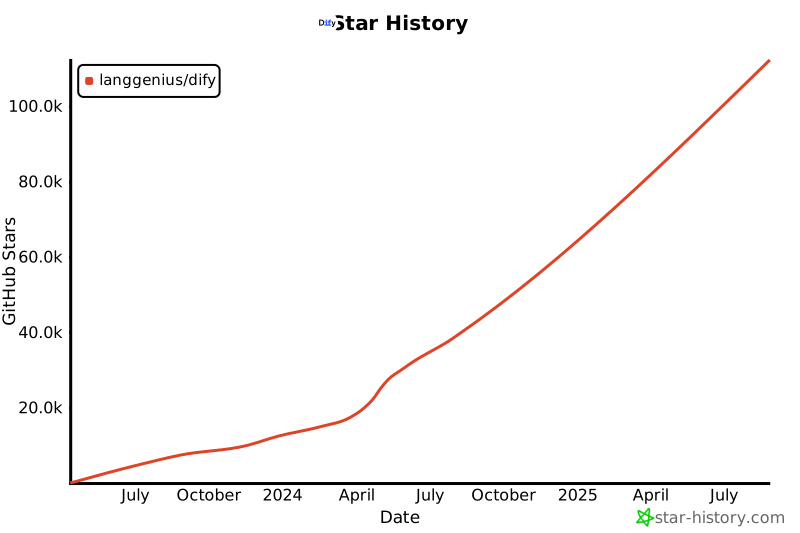](https://star-history.com/#langgenius/dify&Date)
|
||||
|
||||
|
||||
## Contributing
|
||||
## Community & Support
|
||||
|
||||
We welcome you to contribute to Dify to help make Dify better. We welcome contributions in various ways, submitting code, issues, new ideas, or sharing the interesting and useful AI applications you have created based on Dify. At the same time, we also welcome you to share Dify at different events, conferences, and social media.
|
||||
We welcome you to contribute to Dify to help make Dify better in various ways, submitting code, issues, new ideas, or sharing the interesting and useful AI applications you have created based on Dify. At the same time, we also welcome you to share Dify at different events, conferences, and social media.
|
||||
|
||||
### Submit a Pull Request
|
||||
- [GitHub Issues](https://github.com/langgenius/dify/issues). Best for: bugs and errors you encounter using Dify.AI, see the [Contribution Guide](CONTRIBUTING.md).
|
||||
- [Email Support](mailto:hello@dify.ai?subject=[GitHub]Questions%20About%20Dify). Best for: questions you have about using Dify.AI.
|
||||
- [Discord](https://discord.gg/FngNHpbcY7). Best for: sharing your applications and hanging out with the community.
|
||||
- [Twitter](https://twitter.com/dify_ai). Best for: sharing your applications and hanging out with the community.
|
||||
- [Business License](mailto:business@dify.ai?subject=[GitHub]Business%20License%20Inquiry). Best for: business inquiries of licensing Dify.AI for commercial use.
|
||||
|
||||
To ensure proper review, all code contributions, including from contributors with direct commit access, must be submitted as PR requests and approved by core developers before merging branches.
|
||||
We welcome PRs from everyone! If you're willing to help out, you can learn more about how to contribute code to the project in the [Contribution Guide](CONTRIBUTING.md).
|
||||
|
||||
### Submit issues or ideas
|
||||
|
||||
You can submit your issues or ideas by adding issues to the Dify repository. If you encounter issues, please describe the steps you took to encounter the issue as much as possible so we can better discover it. If you have any new ideas for our product, we also welcome your feedback. Please share your insights as much as possible so we can get more feedback and further discussion in the community.
|
||||
|
||||
### Share your applications
|
||||
|
||||
We encourage all community members to share their AI applications built on Dify, which can be applied to different scenarios or different users. This will provide powerful inspiration for people who want to create AI capabilities! You can share your experience by [submitting an issue in the Dify-user-case repository](https://github.com/langgenius/dify-user-case/issues).
|
||||
|
||||
### Share Dify with others
|
||||
|
||||
We encourage community contributors to actively demonstrate different aspects of using Dify. You can talk or share any feature of using Dify at meetups and conferences, blogs or social media. We believe your unique sharing will be of great help to others! Mention @Dify.AI on Twitter and/or communicate on [Discord](https://discord.gg/FngNHpbcY7) so we can give pointers and tips and help you spread the word by promoting your content on the different Dify communication channels.
|
||||
|
||||
### Help others
|
||||
You can also help people in need of help on Discord, GitHub issues or other social platforms, guide others to solve problems encountered during use and share usage experiences. This is also a great contribution! If you want to become a maintainer of the Dify community, please contact the official team via [Discord](https://discord.gg/FngNHpbcY7) or email us at support@dify.ai.
|
||||
|
||||
|
||||
## Contact Us
|
||||
|
||||
If you have any questions, suggestions, or partnership inquiries, feel free to contact us through the following channels:
|
||||
|
||||
- Submit an Issue or PR on our GitHub Repo
|
||||
- Join the discussion in our [Discord](https://discord.gg/FngNHpbcY7) Community
|
||||
- Send an email to hello@dify.ai
|
||||
|
||||
We're eager to assist you and together create more fun and useful AI applications!
|
||||
|
||||
## Security
|
||||
## Security Disclosure
|
||||
|
||||
To protect your privacy, please avoid posting security issues on GitHub. Instead, send your questions to security@dify.ai and we will provide you with a more detailed answer.
|
||||
|
||||
## Citation
|
||||
|
||||
This software uses the following open-source software:
|
||||
|
||||
- Chase, H. (2022). LangChain [Computer software]. https://github.com/hwchase17/langchain
|
||||
|
||||
For more information, please refer to the official website or license text of the respective software.
|
||||
|
||||
## License
|
||||
|
||||
This repository is available under the [Dify Open Source License](LICENSE).
|
||||
This repository is available under the [Dify Open Source License](LICENSE), which is essentially Apache 2.0 with a few additional restrictions.
|
||||
|
||||
158
README_CN.md
158
README_CN.md
@ -1,60 +1,63 @@
|
||||

|
||||
[](https://dify.ai)
|
||||
<p align="center">
|
||||
<a href="./README.md">English</a> |
|
||||
<a href="./README_CN.md">简体中文</a> |
|
||||
<a href="./README_JA.md">日本語</a> |
|
||||
<a href="./README_ES.md">Español</a>
|
||||
<a href="./README_ES.md">Español</a> |
|
||||
<a href="./README_KL.md">Klingon</a>
|
||||
</p>
|
||||
|
||||
<p align="center">
|
||||
<a href="https://dify.ai" target="_blank">
|
||||
<img alt="Static Badge" src="https://img.shields.io/badge/AI-Dify?logo=AI&logoColor=%20%23f5f5f5&label=Dify&labelColor=%20%23155EEF&color=%23EAECF0"></a>
|
||||
<a href="https://discord.gg/FngNHpbcY7" target="_blank">
|
||||
<img src="https://img.shields.io/discord/1082486657678311454?logo=discord"
|
||||
alt="chat on Discord"></a>
|
||||
<a href="https://twitter.com/intent/follow?screen_name=dify_ai" target="_blank">
|
||||
<img src="https://img.shields.io/twitter/follow/dify_ai?style=social&logo=X"
|
||||
alt="follow on Twitter"></a>
|
||||
<a href="https://hub.docker.com/u/langgenius" target="_blank">
|
||||
<img alt="Docker Pulls" src="https://img.shields.io/docker/pulls/langgenius/dify-web"></a>
|
||||
</p>
|
||||
|
||||
#### [官方网站](https://dify.ai) • [使用文档](https://docs.dify.ai/v/zh-hans) · [部署文档](https://docs.dify.ai/v/zh-hans/getting-started/install-self-hosted) · [FAQ](https://docs.dify.ai/v/zh-hans/getting-started/faq) • [Twitter](https://twitter.com/dify_ai) • [Discord](https://discord.gg/FngNHpbcY7)
|
||||
Dify 是一个 LLM 应用开发平台,已经有超过 10 万个应用基于 Dify.AI 构建。它融合了 Backend as Service 和 LLMOps 的理念,涵盖了构建生成式 AI 原生应用所需的核心技术栈,包括一个内置 RAG 引擎。使用 Dify,你可以基于任何模型自部署类似 Assistants API 和 GPTs 的能力。
|
||||
|
||||
**Dify** 是一个易用的 LLMOps 平台,基于不同的大型语言模型能力,让更多人可以简易地创建可持续运营的原生 AI 应用。Dify 提供多种类型应用的可视化编排,应用可开箱即用,也能以“后端即服务”的 API 提供服务。
|
||||

|
||||
|
||||
通过 Dify 创建的应用包含了:
|
||||
## 为什么选择 Dify
|
||||
|
||||
- 开箱即用的的 Web 站点,支持表单模式和聊天对话模式
|
||||
- 一套 API 即可包含插件、上下文增强等能力,替你省下了后端代码的编写工作
|
||||
- 可视化的对应用进行数据分析,查阅日志或进行标注
|
||||
Dify 具有模型中立性,相较 LangChain 等硬编码开发库 Dify 是一个完整的、工程化的技术栈,而相较于 OpenAI 的 Assistants API 你可以完全将服务部署在本地。
|
||||
|
||||
https://github.com/langgenius/dify/assets/100913391/f6e658d5-31b3-4c16-a0af-9e191da4d0f6
|
||||
|
||||
## 核心能力
|
||||
1. **模型支持:** 你可以在 Dify 上选择基于不同模型的能力来开发你的 AI 应用。Dify 兼容 Langchain,这意味着我们将逐步支持多种 LLMs ,目前支持的模型供应商:
|
||||
|
||||
- [x] **OpenAI**:GPT4、GPT3.5-turbo、GPT3.5-turbo-16k、text-davinci-003
|
||||
- [x] **Azure OpenAI Service**
|
||||
- [x] **Anthropic**:Claude2、Claude-instant
|
||||
- [x] **Replicate**
|
||||
- [x] **Hugging Face Hub**
|
||||
- [x] **ChatGLM**
|
||||
- [x] **Llama2**
|
||||
- [x] **MiniMax**
|
||||
- [x] **讯飞星火大模型**
|
||||
- [x] **文心一言**
|
||||
- [x] **通义千问**
|
||||
| 功能 | Dify.AI | Assistants API | LangChain |
|
||||
| --- | --- | --- | --- |
|
||||
| 编程方式 | 面向 API | 面向 API | 面向 Python 代码 |
|
||||
| 生态策略 | 开源 | 封闭且商用 | 开源 |
|
||||
| RAG 引擎 | 支持 | 支持 | 不支持 |
|
||||
| Prompt IDE | 包含 | 包含 | 没有 |
|
||||
| 支持的 LLMs | 丰富 | 仅 GPT | 丰富 |
|
||||
| 本地部署 | 支持 | 不支持 | 不适用 |
|
||||
|
||||
|
||||
我们为所有注册云端版的用户免费提供以下资源(登录 [dify.ai](https://cloud.dify.ai) 即可使用):
|
||||
* 200 次 OpenAI 模型的消息调用额度,用于创建基于 OpenAI 模型的 AI 应用
|
||||
* 300 万 讯飞星火大模型 Token 的调用额度,用于创建基于讯飞星火大模型的 AI 应用
|
||||
* 100 万 MiniMax Token 的调用额度,用于创建基于 MiniMax 模型的 AI 应用
|
||||
2. **可视化编排 Prompt:** 通过界面化编写 prompt 并调试,只需几分钟即可发布一个 AI 应用。
|
||||
3. **文本 Embedding 处理(数据集)**:全自动完成文本预处理,使用你的数据作为上下文,无需理解晦涩的概念和技术处理。支持 PDF、txt 等文件格式,支持从 Notion、网页、API 同步数据。
|
||||
4. **基于 API 开发:** 后端即服务。您可以直接访问网页应用,也可以接入 API 集成到您的应用中,无需关注复杂的后端架构和部署过程。
|
||||
5. **插件能力:** Dify 「智聊」平台已支持网页浏览、Google 搜索、Wikipedia 查询等第一方插件,可在对话中实现联网搜索、分析网页内容、展示 AI 的推理过程。
|
||||
6. **团队 Workspace:** 团队成员可加入 Workspace 编辑、管理和使用团队内的 AI 应用。
|
||||
6. **数据标注与改进:** 可视化查阅 AI 应用日志并对数据进行改进标注,观测 AI 的推理过程,不断提高其性能。(Coming soon)
|
||||
-----------------------------
|
||||
## Use cases
|
||||
* [几分钟创建一个带有业务数据的官网 AI 智能客服](https://docs.dify.ai/v/zh-hans/use-cases/create-an-ai-chatbot-with-business-data-in-minutes)
|
||||
* [构建一个 Notion AI 助手](https://docs.dify.ai/v/zh-hans/use-cases/build-an-notion-ai-assistant)
|
||||
* [创建 Midjoureny 提示词机器人](https://docs.dify.ai/v/zh-hans/use-cases/create-a-midjoureny-prompt-word-robot-with-zero-code)
|
||||
## 特点
|
||||
|
||||

|
||||
|
||||
## 使用云服务
|
||||
**1. LLM支持**:与 OpenAI 的 GPT 系列模型集成,或者与开源的 Llama2 系列模型集成。事实上,Dify支持主流的商业模型和开源模型(本地部署或基于 MaaS)。
|
||||
|
||||
访问 [Dify.ai](https://cloud.dify.ai) 使用云端版。
|
||||
**2. Prompt IDE**:和团队一起在 Dify 协作,通过可视化的 Prompt 和应用编排工具开发 AI 应用。 支持无缝切换多种大型语言模型。
|
||||
|
||||
**3. RAG引擎**:包括各种基于全文索引或向量数据库嵌入的 RAG 能力,允许直接上传 PDF、TXT 等各种文本格式。
|
||||
|
||||
**4. Agent**:基于函数调用的 Agent框架,允许用户自定义配置,所见即所得。Dify 提供了基本的插件能力,如谷歌搜索。
|
||||
|
||||
**5. 持续运营**:监控和分析应用日志和性能,使用生产数据持续改进 Prompt、数据集或模型。
|
||||
|
||||
## 在开始之前
|
||||
|
||||
- [网站](https://dify.ai)
|
||||
- [文档](https://docs.dify.ai)
|
||||
- [部署文档](https://docs.dify.ai/getting-started/install-self-hosted)
|
||||
- [常见问题](https://docs.dify.ai/getting-started/faq)
|
||||
|
||||
## 安装社区版
|
||||
|
||||
@ -83,80 +86,29 @@ docker compose up -d
|
||||
|
||||
### 配置
|
||||
|
||||
需要自定义配置,请参考我们的 [docker-compose.yml](docker/docker-compose.yaml) 文件中的注释,并手动设置环境配置,修改完毕后,请再次执行 `docker-compose up -d`。
|
||||
|
||||
## Roadmap
|
||||
|
||||
我们正在开发中的功能:
|
||||
|
||||
- **数据集**,支持更多的数据集,通过网页、API 同步内容。用户可以根据自己的数据源构建 AI 应用程序。
|
||||
- **插件**,我们将发布符合 ChatGPT 标准的插件,支持更多 Dify 自己的插件,支持用户自定义插件能力,以在应用程序中启用更多功能,例如以支持以目标为导向的分解推理任务。
|
||||
|
||||
## Q&A
|
||||
|
||||
**Q: 我能用 Dify 做什么?**
|
||||
|
||||
A: Dify 是一个简单且能力丰富的 LLM 开发和运营工具。你可以用它搭建商用级应用,个人助理。如果你想自己开发应用,Dify 也能为你省下接入 OpenAI 的后端工作,使用我们逐步提供的可视化运营能力,你可以持续的改进和训练你的 GPT 模型。
|
||||
|
||||
**Q: 如何使用 Dify “训练”自己的模型?**
|
||||
|
||||
A: 一个有价值的应用由 Prompt Engineering、上下文增强和 Fine-tune 三个环节组成。我们创造了一种 Prompt 结合编程语言的 Hybrid 编程方式(类似一个模版引擎),你可以轻松的完成长文本嵌入,或抓取用户输入的一个 Youtube 视频的字幕——这些都将作为上下文提交给 LLMs 进行计算。我们十分注重应用的可运营性,你的用户在使用 App 期间产生的数据,可进行分析、标记和持续训练。以上环节如果没有好的工具支持,可能会消耗你大量的时间。
|
||||
|
||||
**Q: 如果要创建一个自己的应用,我需要准备什么?**
|
||||
|
||||
A: 我们假定你已经有了 OpenAI 或 Claude 等模型的 API Key,如果没有请去注册一个。如果你已经有了一些内容可以作为训练上下文,就太好了。
|
||||
|
||||
**Q: 提供哪些界面语言?**
|
||||
|
||||
A: 支持英文、中文,你可以为我们贡献语言包并提供维护支持。
|
||||
如果您需要自定义配置,请参考我们的 [docker-compose.yml](docker/docker-compose.yaml) 文件中的注释,并手动设置环境配置。更改后,请再次运行 `docker-compose up -d`。您可以在我们的[文档](https://docs.dify.ai/getting-started/install-self-hosted/environments)中查看所有环境变量的完整列表。
|
||||
|
||||
## Star History
|
||||
|
||||
[](https://star-history.com/#langgenius/dify&Date)
|
||||
|
||||
|
||||
## 贡献
|
||||
## 社区与支持
|
||||
|
||||
我们欢迎你为 Dify 作出贡献帮助 Dify 变得更好。我们欢迎各种方式的贡献,提交代码、问题、新想法、或者分享你基于 Dify 创建出的各种有趣有用的 AI 应用。同时,我们也欢迎你在不同的活动、研讨会、社交媒体上分享 Dify。
|
||||
我们欢迎您为 Dify 做出贡献,以帮助改善 Dify。包括:提交代码、问题、新想法,或分享您基于 Dify 创建的有趣且有用的 AI 应用程序。同时,我们也欢迎您在不同的活动、会议和社交媒体上分享 Dify。
|
||||
|
||||
### 贡献代码
|
||||
为了确保正确审查,所有代码贡献 - 包括来自具有直接提交更改权限的贡献者 - 都必须提交 PR 请求并在合并分支之前得到核心开发人员的批准。
|
||||
- [GitHub Issues](https://github.com/langgenius/dify/issues)。👉:使用 Dify.AI 时遇到的错误和问题,请参阅[贡献指南](CONTRIBUTING.md)。
|
||||
- [电子邮件支持](mailto:hello@dify.ai?subject=[GitHub]Questions%20About%20Dify)。👉:关于使用 Dify.AI 的问题。
|
||||
- [Discord](https://discord.gg/FngNHpbcY7)。👉:分享您的应用程序并与社区交流。
|
||||
- [Twitter](https://twitter.com/dify_ai)。👉:分享您的应用程序并与社区交流。
|
||||
- [商业许可](mailto:business@dify.ai?subject=[GitHub]Business%20License%20Inquiry)。👉:有关商业用途许可 Dify.AI 的商业咨询。
|
||||
- [微信]() 👉:扫描下方二维码,添加微信好友,备注 Dify,我们将邀请您加入 Dify 社区。
|
||||
<img src="./images/wechat.png" alt="wechat" width="100"/>
|
||||
|
||||
我们欢迎所有人提交 PR!如果您愿意提供帮助,可以在 [贡献指南](CONTRIBUTING_CN.md) 中了解有关如何为项目做出代码贡献的更多信息。
|
||||
|
||||
### 提交问题或想法
|
||||
你可以通过 Dify 代码仓库新增 issues 来提交你的问题或想法。如遇到问题,请尽可能描述你遇到问题的操作步骤,以便我们更好地发现它。如果你对我们的产品有任何新想法,也欢迎向我们反馈,请尽可能多地分享你的见解,以便我们在社区中获得更多反馈和进一步讨论。
|
||||
|
||||
### 分享你的应用
|
||||
我们鼓励所有社区成员分享他们基于 Dify 创造出的 AI 应用,它们可以是应用于不同情景或不同用户,这将有助于为希望基于 AI 能力创造的人们提供强大灵感!你可以通过 [Dify-user-case 仓库项目提交 issue](https://github.com/langgenius/dify-user-case) 来分享你的应用案例。
|
||||
|
||||
### 向别人分享 Dify
|
||||
我们鼓励社区贡献者们积极展示你使用 Dify 的不同角度。你可以通过线下研讨会、博客或社交媒体上谈论或分享你使用 Dify 的任意功能,相信你独特的使用分享会给别人带来非常大的帮助!如果你需要任何指导帮助,欢迎联系我们 support@dify.ai ,你也可以在 twitter @Dify.AI 或在 [Discord 社区](https://discord.gg/FngNHpbcY7)交流来帮助你传播信息。
|
||||
|
||||
### 帮助别人
|
||||
你还可以在 Discord、GitHub issues或其他社交平台上帮助需要帮助的人,指导别人解决使用过程中遇到的问题和分享使用经验。这也是个非常了不起的贡献!如果你希望成为 Dify 社区的维护者,请通过[Discord 社区](https://discord.gg/FngNHpbcY7) 联系官方团队或邮件联系我们 support@dify.ai.
|
||||
|
||||
|
||||
## 联系我们
|
||||
|
||||
如果您有任何问题、建议或合作意向,欢迎通过以下方式联系我们:
|
||||
|
||||
- 在我们的 [GitHub Repo](https://github.com/langgenius/dify) 上提交 Issue 或 PR
|
||||
- 在我们的 [Discord 社区](https://discord.gg/FngNHpbcY7) 上加入讨论
|
||||
- 发送邮件至 hello@dify.ai
|
||||
|
||||
## 安全
|
||||
## 安全问题
|
||||
|
||||
为了保护您的隐私,请避免在 GitHub 上发布安全问题。发送问题至 security@dify.ai,我们将为您做更细致的解答。
|
||||
|
||||
## Citation
|
||||
|
||||
本软件使用了以下开源软件:
|
||||
|
||||
- Chase, H. (2022). LangChain [Computer software]. https://github.com/hwchase17/langchain
|
||||
|
||||
更多信息,请参考相应软件的官方网站或许可证文本。
|
||||
|
||||
## License
|
||||
|
||||
本仓库遵循 [Dify Open Source License](LICENSE) 开源协议。
|
||||
|
||||
143
README_ES.md
143
README_ES.md
@ -1,4 +1,4 @@
|
||||

|
||||
[](https://dify.ai)
|
||||
<p align="center">
|
||||
<a href="./README.md">English</a> |
|
||||
<a href="./README_CN.md">简体中文</a> |
|
||||
@ -6,36 +6,71 @@
|
||||
<a href="./README_ES.md">Español</a>
|
||||
</p>
|
||||
|
||||
[Sitio web](https://dify.ai) • [Documentación](https://docs.dify.ai) • [Twitter](https://twitter.com/dify_ai) • [Discord](https://discord.gg/FngNHpbcY7)
|
||||
<p align="center">
|
||||
<a href="https://dify.ai" target="_blank">
|
||||
<img alt="Static Badge" src="https://img.shields.io/badge/AI-Dify?logo=AI&logoColor=%20%23f5f5f5&label=Dify&labelColor=%20%23155EEF&color=%23EAECF0"></a>
|
||||
<a href="https://discord.gg/FngNHpbcY7" target="_blank">
|
||||
<img src="https://img.shields.io/discord/1082486657678311454?logo=discord"
|
||||
alt="chat on Discord"></a>
|
||||
<a href="https://twitter.com/intent/follow?screen_name=dify_ai" target="_blank">
|
||||
<img src="https://img.shields.io/twitter/follow/dify_ai?style=social&logo=X"
|
||||
alt="follow on Twitter"></a>
|
||||
<a href="https://hub.docker.com/u/langgenius" target="_blank">
|
||||
<img alt="Docker Pulls" src="https://img.shields.io/docker/pulls/langgenius/dify-web"></a>
|
||||
</p>
|
||||
|
||||
**Dify** es una plataforma LLMOps fácil de usar diseñada para capacitar a más personas para que creen aplicaciones sostenibles basadas en IA. Con orquestación visual para varios tipos de aplicaciones, Dify ofrece aplicaciones listas para usar que también pueden funcionar como APIs de Backend-as-a-Service. Unifica tu proceso de desarrollo con una API para la integración de complementos y conjuntos de datos, y agiliza tus operaciones utilizando una interfaz única para la ingeniería de indicaciones, análisis visual y mejora continua.
|
||||
**Dify** es una plataforma de desarrollo de aplicaciones para modelos de lenguaje de gran tamaño (LLM) que ya ha visto la creación de más de **100,000** aplicaciones basadas en Dify.AI. Integra los conceptos de Backend como Servicio y LLMOps, cubriendo el conjunto de tecnologías esenciales requerido para construir aplicaciones nativas de inteligencia artificial generativa, incluyendo un motor RAG incorporado. Con Dify, **puedes auto-desplegar capacidades similares a las de Assistants API y GPTs basadas en cualquier LLM.**
|
||||
|
||||
Las aplicaciones creadas con Dify incluyen:
|
||||

|
||||
|
||||
- Sitios web listos para usar que admiten el modo de formulario y el modo de conversación por chat.
|
||||
- Una API única que abarca capacidades de complementos, mejora de contexto y más, lo que te ahorra esfuerzo de programación en el backend.
|
||||
- Análisis visual de datos, revisión de registros y anotación para aplicaciones.
|
||||
## Utilizar Servicios en la Nube
|
||||
|
||||
Dify es compatible con Langchain, lo que significa que gradualmente admitiremos múltiples LLMs, actualmente compatibles con:
|
||||
Usar [Dify.AI Cloud](https://dify.ai) proporciona todas las capacidades de la versión de código abierto, e incluye un complemento de 200 créditos de prueba para GPT.
|
||||
|
||||
- GPT 3 (text-davinci-003)
|
||||
- GPT 3.5 Turbo (ChatGPT)
|
||||
- GPT-4
|
||||
## Por qué Dify
|
||||
|
||||
## Usar servicios en la nube
|
||||
Dify se caracteriza por su neutralidad de modelo y es un conjunto tecnológico completo e ingenierizado, en comparación con las bibliotecas de desarrollo codificadas como LangChain. A diferencia de la API de Assistants de OpenAI, Dify permite el despliegue local completo de los servicios.
|
||||
|
||||
Visita [Dify.ai](https://dify.ai)
|
||||
| Característica | Dify.AI | API de Assistants | LangChain |
|
||||
|----------------|---------|------------------|-----------|
|
||||
| **Enfoque de Programación** | Orientado a API | Orientado a API | Orientado a Código en Python |
|
||||
| **Estrategia del Ecosistema** | Código Abierto | Cerrado y Comercial | Código Abierto |
|
||||
| **Motor RAG** | Soportado | Soportado | No Soportado |
|
||||
| **IDE de Prompts** | Incluido | Incluido | Ninguno |
|
||||
| **LLMs Soportados** | Gran Variedad | Solo GPT | Gran Variedad |
|
||||
| **Despliegue Local** | Soportado | No Soportado | No Aplicable |
|
||||
|
||||
## Características
|
||||
|
||||

|
||||
|
||||
**1. Soporte LLM**: Integración con la familia de modelos GPT de OpenAI, o los modelos de la familia Llama2 de código abierto. De hecho, Dify soporta modelos comerciales convencionales y modelos de código abierto (desplegados localmente o basados en MaaS).
|
||||
|
||||
**2. IDE de Prompts**: Orquestación visual de aplicaciones y servicios basados en LLMs con tu equipo.
|
||||
|
||||
**3. Motor RAG**: Incluye varias capacidades RAG basadas en indexación de texto completo o incrustaciones de base de datos vectoriales, permitiendo la carga directa de PDFs, TXTs y otros formatos de texto.
|
||||
|
||||
**4. Agentes**: Un marco de Agentes basado en Llamadas de Función que permite a los usuarios configurar lo que ven es lo que obtienen. Dify incluye capacidades básicas de plugins como la Búsqueda de Google.
|
||||
|
||||
**5. Operaciones Continuas**: Monitorear y analizar registros de aplicaciones y rendimiento, mejorando continuamente Prompts, conjuntos de datos o modelos usando datos de producción.
|
||||
|
||||
## Antes de Empezar
|
||||
|
||||
- [Sitio web](https://dify.ai)
|
||||
- [Documentación](https://docs.dify.ai)
|
||||
- [Documentación de Implementación](https://docs.dify.ai/getting-started/install-self-hosted)
|
||||
- [Preguntas Frecuentes](https://docs.dify.ai/getting-started/faq)
|
||||
|
||||
## Instalar la Edición Comunitaria
|
||||
|
||||
### Requisitos del sistema
|
||||
### Requisitos del Sistema
|
||||
|
||||
Antes de instalar Dify, asegúrate de que tu máquina cumple con los siguientes requisitos mínimos del sistema:
|
||||
Antes de instalar Dify, asegúrate de que tu máquina cumpla con los siguientes requisitos mínimos del sistema:
|
||||
|
||||
- CPU >= 2 Core
|
||||
- CPU >= 2 núcleos
|
||||
- RAM >= 4GB
|
||||
|
||||
### Inicio rápido
|
||||
### Inicio Rápido
|
||||
|
||||
La forma más sencilla de iniciar el servidor de Dify es ejecutar nuestro archivo [docker-compose.yml](docker/docker-compose.yaml). Antes de ejecutar el comando de instalación, asegúrate de que [Docker](https://docs.docker.com/get-docker/) y [Docker Compose](https://docs.docker.com/compose/install/) estén instalados en tu máquina:
|
||||
|
||||
@ -44,80 +79,34 @@ cd docker
|
||||
docker compose up -d
|
||||
```
|
||||
|
||||
Después de ejecutarlo, puedes acceder al panel de control de Dify en tu navegador desde [http://localhost/install](http://localhost/install) y comenzar el proceso de instalación de inicialización.
|
||||
Después de ejecutarlo, puedes acceder al panel de control de Dify en tu navegador en [http://localhost/install](http://localhost/install) y comenzar el proceso de instalación de inicialización.
|
||||
|
||||
### Helm Chart
|
||||
### Gráfico Helm
|
||||
|
||||
Un gran agradecimiento a @BorisPolonsky por proporcionarnos una versión de [Helm Chart](https://helm.sh/), que permite desplegar Dify en Kubernetes.
|
||||
Puede ir a https://github.com/BorisPolonsky/dify-helm para obtener información de despliegue.
|
||||
Un gran agradecimiento a @BorisPolonsky por proporcionarnos una versión del [Gráfico Helm](https://helm.sh/), que permite implementar Dify en Kubernetes. Puedes visitar https://github.com/BorisPolonsky/dify-helm para obtener información sobre la implementación.
|
||||
|
||||
### Configuración
|
||||
|
||||
Si necesitas personalizar la configuración, consulta los comentarios en nuestro archivo [docker-compose.yml](docker/docker-compose.yaml) y configura manualmente la configuración del entorno. Después de realizar los cambios, ejecuta nuevamente 'docker-compose up -d'.
|
||||
Si necesitas personalizar la configuración, consulta los comentarios en nuestro archivo [docker-compose.yml](docker/docker-compose.yaml) y configura manualmente la configuración del entorno. Después de realizar los cambios, ejecuta nuevamente `docker-compose up -d`. Puedes ver la lista completa de variables de entorno en nuestra [documentación](https://docs.dify.ai/getting-started/install-self-hosted/environments).
|
||||
|
||||
## Hoja de ruta
|
||||
## Historial de Estrellas
|
||||
|
||||
Funciones en desarrollo:
|
||||
[](https://star-history.com/#langgenius/dify&Date)
|
||||
|
||||
- **Conjuntos de datos**, admitiendo más conjuntos de datos, por ejemplo, sincronización de contenido desde Notion o páginas web.
|
||||
Admitiremos más conjuntos de datos, incluidos texto, páginas web e incluso contenido de Notion. Los usuarios pueden construir aplicaciones de IA basadas en sus propias fuentes de datos
|
||||
- **Complementos**, introduciendo complementos estándar de ChatGPT para aplicaciones, o utilizando complementos producidos por Dify.
|
||||
Lanzaremos complementos que cumplan con el estándar de ChatGPT, o nuestros propios complementos de Dify para habilitar más capacidades en las aplicaciones.
|
||||
- **Modelos de código abierto**, por ejemplo, adoptar Llama como proveedor de modelos o para un ajuste adicional.
|
||||
Trabajaremos con excelentes modelos de código abierto como Llama, proporcionándolos como opciones de modelos en nuestra plataforma o utilizándolos para un ajuste adicional.
|
||||
## Comunidad y Soporte
|
||||
|
||||
## Preguntas y respuestas
|
||||
Te damos la bienvenida a contribuir a Dify para ayudar a hacer que Dify sea mejor de diversas maneras, enviando código, informando problemas, proponiendo nuevas ideas o compartiendo las aplicaciones de inteligencia artificial interesantes y útiles que hayas creado basadas en Dify. Al mismo tiempo, también te invitamos a compartir Dify en diferentes eventos, conferencias y redes sociales.
|
||||
|
||||
**P: ¿Qué puedo hacer con Dify?**
|
||||
- [Problemas en GitHub](https://github.com/langgenius/dify/issues). Lo mejor para: errores y problemas que encuentres al usar Dify.AI, consulta la [Guía de Contribución](CONTRIBUTING.md).
|
||||
- [Soporte por Correo Electrónico](mailto:hello@dify.ai?subject=[GitHub]Preguntas%20sobre%20Dify). Lo mejor para: preguntas que tengas sobre el uso de Dify.AI.
|
||||
- [Discord](https://discord.gg/FngNHpbcY7). Lo mejor para: compartir tus aplicaciones y socializar con la comunidad.
|
||||
- [Twitter](https://twitter.com/dify_ai). Lo mejor para: compartir tus aplicaciones y socializar con la comunidad.
|
||||
- [Licencia Comercial](mailto:business@dify.ai?subject=[GitHub]Consulta%20de%20Licencia%20Comercial). Lo mejor para: consultas comerciales sobre la licencia de Dify.AI para uso comercial.
|
||||
|
||||
R: Dify es una herramienta de desarrollo y operaciones de LLM, simple pero poderosa. Puedes usarla para construir aplicaciones de calidad comercial y asistentes personales. Si deseas desarrollar tus propias aplicaciones, LangDifyGenius puede ahorrarte trabajo en el backend al integrar con OpenAI y ofrecer capacidades de operaciones visuales, lo que te permite mejorar y entrenar continuamente tu modelo GPT.
|
||||
|
||||
**P: ¿Cómo uso Dify para "entrenar" mi propio modelo?**
|
||||
|
||||
R: Una aplicación valiosa consta de Ingeniería de indicaciones, mejora de contexto y ajuste fino. Hemos creado un enfoque de programación híbrida que combina las indicaciones con lenguajes de programación (similar a un motor de plantillas), lo que facilita la incorporación de texto largo o la captura de subtítulos de un video de YouTube ingresado por el usuario, todo lo cual se enviará como contexto para que los LLM lo procesen. Damos gran importancia a la operabilidad de la aplicación, con los datos generados por los usuarios durante el uso de la aplicación disponibles para análisis, anotación y entrenamiento continuo. Sin las herramientas adecuadas, estos pasos pueden llevar mucho tiempo.
|
||||
|
||||
**P: ¿Qué necesito preparar si quiero crear mi propia aplicación?**
|
||||
|
||||
R: Suponemos que ya tienes una clave de API de OpenAI; si no la tienes, por favor regístrate. ¡Si ya tienes contenido que pueda servir como contexto de entrenamiento, eso es genial!
|
||||
|
||||
**P: ¿Qué idiomas de interfaz están disponibles?**
|
||||
|
||||
R: Actualmente se admiten inglés y chino, y puedes contribuir con paquetes de idiomas.
|
||||
|
||||
## Historial de estrellas
|
||||
|
||||
[](https://star-history.com/#langgenius/dify&Date)
|
||||
|
||||
## Contáctanos
|
||||
|
||||
Si tienes alguna pregunta, sugerencia o consulta sobre asociación, no dudes en contactarnos a través de los siguientes canales:
|
||||
|
||||
- Presentar un problema o una solicitud de extracción en nuestro repositorio de GitHub.
|
||||
- Únete a la discusión en nuestra comunidad de [Discord](https://discord.gg/FngNHpbcY7).
|
||||
- Envía un correo electrónico a hello@dify.ai.
|
||||
|
||||
¡Estamos ansiosos por ayudarte y crear juntos aplicaciones de IA más divertidas y útiles!
|
||||
|
||||
## Contribuciones
|
||||
|
||||
Para garantizar una revisión adecuada, todas las contribuciones de código, incluidas las de los colaboradores con acceso directo a los compromisos, deben enviarse mediante solicitudes de extracción y ser aprobadas por el equipo principal de
|
||||
|
||||
desarrollo antes de fusionarse.
|
||||
|
||||
¡Agradecemos todas las solicitudes de extracción! Si deseas ayudar, consulta la [Guía de Contribución](CONTRIBUTING.md) para obtener más información sobre cómo comenzar.
|
||||
|
||||
## Seguridad
|
||||
## Divulgación de Seguridad
|
||||
|
||||
Para proteger tu privacidad, evita publicar problemas de seguridad en GitHub. En su lugar, envía tus preguntas a security@dify.ai y te proporcionaremos una respuesta más detallada.
|
||||
|
||||
## Citación
|
||||
|
||||
Este software utiliza el siguiente software de código abierto:
|
||||
|
||||
- Chase, H. (2022). LangChain [Software de computadora]. https://github.com/hwchase17/langchain
|
||||
|
||||
Para obtener más información, consulta el sitio web oficial o el texto de la licencia del software correspondiente.
|
||||
|
||||
## Licencia
|
||||
|
||||
Este repositorio está disponible bajo la [Licencia de código abierto de Dify](LICENSE).
|
||||
|
||||
131
README_JA.md
131
README_JA.md
@ -1,122 +1,103 @@
|
||||

|
||||
[](https://dify.ai)
|
||||
<p align="center">
|
||||
<a href="./README.md">English</a> |
|
||||
<a href="./README_CN.md">简体中文</a> |
|
||||
<a href="./README_JA.md">日本語</a> |
|
||||
<a href="./README_ES.md">Español</a>
|
||||
<a href="./README_ES.md">Español</a> |
|
||||
<a href="./README_KL.md">Klingon</a>
|
||||
</p>
|
||||
|
||||
[Web サイト](https://dify.ai) • [ドキュメント](https://docs.dify.ai) • [Twitter](https://twitter.com/dify_ai) • [Discord](https://discord.gg/FngNHpbcY7)
|
||||
<p align="center">
|
||||
<a href="https://dify.ai" target="_blank">
|
||||
<img alt="Static Badge" src="https://img.shields.io/badge/AI-Dify?logo=AI&logoColor=%20%23f5f5f5&label=Dify&labelColor=%20%23155EEF&color=%23EAECF0"></a>
|
||||
<a href="https://discord.gg/FngNHpbcY7" target="_blank">
|
||||
<img src="https://img.shields.io/discord/1082486657678311454?logo=discord"
|
||||
alt="chat on Discord"></a>
|
||||
<a href="https://twitter.com/intent/follow?screen_name=dify_ai" target="_blank">
|
||||
<img src="https://img.shields.io/twitter/follow/dify_ai?style=social&logo=X"
|
||||
alt="follow on Twitter"></a>
|
||||
<a href="https://hub.docker.com/u/langgenius" target="_blank">
|
||||
<img alt="Docker Pulls" src="https://img.shields.io/docker/pulls/langgenius/dify-web"></a>
|
||||
</p>
|
||||
|
||||
"Difyは、既にDify.AI上で10万以上のアプリケーションが構築されているLLMアプリケーション開発プラットフォームです。バックエンド・アズ・ア・サービスとLLMOpsの概念を統合し、組み込みのRAGエンジンを含む、生成AIネイティブアプリケーションを構築するためのコアテックスタックをカバーしています。Difyを使用すると、どのLLMに基づいても、Assistants APIやGPTのような機能を自己デプロイすることができます。"
|
||||
|
||||
**Dify** は、より多くの人々が持続可能な AI ネイティブアプリケーションを作成できるように設計された、使いやすい LLMOps プラットフォームです。様々なアプリケーションタイプに対応したビジュアルオーケストレーションにより Dify は Backend-as-a-Service API としても機能する、すぐに使えるアプリケーションを提供します。プラグインやデータセットを統合するための1つの API で開発プロセスを統一し、プロンプトエンジニアリング、ビジュアル分析、継続的な改善のための1つのインターフェイスを使って業務を合理化します。
|
||||
|
||||
Difyで作成したアプリケーションは以下の通りです:
|
||||
|
||||
フォームモードとチャット会話モードをサポートする、すぐに使える Web サイト
|
||||
プラグイン機能、コンテキストの強化などを網羅する単一の API により、バックエンドのコーディングの手間を省きます。
|
||||
アプリケーションの視覚的なデータ分析、ログレビュー、アノテーションが可能です。
|
||||
Dify は LangChain と互換性があり、複数の LLM を徐々にサポートします:
|
||||
|
||||
- GPT 3 (text-davinci-003)
|
||||
- GPT 3.5 Turbo(ChatGPT)
|
||||
- GPT-4
|
||||
Please note that translating complex technical terms can sometimes result in slight variations in meaning due to differences in language nuances.
|
||||
|
||||
## クラウドサービスの利用
|
||||
|
||||
[Dify.ai](https://dify.ai) をご覧ください
|
||||
[Dify.AI Cloud](https://dify.ai) を使用すると、オープンソース版の全機能を利用でき、さらに200GPTのトライアルクレジットが無料で提供されます。
|
||||
|
||||
## Community Edition のインストール
|
||||
## Difyの利点
|
||||
|
||||
Difyはモデルニュートラルであり、LangChainのようなハードコードされた開発ライブラリと比較して、完全にエンジニアリングされた技術スタックを特徴としています。OpenAIのAssistants APIとは異なり、Difyではサービスの完全なローカルデプロイメントが可能です。
|
||||
|
||||
| 機能 | Dify.AI | Assistants API | LangChain |
|
||||
|---------|---------|----------------|-----------|
|
||||
| **プログラミングアプローチ** | API指向 | API指向 | Pythonコード指向 |
|
||||
| **エコシステム戦略** | オープンソース | 閉鎖的かつ商業的 | オープンソース |
|
||||
| **RAGエンジン** | サポート済み | サポート済み | 非サポート |
|
||||
| **プロンプトIDE** | 含まれる | 含まれる | なし |
|
||||
| **サポートされるLLMs** | 豊富な種類 | GPTのみ | 豊富な種類 |
|
||||
| **ローカルデプロイメント** | サポート済み | 非サポート | 該当なし |
|
||||
|
||||
|
||||
## 開始する前に
|
||||
|
||||
- [Website](https://dify.ai)
|
||||
- [Docs](https://docs.dify.ai)
|
||||
- [Deployment Docs](https://docs.dify.ai/getting-started/install-self-hosted)
|
||||
- [FAQ](https://docs.dify.ai/getting-started/faq)
|
||||
|
||||
|
||||
## コミュニティエディションのインストール
|
||||
|
||||
### システム要件
|
||||
|
||||
Dify をインストールする前に、お使いのマシンが以下の最低システム要件を満たしていることを確認してください:
|
||||
Difyをインストールする前に、以下の最低限のシステム要件を満たしていることを確認してください:
|
||||
|
||||
- CPU >= 1 Core
|
||||
- CPU >= 2コア
|
||||
- RAM >= 4GB
|
||||
|
||||
### クイックスタート
|
||||
|
||||
Dify サーバーを起動する最も簡単な方法は、[docker-compose.yml](docker/docker-compose.yaml) ファイルを実行することです。インストールコマンドを実行する前に、[Docker](https://docs.docker.com/get-docker/) と [Docker Compose](https://docs.docker.com/compose/install/) がお使いのマシンにインストールされていることを確認してください:
|
||||
Difyサーバーを始める最も簡単な方法は、[docker-compose.yml](docker/docker-compose.yaml) ファイルを実行することです。インストールコマンドを実行する前に、マシンに [Docker](https://docs.docker.com/get-docker/) と [Docker Compose](https://docs.docker.com/compose/install/) がインストールされていることを確認してください:
|
||||
|
||||
```bash
|
||||
cd docker
|
||||
docker compose up -d
|
||||
```
|
||||
|
||||
実行後、ブラウザで [http://localhost/install](http://localhost/install) にアクセスし、初期化インストール作業を開始することができます。
|
||||
実行後、ブラウザで [http://localhost/install](http://localhost/install) にアクセスし、初期化インストールプロセスを開始できます。
|
||||
|
||||
### Helm Chart
|
||||
|
||||
@BorisPolonsky に大感謝します。彼は Dify を Kubernetes 上にデプロイするための [Helm Chart](https://helm.sh/) バージョンを提供してくれました。
|
||||
@BorisPolonskyによる[Helm Chart](https://helm.sh/) バージョンを提供してくれて、大変感謝しています。これにより、DifyはKubernetes上にデプロイすることができます。
|
||||
デプロイ情報については、https://github.com/BorisPolonsky/dify-helm をご覧ください。
|
||||
|
||||
### 構成
|
||||
### 設定
|
||||
|
||||
カスタマイズが必要な場合は、[docker-compose.yml](docker/docker-compose.yaml) ファイルのコメントを参照し、手動で環境設定をお願いします。変更後、再度 'docker-compose up -d' を実行してください。
|
||||
|
||||
## ロードマップ
|
||||
|
||||
開発中の機能:
|
||||
|
||||
- **データセット**, Notionやウェブページからのコンテンツ同期など、より多くのデータセットをサポートします
|
||||
テキスト、ウェブページ、さらには Notion コンテンツなど、より多くのデータセットをサポートする予定です。ユーザーは、自分のデータソースをもとに AI アプリケーションを構築することができます。
|
||||
- **プラグイン**, アプリケーションに ChatGPT プラグイン標準のプラグインを導入する、または Dify 制作のプラグインを利用する
|
||||
今後、ChatGPT 規格に準拠したプラグインや、ディファイ独自のプラグインを公開し、より多くの機能をアプリケーションで実現できるようにします。
|
||||
- **オープンソースモデル**, 例えばモデルプロバイダーとして Llama を採用したり、さらにファインチューニングを行う
|
||||
Llama のような優れたオープンソースモデルを、私たちのプラットフォームのモデルオプションとして提供したり、さらなる微調整のために使用したりすることで、協力していきます。
|
||||
設定をカスタマイズする必要がある場合は、[docker-compose.yml](docker/docker-compose.yaml) ファイルのコメントを参照し、環境設定を手動で行ってください。変更を行った後は、もう一度 `docker-compose up -d` を実行してください。環境変数の完全なリストは、[ドキュメント](https://docs.dify.ai/getting-started/install-self-hosted/environments)で確認できます。
|
||||
|
||||
|
||||
## Q&A
|
||||
|
||||
**Q: Dify で何ができるのか?**
|
||||
|
||||
A: Dify はシンプルでパワフルな LLM 開発・運用ツールです。商用グレードのアプリケーション、パーソナルアシスタントを構築するために使用することができます。独自のアプリケーションを開発したい場合、LangDifyGenius は OpenAI と統合する際のバックエンド作業を省き、視覚的な操作機能を提供し、GPT モデルを継続的に改善・訓練することが可能です。
|
||||
|
||||
**Q: Dify を使って、自分のモデルを「トレーニング」するにはどうすればいいのでしょうか?**
|
||||
|
||||
A: プロンプトエンジニアリング、コンテキスト拡張、ファインチューニングからなる価値あるアプリケーションです。プロンプトとプログラミング言語を組み合わせたハイブリッドプログラミングアプローチ(テンプレートエンジンのようなもの)で、長文の埋め込みやユーザー入力の YouTube 動画からの字幕取り込みなどを簡単に実現し、これらはすべて LLM が処理するコンテキストとして提出される予定です。また、アプリケーションの操作性を重視し、ユーザーがアプリケーションを使用する際に生成したデータを分析、アノテーション、継続的なトレーニングに利用できるようにしました。適切なツールがなければ、これらのステップに時間がかかることがあります。
|
||||
|
||||
**Q: 自分でアプリケーションを作りたい場合、何を準備すればよいですか?**
|
||||
|
||||
A: すでに OpenAI API Key をお持ちだと思いますが、お持ちでない場合はご登録ください。もし、すでにトレーニングのコンテキストとなるコンテンツをお持ちでしたら、それは素晴らしいことです!
|
||||
|
||||
**Q: インターフェイスにどの言語が使えますか?**
|
||||
|
||||
A: 現在、英語と中国語に対応しており、言語パックを寄贈することも可能です。
|
||||
|
||||
## Star ヒストリー
|
||||
## スターヒストリー
|
||||
|
||||
[](https://star-history.com/#langgenius/dify&Date)
|
||||
|
||||
## お問合せ
|
||||
## コミュニティとサポート
|
||||
|
||||
ご質問、ご提案、パートナーシップに関するお問い合わせは、以下のチャンネルからお気軽にご連絡ください:
|
||||
Difyに貢献していただき、コードの提出、問題の報告、新しいアイデアの提供、またはDifyを基に作成した興味深く有用なAIアプリケーションの共有により、Difyをより良いものにするお手伝いを歓迎します。同時に、さまざまなイベント、会議、ソーシャルメディアでDifyを共有することも歓迎します。
|
||||
|
||||
- GitHub Repo で Issue や PR を提出する
|
||||
- [Discord](https://discord.gg/FngNHpbcY7) コミュニティで議論に参加する。
|
||||
- hello@dify.ai にメールを送信します
|
||||
|
||||
私たちは、皆様のお手伝いをさせていただき、より楽しく、より便利な AI アプリケーションを一緒に作っていきたいと思っています!
|
||||
|
||||
## コントリビュート
|
||||
|
||||
適切なレビューを行うため、コミットへの直接アクセスが可能なコントリビュータを含むすべてのコードコントリビュータは、プルリクエストで提出し、マージされる前にコア開発チームによって承認される必要があります。
|
||||
|
||||
私たちはすべてのプルリクエストを歓迎します!協力したい方は、[コントリビューションガイド](CONTRIBUTING.md) をチェックしてみてください。
|
||||
- [GitHub Issues](https://github.com/langgenius/dify/issues)。最適な使用法:Dify.AIの使用中に遭遇するバグやエラー、[貢献ガイド](CONTRIBUTING.md)を参照。
|
||||
- [Email サポート](mailto:hello@dify.ai?subject=[GitHub]Questions%20About%20Dify)。最適な使用法:Dify.AIの使用に関する質問。
|
||||
- [Discord](https://discord.gg/FngNHpbcY7)。最適な使用法:アプリケーションの共有とコミュニティとの交流。
|
||||
- [Twitter](https://twitter.com/dify_ai)。最適な使用法:アプリケーションの共有とコミュニティとの交流。
|
||||
- [ビジネスライセンス](mailto:business@dify.ai?subject=[GitHub]Business%20License%20Inquiry)。最適な使用法:Dify.AIを商業利用するためのビジネス関連の問い合わせ。
|
||||
|
||||
## セキュリティ
|
||||
|
||||
プライバシー保護のため、GitHub へのセキュリティ問題の投稿は避けてください。代わりに、あなたの質問を security@dify.ai に送ってください。より詳細な回答を提供します。
|
||||
|
||||
## 引用
|
||||
|
||||
本ソフトウェアは、以下のオープンソースソフトウェアを使用しています:
|
||||
|
||||
- Chase, H. (2022). LangChain [Computer software]. https://github.com/hwchase17/langchain
|
||||
|
||||
詳しくは、各ソフトウェアの公式サイトまたはライセンス文をご参照ください。
|
||||
|
||||
## ライセンス
|
||||
|
||||
このリポジトリは、[Dify Open Source License](LICENSE) のもとで利用できます。
|
||||
|
||||
114
README_KL.md
Normal file
114
README_KL.md
Normal file
@ -0,0 +1,114 @@
|
||||
[](https://dify.ai)
|
||||
<p align="center">
|
||||
<a href="./README.md">English</a> |
|
||||
<a href="./README_CN.md">简体中文</a> |
|
||||
<a href="./README_JA.md">日本語</a> |
|
||||
<a href="./README_ES.md">Español</a> |
|
||||
<a href="./README_KL.md">Klingon</a>
|
||||
</p>
|
||||
|
||||
<p align="center">
|
||||
<a href="https://dify.ai" target="_blank">
|
||||
<img alt="Static Badge" src="https://img.shields.io/badge/AI-Dify?logo=AI&logoColor=%20%23f5f5f5&label=Dify&labelColor=%20%23155EEF&color=%23EAECF0"></a>
|
||||
<a href="https://discord.gg/FngNHpbcY7" target="_blank">
|
||||
<img src="https://img.shields.io/discord/1082486657678311454?logo=discord"
|
||||
alt="chat on Discord"></a>
|
||||
<a href="https://twitter.com/intent/follow?screen_name=dify_ai" target="_blank">
|
||||
<img src="https://img.shields.io/twitter/follow/dify_ai?style=social&logo=X"
|
||||
alt="follow on Twitter"></a>
|
||||
<a href="https://hub.docker.com/u/langgenius" target="_blank">
|
||||
<img alt="Docker Pulls" src="https://img.shields.io/docker/pulls/langgenius/dify-web"></a>
|
||||
</p>
|
||||
|
||||
**Dify** Hoch LLM qorwI' pIqoDvam pagh laHta' je **100,000** pIqoDvamvam Dify.AI De'wI'. Dify leghpu' Backend chu' a Service teH LLMOps vItlhutlh, generative AI-native pIqoD teq wa'vam, vIyoD Built-in RAG engine. Dify, **'ej chenmoHmoH Hoch 'oHna' Assistant API 'ej GPTmey HoStaHbogh LLMmey.**
|
||||
|
||||

|
||||
|
||||
## ngIl QaQ
|
||||
|
||||
[Dify.AI ngIl](https://dify.ai) pIm neHlaH 'ej ghaH. cha'logh wa' DIvI' 200 GPT trial credits.
|
||||
|
||||
## Dify WovmoH
|
||||
|
||||
Dify Daq rIn neutrality 'ej Hoch, LangChain tInHar HubwI'. maH Daqbe'law' Qawqar, OpenAI's Assistant API Daq local neH deployment.
|
||||
|
||||
| Qo'logh | Dify.AI | Assistants API | LangChain |
|
||||
|---------|---------|----------------|-----------|
|
||||
| **qet QaS** | API-oriented | API-oriented | Python Code-oriented |
|
||||
| **Ecosystem Strategy** | Open Source | Closed and Commercial | Open Source |
|
||||
| **RAG Engine** | Ha'qu' | Ha'qu' | ghoS Ha'qu' |
|
||||
| **Prompt IDE** | jaH Include | jaH Include | qeylIS qaq |
|
||||
| **qet LLMmey** | bo'Degh Hoch | GPTmey tIn | bo'Degh Hoch |
|
||||
| **local deployment** | Ha'qu' | tInHa'qu' | tInHa'qu' ghogh |
|
||||
|
||||
## ruch
|
||||
|
||||

|
||||
|
||||
**1. LLM tIq**: OpenAI's GPT Hur nISmoHvam neH vIngeH, wa' Llama2 Hur nISmoHvam. Heghlu'lu'pu' Dify mIw 'oH choH qay'be'.Daq commercial Hurmey 'ej Open Source Hurmey (maqtaHvIS pagh locally neH neH deployment HoSvam).
|
||||
|
||||
**2. Prompt IDE**: cha'logh wa' LLMmey Hoch janlu'pu' 'ej lughpu' choH qay'be'.
|
||||
|
||||
**3. RAG Engine**: RAG vaD tIqpu' lo'taH indexing qor neH vector database wa' embeddings wIj, PDFs, TXTs, 'ej ghojmoHmoH HIq qorlIj je upload.
|
||||
|
||||
**4. jenSuvpu'**: jenbe' SuDqang naQ moDwu' jenSuvpu' porgh cha'logh choHvam. Dify Google Search Hur vItlhutlh plugin choH.
|
||||
|
||||
**5. QaS muDHa'wI': cha'logh wa' pIq mI' logs 'ej quv yIn, vItlhutlh tIq 'e'wIj lo'taHmoHmoH Prompts, vItlhutlh, Hurmey ghaH production data jatlh.
|
||||
|
||||
## Do'wI' qabmey lo'taH
|
||||
|
||||
- [Website](https://dify.ai)
|
||||
- [Docs](https://docs.dify.ai)
|
||||
- [lo'taHmoH Docs](https://docs.dify.ai/getting-started/install-self-hosted)
|
||||
- [FAQ](https://docs.dify.ai/getting-started/faq)
|
||||
|
||||
## Community Edition tu' yo'
|
||||
|
||||
### System Qab
|
||||
|
||||
Dify yo' yo' qaqmeH SuS chenmoH 'oH qech!
|
||||
|
||||
- CPU >= 2 Cores
|
||||
- RAM >= 4GB
|
||||
|
||||
### Quick Start
|
||||
|
||||
Dify server luHoHtaHlu' vIngeH lo'laHbe'chugh vIyoD [docker-compose.yml](docker/docker-compose.yaml) QorwI'ghach. toH yItlhutlh chenmoH luH!chugh 'ay' vaj vIneHmeH, 'ej [Docker](https://docs.docker.com/get-docker/) 'ej [Docker Compose](https://docs.docker.com/compose/install/) vaj 'oH 'e' vIneHmeH:
|
||||
|
||||
```bash
|
||||
cd docker
|
||||
docker compose up -d
|
||||
```
|
||||
|
||||
luHoHtaHmeH HoHtaHvIS, Dify dashboard vIneHmeH vIngeH lI'wI' [http://localhost/install](http://localhost/install) 'ej 'oH initialization 'e' vIneHmeH.
|
||||
|
||||
### Helm Chart
|
||||
|
||||
@BorisPolonsky Dify wIq tIq ['ay'var (Helm Chart)](https://helm.sh/) version Hur yIn chu' Dify luHoHchu'. Heghlu'lu' vIneHmeH [https://github.com/BorisPolonsky/dify-helm](https://github.com/BorisPolonsky/dify-helm) 'ej vaj QaS deployment information.
|
||||
|
||||
### veS config
|
||||
|
||||
chenmoHDI' config lo'taH ghaH, vItlhutlh HIq wIgharghbe'lu'pu'. toH lo'taHvIS pagh vay' vIneHmeH, 'ej `docker-compose up -d` wa'DIch. tIqmoHmeH list full wa' lo'taHvo'lu'pu' ghaH [docs](https://docs.dify.ai/getting-started/install-self-hosted/environments).
|
||||
|
||||
## tIng qem
|
||||
|
||||
[](https://star-history.com/#langgenius/dify&Date)
|
||||
|
||||
## choHmoH 'ej vItlhutlh
|
||||
|
||||
Dify choHmoH je mIw Dify puqloD, Dify ghaHta'bogh vItlhutlh, HurDI' code, ghItlh, ghItlh qo'lu'pu'pu' qej. tIqmeH, Hurmey je, Dify Hur tIqDI' woDDaj, DuD QangmeH 'ej HInobDaq vItlhutlh HImej Dify'e'.
|
||||
|
||||
- [GitHub vItlhutlh](https://github.com/langgenius/dify/issues). Hurmey: bugs 'ej errors Dify.AI tIqmeH. yImej [Contribution Guide](CONTRIBUTING.md).
|
||||
- [Email QaH](mailto:hello@dify.ai?subject=[GitHub]Questions%20About%20Dify). Hurmey: questions vItlhutlh Dify.AI chaw'.
|
||||
- [Discord](https://discord.gg/FngNHpbcY7). Hurmey: jIpuv 'ej jImej mIw Dify vItlhutlh.
|
||||
- [Twitter](https://twitter.com/dify_ai). Hurmey: jIpuv 'ej jImej mIw Dify vItlhutlh.
|
||||
- [Business License](mailto:business@dify.ai?subject=[GitHub]Business%20License%20Inquiry). Hurmey: qurgh vItlhutlh Hurmey Dify.AI tIqbe'law'.
|
||||
|
||||
## bIQDaqmey bom
|
||||
|
||||
taghlI' vIngeH'a'? pong security 'oH posting GitHub. yItlhutlh, toH security@dify.ai 'ej vIngeH'a'.
|
||||
|
||||
## License
|
||||
|
||||
ghItlh puqloD chenmoH [Dify vItlhutlh Hur](LICENSE), ghaH nIvbogh Apache 2.0.
|
||||
|
||||
@ -10,6 +10,7 @@ if not os.environ.get("DEBUG") or os.environ.get("DEBUG").lower() != 'true':
|
||||
import grpc.experimental.gevent
|
||||
grpc.experimental.gevent.init_gevent()
|
||||
|
||||
import time
|
||||
import logging
|
||||
import json
|
||||
import threading
|
||||
@ -36,6 +37,13 @@ from libs.passport import PassportService
|
||||
import warnings
|
||||
warnings.simplefilter("ignore", ResourceWarning)
|
||||
|
||||
# fix windows platform
|
||||
if os.name == "nt":
|
||||
os.system('tzutil /s "UTC"')
|
||||
else:
|
||||
os.environ['TZ'] = 'UTC'
|
||||
time.tzset()
|
||||
|
||||
|
||||
class DifyApp(Flask):
|
||||
pass
|
||||
|
||||
@ -8,6 +8,8 @@ import time
|
||||
import uuid
|
||||
|
||||
import click
|
||||
import qdrant_client
|
||||
from qdrant_client.http.models import TextIndexParams, TextIndexType, TokenizerType
|
||||
from tqdm import tqdm
|
||||
from flask import current_app, Flask
|
||||
from langchain.embeddings import OpenAIEmbeddings
|
||||
@ -484,6 +486,38 @@ def normalization_collections():
|
||||
click.echo(click.style('Congratulations! restore {} dataset indexes.'.format(len(normalization_count)), fg='green'))
|
||||
|
||||
|
||||
@click.command('add-qdrant-full-text-index', help='add qdrant full text index')
|
||||
def add_qdrant_full_text_index():
|
||||
click.echo(click.style('Start add full text index.', fg='green'))
|
||||
binds = db.session.query(DatasetCollectionBinding).all()
|
||||
if binds and current_app.config['VECTOR_STORE'] == 'qdrant':
|
||||
qdrant_url = current_app.config['QDRANT_URL']
|
||||
qdrant_api_key = current_app.config['QDRANT_API_KEY']
|
||||
client = qdrant_client.QdrantClient(
|
||||
qdrant_url,
|
||||
api_key=qdrant_api_key, # For Qdrant Cloud, None for local instance
|
||||
)
|
||||
for bind in binds:
|
||||
try:
|
||||
text_index_params = TextIndexParams(
|
||||
type=TextIndexType.TEXT,
|
||||
tokenizer=TokenizerType.MULTILINGUAL,
|
||||
min_token_len=2,
|
||||
max_token_len=20,
|
||||
lowercase=True
|
||||
)
|
||||
client.create_payload_index(bind.collection_name, 'page_content',
|
||||
field_schema=text_index_params)
|
||||
except Exception as e:
|
||||
click.echo(
|
||||
click.style('Create full text index error: {} {}'.format(e.__class__.__name__, str(e)),
|
||||
fg='red'))
|
||||
click.echo(
|
||||
click.style(
|
||||
'Congratulations! add collection {} full text index successful.'.format(bind.collection_name),
|
||||
fg='green'))
|
||||
|
||||
|
||||
def deal_dataset_vector(flask_app: Flask, dataset: Dataset, normalization_count: list):
|
||||
with flask_app.app_context():
|
||||
try:
|
||||
@ -647,10 +681,10 @@ def update_app_model_configs(batch_size):
|
||||
|
||||
pbar.update(len(data_batch))
|
||||
|
||||
|
||||
@click.command('migrate_default_input_to_dataset_query_variable')
|
||||
@click.option("--batch-size", default=500, help="Number of records to migrate in each batch.")
|
||||
def migrate_default_input_to_dataset_query_variable(batch_size):
|
||||
|
||||
click.secho("Starting...", fg='green')
|
||||
|
||||
total_records = db.session.query(AppModelConfig) \
|
||||
@ -658,13 +692,13 @@ def migrate_default_input_to_dataset_query_variable(batch_size):
|
||||
.filter(App.mode == 'completion') \
|
||||
.filter(AppModelConfig.dataset_query_variable == None) \
|
||||
.count()
|
||||
|
||||
|
||||
if total_records == 0:
|
||||
click.secho("No data to migrate.", fg='green')
|
||||
return
|
||||
|
||||
num_batches = (total_records + batch_size - 1) // batch_size
|
||||
|
||||
|
||||
with tqdm(total=total_records, desc="Migrating Data") as pbar:
|
||||
for i in range(num_batches):
|
||||
offset = i * batch_size
|
||||
@ -697,14 +731,14 @@ def migrate_default_input_to_dataset_query_variable(batch_size):
|
||||
for form in user_input_form:
|
||||
paragraph = form.get('paragraph')
|
||||
if paragraph \
|
||||
and paragraph.get('variable') == 'query':
|
||||
data.dataset_query_variable = 'query'
|
||||
break
|
||||
|
||||
and paragraph.get('variable') == 'query':
|
||||
data.dataset_query_variable = 'query'
|
||||
break
|
||||
|
||||
if paragraph \
|
||||
and paragraph.get('variable') == 'default_input':
|
||||
data.dataset_query_variable = 'default_input'
|
||||
break
|
||||
and paragraph.get('variable') == 'default_input':
|
||||
data.dataset_query_variable = 'default_input'
|
||||
break
|
||||
|
||||
db.session.commit()
|
||||
|
||||
@ -712,7 +746,7 @@ def migrate_default_input_to_dataset_query_variable(batch_size):
|
||||
click.secho(f"Error while migrating data: {e}, app_id: {data.app_id}, app_model_config_id: {data.id}",
|
||||
fg='red')
|
||||
continue
|
||||
|
||||
|
||||
click.secho(f"Successfully migrated batch {i + 1}/{num_batches}.", fg='green')
|
||||
|
||||
pbar.update(len(data_batch))
|
||||
@ -731,3 +765,4 @@ def register_commands(app):
|
||||
app.cli.add_command(update_app_model_configs)
|
||||
app.cli.add_command(normalization_collections)
|
||||
app.cli.add_command(migrate_default_input_to_dataset_query_variable)
|
||||
app.cli.add_command(add_qdrant_full_text_index)
|
||||
|
||||
@ -60,7 +60,8 @@ DEFAULTS = {
|
||||
'UPLOAD_FILE_BATCH_LIMIT': 5,
|
||||
'UPLOAD_IMAGE_FILE_SIZE_LIMIT': 10,
|
||||
'OUTPUT_MODERATION_BUFFER_SIZE': 300,
|
||||
'MULTIMODAL_SEND_IMAGE_FORMAT': 'base64'
|
||||
'MULTIMODAL_SEND_IMAGE_FORMAT': 'base64',
|
||||
'INVITE_EXPIRY_HOURS': 72
|
||||
}
|
||||
|
||||
|
||||
@ -90,7 +91,7 @@ class Config:
|
||||
# ------------------------
|
||||
# General Configurations.
|
||||
# ------------------------
|
||||
self.CURRENT_VERSION = "0.3.30"
|
||||
self.CURRENT_VERSION = "0.3.32"
|
||||
self.COMMIT_SHA = get_env('COMMIT_SHA')
|
||||
self.EDITION = "SELF_HOSTED"
|
||||
self.DEPLOY_ENV = get_env('DEPLOY_ENV')
|
||||
@ -218,6 +219,11 @@ class Config:
|
||||
self.MAIL_TYPE = get_env('MAIL_TYPE')
|
||||
self.MAIL_DEFAULT_SEND_FROM = get_env('MAIL_DEFAULT_SEND_FROM')
|
||||
self.RESEND_API_KEY = get_env('RESEND_API_KEY')
|
||||
|
||||
# ------------------------
|
||||
# Workpace Configurations.
|
||||
# ------------------------
|
||||
self.INVITE_EXPIRY_HOURS = int(get_env('INVITE_EXPIRY_HOURS'))
|
||||
|
||||
# ------------------------
|
||||
# Sentry Configurations.
|
||||
|
||||
@ -62,16 +62,15 @@ class DailyConversationStatistic(Resource):
|
||||
|
||||
sql_query += ' GROUP BY date order by date'
|
||||
|
||||
with db.engine.begin() as conn:
|
||||
rs = conn.execute(db.text(sql_query), arg_dict)
|
||||
|
||||
response_data = []
|
||||
|
||||
for i in rs:
|
||||
response_data.append({
|
||||
'date': str(i.date),
|
||||
'conversation_count': i.conversation_count
|
||||
})
|
||||
with db.engine.begin() as conn:
|
||||
rs = conn.execute(db.text(sql_query), arg_dict)
|
||||
for i in rs:
|
||||
response_data.append({
|
||||
'date': str(i.date),
|
||||
'conversation_count': i.conversation_count
|
||||
})
|
||||
|
||||
return jsonify({
|
||||
'data': response_data
|
||||
@ -124,16 +123,15 @@ class DailyTerminalsStatistic(Resource):
|
||||
|
||||
sql_query += ' GROUP BY date order by date'
|
||||
|
||||
with db.engine.begin() as conn:
|
||||
rs = conn.execute(db.text(sql_query), arg_dict)
|
||||
|
||||
response_data = []
|
||||
|
||||
for i in rs:
|
||||
response_data.append({
|
||||
'date': str(i.date),
|
||||
'terminal_count': i.terminal_count
|
||||
})
|
||||
with db.engine.begin() as conn:
|
||||
rs = conn.execute(db.text(sql_query), arg_dict)
|
||||
for i in rs:
|
||||
response_data.append({
|
||||
'date': str(i.date),
|
||||
'terminal_count': i.terminal_count
|
||||
})
|
||||
|
||||
return jsonify({
|
||||
'data': response_data
|
||||
@ -187,18 +185,17 @@ class DailyTokenCostStatistic(Resource):
|
||||
|
||||
sql_query += ' GROUP BY date order by date'
|
||||
|
||||
with db.engine.begin() as conn:
|
||||
rs = conn.execute(db.text(sql_query), arg_dict)
|
||||
|
||||
response_data = []
|
||||
|
||||
for i in rs:
|
||||
response_data.append({
|
||||
'date': str(i.date),
|
||||
'token_count': i.token_count,
|
||||
'total_price': i.total_price,
|
||||
'currency': 'USD'
|
||||
})
|
||||
with db.engine.begin() as conn:
|
||||
rs = conn.execute(db.text(sql_query), arg_dict)
|
||||
for i in rs:
|
||||
response_data.append({
|
||||
'date': str(i.date),
|
||||
'token_count': i.token_count,
|
||||
'total_price': i.total_price,
|
||||
'currency': 'USD'
|
||||
})
|
||||
|
||||
return jsonify({
|
||||
'data': response_data
|
||||
@ -256,16 +253,15 @@ LEFT JOIN conversations c on c.id=subquery.conversation_id
|
||||
GROUP BY date
|
||||
ORDER BY date"""
|
||||
|
||||
response_data = []
|
||||
|
||||
with db.engine.begin() as conn:
|
||||
rs = conn.execute(db.text(sql_query), arg_dict)
|
||||
|
||||
response_data = []
|
||||
|
||||
for i in rs:
|
||||
response_data.append({
|
||||
'date': str(i.date),
|
||||
'interactions': float(i.interactions.quantize(Decimal('0.01')))
|
||||
})
|
||||
for i in rs:
|
||||
response_data.append({
|
||||
'date': str(i.date),
|
||||
'interactions': float(i.interactions.quantize(Decimal('0.01')))
|
||||
})
|
||||
|
||||
return jsonify({
|
||||
'data': response_data
|
||||
@ -320,20 +316,19 @@ class UserSatisfactionRateStatistic(Resource):
|
||||
|
||||
sql_query += ' GROUP BY date order by date'
|
||||
|
||||
with db.engine.begin() as conn:
|
||||
rs = conn.execute(db.text(sql_query), arg_dict)
|
||||
|
||||
response_data = []
|
||||
|
||||
for i in rs:
|
||||
response_data.append({
|
||||
'date': str(i.date),
|
||||
'rate': round((i.feedback_count * 1000 / i.message_count) if i.message_count > 0 else 0, 2),
|
||||
})
|
||||
with db.engine.begin() as conn:
|
||||
rs = conn.execute(db.text(sql_query), arg_dict)
|
||||
for i in rs:
|
||||
response_data.append({
|
||||
'date': str(i.date),
|
||||
'rate': round((i.feedback_count * 1000 / i.message_count) if i.message_count > 0 else 0, 2),
|
||||
})
|
||||
|
||||
return jsonify({
|
||||
'data': response_data
|
||||
})
|
||||
'data': response_data
|
||||
})
|
||||
|
||||
|
||||
class AverageResponseTimeStatistic(Resource):
|
||||
@ -383,16 +378,15 @@ class AverageResponseTimeStatistic(Resource):
|
||||
|
||||
sql_query += ' GROUP BY date order by date'
|
||||
|
||||
with db.engine.begin() as conn:
|
||||
rs = conn.execute(db.text(sql_query), arg_dict)
|
||||
|
||||
response_data = []
|
||||
|
||||
for i in rs:
|
||||
response_data.append({
|
||||
'date': str(i.date),
|
||||
'latency': round(i.latency * 1000, 4)
|
||||
})
|
||||
with db.engine.begin() as conn:
|
||||
rs = conn.execute(db.text(sql_query), arg_dict)
|
||||
for i in rs:
|
||||
response_data.append({
|
||||
'date': str(i.date),
|
||||
'latency': round(i.latency * 1000, 4)
|
||||
})
|
||||
|
||||
return jsonify({
|
||||
'data': response_data
|
||||
@ -447,16 +441,15 @@ WHERE app_id = :app_id'''
|
||||
|
||||
sql_query += ' GROUP BY date order by date'
|
||||
|
||||
with db.engine.begin() as conn:
|
||||
rs = conn.execute(db.text(sql_query), arg_dict)
|
||||
|
||||
response_data = []
|
||||
|
||||
for i in rs:
|
||||
response_data.append({
|
||||
'date': str(i.date),
|
||||
'tps': round(i.tokens_per_second, 4)
|
||||
})
|
||||
with db.engine.begin() as conn:
|
||||
rs = conn.execute(db.text(sql_query), arg_dict)
|
||||
for i in rs:
|
||||
response_data.append({
|
||||
'date': str(i.date),
|
||||
'tps': round(i.tokens_per_second, 4)
|
||||
})
|
||||
|
||||
return jsonify({
|
||||
'data': response_data
|
||||
|
||||
@ -170,6 +170,7 @@ class DatasetApi(Resource):
|
||||
help='Invalid indexing technique.')
|
||||
parser.add_argument('permission', type=str, location='json', choices=(
|
||||
'only_me', 'all_team_members'), help='Invalid permission.')
|
||||
parser.add_argument('retrieval_model', type=dict, location='json', help='Invalid retrieval model.')
|
||||
args = parser.parse_args()
|
||||
|
||||
# The role of the current user in the ta table must be admin or owner
|
||||
@ -401,6 +402,7 @@ class DatasetApiKeyApi(Resource):
|
||||
|
||||
class DatasetApiDeleteApi(Resource):
|
||||
resource_type = 'dataset'
|
||||
|
||||
@setup_required
|
||||
@login_required
|
||||
@account_initialization_required
|
||||
@ -436,6 +438,50 @@ class DatasetApiBaseUrlApi(Resource):
|
||||
}
|
||||
|
||||
|
||||
class DatasetRetrievalSettingApi(Resource):
|
||||
@setup_required
|
||||
@login_required
|
||||
@account_initialization_required
|
||||
def get(self):
|
||||
vector_type = current_app.config['VECTOR_STORE']
|
||||
if vector_type == 'milvus':
|
||||
return {
|
||||
'retrieval_method': [
|
||||
'semantic_search'
|
||||
]
|
||||
}
|
||||
elif vector_type == 'qdrant' or vector_type == 'weaviate':
|
||||
return {
|
||||
'retrieval_method': [
|
||||
'semantic_search', 'full_text_search', 'hybrid_search'
|
||||
]
|
||||
}
|
||||
else:
|
||||
raise ValueError("Unsupported vector db type.")
|
||||
|
||||
|
||||
class DatasetRetrievalSettingMockApi(Resource):
|
||||
@setup_required
|
||||
@login_required
|
||||
@account_initialization_required
|
||||
def get(self, vector_type):
|
||||
|
||||
if vector_type == 'milvus':
|
||||
return {
|
||||
'retrieval_method': [
|
||||
'semantic_search'
|
||||
]
|
||||
}
|
||||
elif vector_type == 'qdrant' or vector_type == 'weaviate':
|
||||
return {
|
||||
'retrieval_method': [
|
||||
'semantic_search', 'full_text_search', 'hybrid_search'
|
||||
]
|
||||
}
|
||||
else:
|
||||
raise ValueError("Unsupported vector db type.")
|
||||
|
||||
|
||||
api.add_resource(DatasetListApi, '/datasets')
|
||||
api.add_resource(DatasetApi, '/datasets/<uuid:dataset_id>')
|
||||
api.add_resource(DatasetQueryApi, '/datasets/<uuid:dataset_id>/queries')
|
||||
@ -445,3 +491,5 @@ api.add_resource(DatasetIndexingStatusApi, '/datasets/<uuid:dataset_id>/indexing
|
||||
api.add_resource(DatasetApiKeyApi, '/datasets/api-keys')
|
||||
api.add_resource(DatasetApiDeleteApi, '/datasets/api-keys/<uuid:api_key_id>')
|
||||
api.add_resource(DatasetApiBaseUrlApi, '/datasets/api-base-info')
|
||||
api.add_resource(DatasetRetrievalSettingApi, '/datasets/retrieval-setting')
|
||||
api.add_resource(DatasetRetrievalSettingMockApi, '/datasets/retrieval-setting/<string:vector_type>')
|
||||
|
||||
@ -221,6 +221,8 @@ class DatasetDocumentListApi(Resource):
|
||||
parser.add_argument('doc_form', type=str, default='text_model', required=False, nullable=False, location='json')
|
||||
parser.add_argument('doc_language', type=str, default='English', required=False, nullable=False,
|
||||
location='json')
|
||||
parser.add_argument('retrieval_model', type=dict, required=False, nullable=False,
|
||||
location='json')
|
||||
args = parser.parse_args()
|
||||
|
||||
if not dataset.indexing_technique and not args['indexing_technique']:
|
||||
@ -263,6 +265,8 @@ class DatasetInitApi(Resource):
|
||||
parser.add_argument('doc_form', type=str, default='text_model', required=False, nullable=False, location='json')
|
||||
parser.add_argument('doc_language', type=str, default='English', required=False, nullable=False,
|
||||
location='json')
|
||||
parser.add_argument('retrieval_model', type=dict, required=False, nullable=False,
|
||||
location='json')
|
||||
args = parser.parse_args()
|
||||
if args['indexing_technique'] == 'high_quality':
|
||||
try:
|
||||
|
||||
@ -42,19 +42,18 @@ class HitTestingApi(Resource):
|
||||
|
||||
parser = reqparse.RequestParser()
|
||||
parser.add_argument('query', type=str, location='json')
|
||||
parser.add_argument('retrieval_model', type=dict, required=False, location='json')
|
||||
args = parser.parse_args()
|
||||
|
||||
query = args['query']
|
||||
|
||||
if not query or len(query) > 250:
|
||||
raise ValueError('Query is required and cannot exceed 250 characters')
|
||||
HitTestingService.hit_testing_args_check(args)
|
||||
|
||||
try:
|
||||
response = HitTestingService.retrieve(
|
||||
dataset=dataset,
|
||||
query=query,
|
||||
query=args['query'],
|
||||
account=current_user,
|
||||
limit=10,
|
||||
retrieval_model=args['retrieval_model'],
|
||||
limit=10
|
||||
)
|
||||
|
||||
return {"query": response['query'], 'records': marshal(response['records'], hit_testing_record_fields)}
|
||||
@ -68,7 +67,7 @@ class HitTestingApi(Resource):
|
||||
raise ProviderModelCurrentlyNotSupportError()
|
||||
except LLMBadRequestError:
|
||||
raise ProviderNotInitializeError(
|
||||
f"No Embedding Model available. Please configure a valid provider "
|
||||
f"No Embedding Model or Reranking Model available. Please configure a valid provider "
|
||||
f"in the Settings -> Model Provider.")
|
||||
except ValueError as e:
|
||||
raise ValueError(str(e))
|
||||
|
||||
@ -21,8 +21,12 @@ class ModelProviderListApi(Resource):
|
||||
def get(self):
|
||||
tenant_id = current_user.current_tenant_id
|
||||
|
||||
parser = reqparse.RequestParser()
|
||||
parser.add_argument('model_type', type=str, required=False, nullable=True, location='args')
|
||||
args = parser.parse_args()
|
||||
|
||||
provider_service = ProviderService()
|
||||
provider_list = provider_service.get_provider_list(tenant_id)
|
||||
provider_list = provider_service.get_provider_list(tenant_id=tenant_id, model_type=args.get('model_type'))
|
||||
|
||||
return provider_list
|
||||
|
||||
@ -111,7 +115,7 @@ class ModelProviderModelValidateApi(Resource):
|
||||
parser = reqparse.RequestParser()
|
||||
parser.add_argument('model_name', type=str, required=True, nullable=False, location='json')
|
||||
parser.add_argument('model_type', type=str, required=True, nullable=False,
|
||||
choices=['text-generation', 'embeddings', 'speech2text'], location='json')
|
||||
choices=['text-generation', 'embeddings', 'speech2text', 'reranking'], location='json')
|
||||
parser.add_argument('config', type=dict, required=True, nullable=False, location='json')
|
||||
args = parser.parse_args()
|
||||
|
||||
@ -151,7 +155,7 @@ class ModelProviderModelUpdateApi(Resource):
|
||||
parser = reqparse.RequestParser()
|
||||
parser.add_argument('model_name', type=str, required=True, nullable=False, location='json')
|
||||
parser.add_argument('model_type', type=str, required=True, nullable=False,
|
||||
choices=['text-generation', 'embeddings', 'speech2text'], location='json')
|
||||
choices=['text-generation', 'embeddings', 'speech2text', 'reranking'], location='json')
|
||||
parser.add_argument('config', type=dict, required=True, nullable=False, location='json')
|
||||
args = parser.parse_args()
|
||||
|
||||
@ -180,7 +184,7 @@ class ModelProviderModelUpdateApi(Resource):
|
||||
parser = reqparse.RequestParser()
|
||||
parser.add_argument('model_name', type=str, required=True, nullable=False, location='args')
|
||||
parser.add_argument('model_type', type=str, required=True, nullable=False,
|
||||
choices=['text-generation', 'embeddings', 'speech2text'], location='args')
|
||||
choices=['text-generation', 'embeddings', 'speech2text', 'reranking'], location='args')
|
||||
args = parser.parse_args()
|
||||
|
||||
provider_service = ProviderService()
|
||||
|
||||
@ -1,3 +1,5 @@
|
||||
import logging
|
||||
|
||||
from flask_login import current_user
|
||||
from libs.login import login_required
|
||||
from flask_restful import Resource, reqparse
|
||||
@ -19,7 +21,7 @@ class DefaultModelApi(Resource):
|
||||
def get(self):
|
||||
parser = reqparse.RequestParser()
|
||||
parser.add_argument('model_type', type=str, required=True, nullable=False,
|
||||
choices=['text-generation', 'embeddings', 'speech2text'], location='args')
|
||||
choices=['text-generation', 'embeddings', 'speech2text', 'reranking'], location='args')
|
||||
args = parser.parse_args()
|
||||
|
||||
tenant_id = current_user.current_tenant_id
|
||||
@ -71,19 +73,21 @@ class DefaultModelApi(Resource):
|
||||
@account_initialization_required
|
||||
def post(self):
|
||||
parser = reqparse.RequestParser()
|
||||
parser.add_argument('model_name', type=str, required=True, nullable=False, location='json')
|
||||
parser.add_argument('model_type', type=str, required=True, nullable=False,
|
||||
choices=['text-generation', 'embeddings', 'speech2text'], location='json')
|
||||
parser.add_argument('provider_name', type=str, required=True, nullable=False, location='json')
|
||||
parser.add_argument('model_settings', type=list, required=True, nullable=False, location='json')
|
||||
args = parser.parse_args()
|
||||
|
||||
provider_service = ProviderService()
|
||||
provider_service.update_default_model_of_model_type(
|
||||
tenant_id=current_user.current_tenant_id,
|
||||
model_type=args['model_type'],
|
||||
provider_name=args['provider_name'],
|
||||
model_name=args['model_name']
|
||||
)
|
||||
model_settings = args['model_settings']
|
||||
for model_setting in model_settings:
|
||||
try:
|
||||
provider_service.update_default_model_of_model_type(
|
||||
tenant_id=current_user.current_tenant_id,
|
||||
model_type=model_setting['model_type'],
|
||||
provider_name=model_setting['provider_name'],
|
||||
model_name=model_setting['model_name']
|
||||
)
|
||||
except Exception:
|
||||
logging.warning(f"{model_setting['model_type']} save error")
|
||||
|
||||
return {'result': 'success'}
|
||||
|
||||
|
||||
@ -67,7 +67,7 @@ class ConversationRenameApi(AppApiResource):
|
||||
parser = reqparse.RequestParser()
|
||||
parser.add_argument('name', type=str, required=False, location='json')
|
||||
parser.add_argument('user', type=str, location='json')
|
||||
parser.add_argument('auto_generate', type=bool, required=False, default='False', location='json')
|
||||
parser.add_argument('auto_generate', type=bool, required=False, default=False, location='json')
|
||||
args = parser.parse_args()
|
||||
|
||||
if end_user is None and args['user'] is not None:
|
||||
|
||||
@ -26,6 +26,9 @@ class FileApi(AppApiResource):
|
||||
if 'file' not in request.files:
|
||||
raise NoFileUploadedError()
|
||||
|
||||
if not file.mimetype:
|
||||
raise UnsupportedFileTypeError()
|
||||
|
||||
if len(request.files) > 1:
|
||||
raise TooManyFilesError()
|
||||
|
||||
|
||||
@ -36,6 +36,8 @@ class DocumentAddByTextApi(DatasetApiResource):
|
||||
location='json')
|
||||
parser.add_argument('indexing_technique', type=str, choices=Dataset.INDEXING_TECHNIQUE_LIST, nullable=False,
|
||||
location='json')
|
||||
parser.add_argument('retrieval_model', type=dict, required=False, nullable=False,
|
||||
location='json')
|
||||
args = parser.parse_args()
|
||||
dataset_id = str(dataset_id)
|
||||
tenant_id = str(tenant_id)
|
||||
@ -95,6 +97,8 @@ class DocumentUpdateByTextApi(DatasetApiResource):
|
||||
parser.add_argument('doc_form', type=str, default='text_model', required=False, nullable=False, location='json')
|
||||
parser.add_argument('doc_language', type=str, default='English', required=False, nullable=False,
|
||||
location='json')
|
||||
parser.add_argument('retrieval_model', type=dict, required=False, nullable=False,
|
||||
location='json')
|
||||
args = parser.parse_args()
|
||||
dataset_id = str(dataset_id)
|
||||
tenant_id = str(tenant_id)
|
||||
|
||||
@ -14,7 +14,6 @@ from pydantic import root_validator
|
||||
from core.model_providers.models.entity.message import to_prompt_messages
|
||||
from core.model_providers.models.llm.base import BaseLLM
|
||||
from core.third_party.langchain.llms.fake import FakeLLM
|
||||
from core.tool.dataset_retriever_tool import DatasetRetrieverTool
|
||||
|
||||
|
||||
class MultiDatasetRouterAgent(OpenAIFunctionsAgent):
|
||||
@ -60,7 +59,6 @@ class MultiDatasetRouterAgent(OpenAIFunctionsAgent):
|
||||
return AgentFinish(return_values={"output": ''}, log='')
|
||||
elif len(self.tools) == 1:
|
||||
tool = next(iter(self.tools))
|
||||
tool = cast(DatasetRetrieverTool, tool)
|
||||
rst = tool.run(tool_input={'query': kwargs['input']})
|
||||
# output = ''
|
||||
# rst_json = json.loads(rst)
|
||||
|
||||
158
api/core/agent/agent/output_parser/retirver_dataset_agent.py
Normal file
158
api/core/agent/agent/output_parser/retirver_dataset_agent.py
Normal file
@ -0,0 +1,158 @@
|
||||
import json
|
||||
from typing import Tuple, List, Any, Union, Sequence, Optional, cast
|
||||
|
||||
from langchain.agents import OpenAIFunctionsAgent, BaseSingleActionAgent
|
||||
from langchain.agents.openai_functions_agent.base import _format_intermediate_steps, _parse_ai_message
|
||||
from langchain.callbacks.base import BaseCallbackManager
|
||||
from langchain.callbacks.manager import Callbacks
|
||||
from langchain.prompts.chat import BaseMessagePromptTemplate
|
||||
from langchain.schema import AgentAction, AgentFinish, SystemMessage, Generation, LLMResult, AIMessage
|
||||
from langchain.schema.language_model import BaseLanguageModel
|
||||
from langchain.tools import BaseTool
|
||||
from pydantic import root_validator
|
||||
|
||||
from core.model_providers.models.entity.message import to_prompt_messages
|
||||
from core.model_providers.models.llm.base import BaseLLM
|
||||
from core.third_party.langchain.llms.fake import FakeLLM
|
||||
from core.tool.dataset_retriever_tool import DatasetRetrieverTool
|
||||
|
||||
|
||||
class MultiDatasetRouterAgent(OpenAIFunctionsAgent):
|
||||
"""
|
||||
An Multi Dataset Retrieve Agent driven by Router.
|
||||
"""
|
||||
model_instance: BaseLLM
|
||||
|
||||
class Config:
|
||||
"""Configuration for this pydantic object."""
|
||||
|
||||
arbitrary_types_allowed = True
|
||||
|
||||
@root_validator
|
||||
def validate_llm(cls, values: dict) -> dict:
|
||||
return values
|
||||
|
||||
def should_use_agent(self, query: str):
|
||||
"""
|
||||
return should use agent
|
||||
|
||||
:param query:
|
||||
:return:
|
||||
"""
|
||||
return True
|
||||
|
||||
def plan(
|
||||
self,
|
||||
intermediate_steps: List[Tuple[AgentAction, str]],
|
||||
callbacks: Callbacks = None,
|
||||
**kwargs: Any,
|
||||
) -> Union[AgentAction, AgentFinish]:
|
||||
"""Given input, decided what to do.
|
||||
|
||||
Args:
|
||||
intermediate_steps: Steps the LLM has taken to date, along with observations
|
||||
**kwargs: User inputs.
|
||||
|
||||
Returns:
|
||||
Action specifying what tool to use.
|
||||
"""
|
||||
if len(self.tools) == 0:
|
||||
return AgentFinish(return_values={"output": ''}, log='')
|
||||
elif len(self.tools) == 1:
|
||||
tool = next(iter(self.tools))
|
||||
tool = cast(DatasetRetrieverTool, tool)
|
||||
rst = tool.run(tool_input={'query': kwargs['input']})
|
||||
# output = ''
|
||||
# rst_json = json.loads(rst)
|
||||
# for item in rst_json:
|
||||
# output += f'{item["content"]}\n'
|
||||
return AgentFinish(return_values={"output": rst}, log=rst)
|
||||
|
||||
if intermediate_steps:
|
||||
_, observation = intermediate_steps[-1]
|
||||
return AgentFinish(return_values={"output": observation}, log=observation)
|
||||
|
||||
try:
|
||||
agent_decision = self.real_plan(intermediate_steps, callbacks, **kwargs)
|
||||
if isinstance(agent_decision, AgentAction):
|
||||
tool_inputs = agent_decision.tool_input
|
||||
if isinstance(tool_inputs, dict) and 'query' in tool_inputs and 'chat_history' not in kwargs:
|
||||
tool_inputs['query'] = kwargs['input']
|
||||
agent_decision.tool_input = tool_inputs
|
||||
else:
|
||||
agent_decision.return_values['output'] = ''
|
||||
return agent_decision
|
||||
except Exception as e:
|
||||
new_exception = self.model_instance.handle_exceptions(e)
|
||||
raise new_exception
|
||||
|
||||
def real_plan(
|
||||
self,
|
||||
intermediate_steps: List[Tuple[AgentAction, str]],
|
||||
callbacks: Callbacks = None,
|
||||
**kwargs: Any,
|
||||
) -> Union[AgentAction, AgentFinish]:
|
||||
"""Given input, decided what to do.
|
||||
|
||||
Args:
|
||||
intermediate_steps: Steps the LLM has taken to date, along with observations
|
||||
**kwargs: User inputs.
|
||||
|
||||
Returns:
|
||||
Action specifying what tool to use.
|
||||
"""
|
||||
agent_scratchpad = _format_intermediate_steps(intermediate_steps)
|
||||
selected_inputs = {
|
||||
k: kwargs[k] for k in self.prompt.input_variables if k != "agent_scratchpad"
|
||||
}
|
||||
full_inputs = dict(**selected_inputs, agent_scratchpad=agent_scratchpad)
|
||||
prompt = self.prompt.format_prompt(**full_inputs)
|
||||
messages = prompt.to_messages()
|
||||
prompt_messages = to_prompt_messages(messages)
|
||||
result = self.model_instance.run(
|
||||
messages=prompt_messages,
|
||||
functions=self.functions,
|
||||
)
|
||||
|
||||
ai_message = AIMessage(
|
||||
content=result.content,
|
||||
additional_kwargs={
|
||||
'function_call': result.function_call
|
||||
}
|
||||
)
|
||||
|
||||
agent_decision = _parse_ai_message(ai_message)
|
||||
return agent_decision
|
||||
|
||||
async def aplan(
|
||||
self,
|
||||
intermediate_steps: List[Tuple[AgentAction, str]],
|
||||
callbacks: Callbacks = None,
|
||||
**kwargs: Any,
|
||||
) -> Union[AgentAction, AgentFinish]:
|
||||
raise NotImplementedError()
|
||||
|
||||
@classmethod
|
||||
def from_llm_and_tools(
|
||||
cls,
|
||||
model_instance: BaseLLM,
|
||||
tools: Sequence[BaseTool],
|
||||
callback_manager: Optional[BaseCallbackManager] = None,
|
||||
extra_prompt_messages: Optional[List[BaseMessagePromptTemplate]] = None,
|
||||
system_message: Optional[SystemMessage] = SystemMessage(
|
||||
content="You are a helpful AI assistant."
|
||||
),
|
||||
**kwargs: Any,
|
||||
) -> BaseSingleActionAgent:
|
||||
prompt = cls.create_prompt(
|
||||
extra_prompt_messages=extra_prompt_messages,
|
||||
system_message=system_message,
|
||||
)
|
||||
return cls(
|
||||
model_instance=model_instance,
|
||||
llm=FakeLLM(response=''),
|
||||
prompt=prompt,
|
||||
tools=tools,
|
||||
callback_manager=callback_manager,
|
||||
**kwargs,
|
||||
)
|
||||
@ -89,7 +89,6 @@ class StructuredMultiDatasetRouterAgent(StructuredChatAgent):
|
||||
return AgentFinish(return_values={"output": ''}, log='')
|
||||
elif len(self.dataset_tools) == 1:
|
||||
tool = next(iter(self.dataset_tools))
|
||||
tool = cast(DatasetRetrieverTool, tool)
|
||||
rst = tool.run(tool_input={'query': kwargs['input']})
|
||||
return AgentFinish(return_values={"output": rst}, log=rst)
|
||||
|
||||
|
||||
@ -18,6 +18,7 @@ from langchain.agents import AgentExecutor as LCAgentExecutor
|
||||
from core.helper import moderation
|
||||
from core.model_providers.error import LLMError
|
||||
from core.model_providers.models.llm.base import BaseLLM
|
||||
from core.tool.dataset_multi_retriever_tool import DatasetMultiRetrieverTool
|
||||
from core.tool.dataset_retriever_tool import DatasetRetrieverTool
|
||||
|
||||
|
||||
@ -78,7 +79,7 @@ class AgentExecutor:
|
||||
verbose=True
|
||||
)
|
||||
elif self.configuration.strategy == PlanningStrategy.ROUTER:
|
||||
self.configuration.tools = [t for t in self.configuration.tools if isinstance(t, DatasetRetrieverTool)]
|
||||
self.configuration.tools = [t for t in self.configuration.tools if isinstance(t, DatasetRetrieverTool) or isinstance(t, DatasetMultiRetrieverTool)]
|
||||
agent = MultiDatasetRouterAgent.from_llm_and_tools(
|
||||
model_instance=self.configuration.model_instance,
|
||||
tools=self.configuration.tools,
|
||||
@ -86,7 +87,7 @@ class AgentExecutor:
|
||||
verbose=True
|
||||
)
|
||||
elif self.configuration.strategy == PlanningStrategy.REACT_ROUTER:
|
||||
self.configuration.tools = [t for t in self.configuration.tools if isinstance(t, DatasetRetrieverTool)]
|
||||
self.configuration.tools = [t for t in self.configuration.tools if isinstance(t, DatasetRetrieverTool) or isinstance(t, DatasetMultiRetrieverTool)]
|
||||
agent = StructuredMultiDatasetRouterAgent.from_llm_and_tools(
|
||||
model_instance=self.configuration.model_instance,
|
||||
tools=self.configuration.tools,
|
||||
|
||||
@ -10,8 +10,7 @@ from models.dataset import DocumentSegment
|
||||
class DatasetIndexToolCallbackHandler:
|
||||
"""Callback handler for dataset tool."""
|
||||
|
||||
def __init__(self, dataset_id: str, conversation_message_task: ConversationMessageTask) -> None:
|
||||
self.dataset_id = dataset_id
|
||||
def __init__(self, conversation_message_task: ConversationMessageTask) -> None:
|
||||
self.conversation_message_task = conversation_message_task
|
||||
|
||||
def on_tool_end(self, documents: List[Document]) -> None:
|
||||
@ -21,7 +20,6 @@ class DatasetIndexToolCallbackHandler:
|
||||
|
||||
# add hit count to document segment
|
||||
db.session.query(DocumentSegment).filter(
|
||||
DocumentSegment.dataset_id == self.dataset_id,
|
||||
DocumentSegment.index_node_id == doc_id
|
||||
).update(
|
||||
{DocumentSegment.hit_count: DocumentSegment.hit_count + 1},
|
||||
|
||||
@ -127,6 +127,7 @@ class Completion:
|
||||
memory=memory,
|
||||
rest_tokens=rest_tokens_for_context_and_memory,
|
||||
chain_callback=chain_callback,
|
||||
tenant_id=app.tenant_id,
|
||||
retriever_from=retriever_from
|
||||
)
|
||||
|
||||
|
||||
@ -3,7 +3,7 @@ from pathlib import Path
|
||||
from typing import List, Union, Optional
|
||||
|
||||
import requests
|
||||
from langchain.document_loaders import TextLoader, Docx2txtLoader
|
||||
from langchain.document_loaders import TextLoader, Docx2txtLoader, UnstructuredFileLoader, UnstructuredAPIFileLoader
|
||||
from langchain.schema import Document
|
||||
|
||||
from core.data_loader.loader.csv_loader import CSVLoader
|
||||
@ -20,13 +20,13 @@ USER_AGENT = "Mozilla/5.0 (Windows NT 10.0; Win64; x64) AppleWebKit/537.36 (KHTM
|
||||
|
||||
class FileExtractor:
|
||||
@classmethod
|
||||
def load(cls, upload_file: UploadFile, return_text: bool = False) -> Union[List[Document] | str]:
|
||||
def load(cls, upload_file: UploadFile, return_text: bool = False, is_automatic: bool = False) -> Union[List[Document] | str]:
|
||||
with tempfile.TemporaryDirectory() as temp_dir:
|
||||
suffix = Path(upload_file.key).suffix
|
||||
file_path = f"{temp_dir}/{next(tempfile._get_candidate_names())}{suffix}"
|
||||
storage.download(upload_file.key, file_path)
|
||||
|
||||
return cls.load_from_file(file_path, return_text, upload_file)
|
||||
return cls.load_from_file(file_path, return_text, upload_file, is_automatic)
|
||||
|
||||
@classmethod
|
||||
def load_from_url(cls, url: str, return_text: bool = False) -> Union[List[Document] | str]:
|
||||
@ -44,24 +44,34 @@ class FileExtractor:
|
||||
|
||||
@classmethod
|
||||
def load_from_file(cls, file_path: str, return_text: bool = False,
|
||||
upload_file: Optional[UploadFile] = None) -> Union[List[Document] | str]:
|
||||
upload_file: Optional[UploadFile] = None,
|
||||
is_automatic: bool = False) -> Union[List[Document] | str]:
|
||||
input_file = Path(file_path)
|
||||
delimiter = '\n'
|
||||
file_extension = input_file.suffix.lower()
|
||||
if file_extension == '.xlsx':
|
||||
loader = ExcelLoader(file_path)
|
||||
elif file_extension == '.pdf':
|
||||
loader = PdfLoader(file_path, upload_file=upload_file)
|
||||
elif file_extension in ['.md', '.markdown']:
|
||||
loader = MarkdownLoader(file_path, autodetect_encoding=True)
|
||||
elif file_extension in ['.htm', '.html']:
|
||||
loader = HTMLLoader(file_path)
|
||||
elif file_extension == '.docx':
|
||||
loader = Docx2txtLoader(file_path)
|
||||
elif file_extension == '.csv':
|
||||
loader = CSVLoader(file_path, autodetect_encoding=True)
|
||||
if is_automatic:
|
||||
loader = UnstructuredFileLoader(
|
||||
file_path, strategy="hi_res", mode="elements"
|
||||
)
|
||||
# loader = UnstructuredAPIFileLoader(
|
||||
# file_path=filenames[0],
|
||||
# api_key="FAKE_API_KEY",
|
||||
# )
|
||||
else:
|
||||
# txt
|
||||
loader = TextLoader(file_path, autodetect_encoding=True)
|
||||
if file_extension == '.xlsx':
|
||||
loader = ExcelLoader(file_path)
|
||||
elif file_extension == '.pdf':
|
||||
loader = PdfLoader(file_path, upload_file=upload_file)
|
||||
elif file_extension in ['.md', '.markdown']:
|
||||
loader = MarkdownLoader(file_path, autodetect_encoding=True)
|
||||
elif file_extension in ['.htm', '.html']:
|
||||
loader = HTMLLoader(file_path)
|
||||
elif file_extension == '.docx':
|
||||
loader = Docx2txtLoader(file_path)
|
||||
elif file_extension == '.csv':
|
||||
loader = CSVLoader(file_path, autodetect_encoding=True)
|
||||
else:
|
||||
# txt
|
||||
loader = TextLoader(file_path, autodetect_encoding=True)
|
||||
|
||||
return delimiter.join([document.page_content for document in loader.load()]) if return_text else loader.load()
|
||||
|
||||
@ -40,6 +40,13 @@ class BaseVectorIndex(BaseIndex):
|
||||
def _get_vector_store_class(self) -> type:
|
||||
raise NotImplementedError
|
||||
|
||||
@abstractmethod
|
||||
def search_by_full_text_index(
|
||||
self, query: str,
|
||||
**kwargs: Any
|
||||
) -> List[Document]:
|
||||
raise NotImplementedError
|
||||
|
||||
def search(
|
||||
self, query: str,
|
||||
**kwargs: Any
|
||||
|
||||
@ -1,16 +1,14 @@
|
||||
from typing import Optional, cast
|
||||
from typing import cast, Any, List
|
||||
|
||||
from langchain.embeddings.base import Embeddings
|
||||
from langchain.schema import Document, BaseRetriever
|
||||
from langchain.vectorstores import VectorStore, milvus
|
||||
from langchain.schema import Document
|
||||
from langchain.vectorstores import VectorStore
|
||||
from pydantic import BaseModel, root_validator
|
||||
|
||||
from core.index.base import BaseIndex
|
||||
from core.index.vector_index.base import BaseVectorIndex
|
||||
from core.vector_store.milvus_vector_store import MilvusVectorStore
|
||||
from core.vector_store.weaviate_vector_store import WeaviateVectorStore
|
||||
from extensions.ext_database import db
|
||||
from models.dataset import Dataset, DatasetCollectionBinding
|
||||
from models.dataset import Dataset
|
||||
|
||||
|
||||
class MilvusConfig(BaseModel):
|
||||
@ -74,7 +72,7 @@ class MilvusVectorIndex(BaseVectorIndex):
|
||||
index_params = {
|
||||
'metric_type': 'IP',
|
||||
'index_type': "HNSW",
|
||||
'params': {"M": 8, "efConstruction": 64}
|
||||
'params': {"M": 8, "efConstruction": 64}
|
||||
}
|
||||
self._vector_store = MilvusVectorStore.from_documents(
|
||||
texts,
|
||||
@ -152,3 +150,7 @@ class MilvusVectorIndex(BaseVectorIndex):
|
||||
),
|
||||
],
|
||||
))
|
||||
|
||||
def search_by_full_text_index(self, query: str, **kwargs: Any) -> List[Document]:
|
||||
# milvus/zilliz doesn't support bm25 search
|
||||
return []
|
||||
|
||||
@ -191,3 +191,21 @@ class QdrantVectorIndex(BaseVectorIndex):
|
||||
return True
|
||||
|
||||
return False
|
||||
|
||||
def search_by_full_text_index(self, query: str, **kwargs: Any) -> List[Document]:
|
||||
vector_store = self._get_vector_store()
|
||||
vector_store = cast(self._get_vector_store_class(), vector_store)
|
||||
|
||||
from qdrant_client.http import models
|
||||
return vector_store.similarity_search_by_bm25(models.Filter(
|
||||
must=[
|
||||
models.FieldCondition(
|
||||
key="group_id",
|
||||
match=models.MatchValue(value=self.dataset.id),
|
||||
),
|
||||
models.FieldCondition(
|
||||
key="page_content",
|
||||
match=models.MatchText(text=query),
|
||||
)
|
||||
],
|
||||
), kwargs.get('top_k', 2))
|
||||
|
||||
@ -1,4 +1,4 @@
|
||||
from typing import Optional, cast
|
||||
from typing import Optional, cast, Any, List
|
||||
|
||||
import requests
|
||||
import weaviate
|
||||
@ -26,6 +26,7 @@ class WeaviateConfig(BaseModel):
|
||||
|
||||
|
||||
class WeaviateVectorIndex(BaseVectorIndex):
|
||||
|
||||
def __init__(self, dataset: Dataset, config: WeaviateConfig, embeddings: Embeddings):
|
||||
super().__init__(dataset, embeddings)
|
||||
self._client = self._init_client(config)
|
||||
@ -110,7 +111,7 @@ class WeaviateVectorIndex(BaseVectorIndex):
|
||||
if self._vector_store:
|
||||
return self._vector_store
|
||||
|
||||
attributes = ['doc_id', 'dataset_id', 'document_id']
|
||||
attributes = ['doc_id', 'dataset_id', 'document_id', 'doc_hash']
|
||||
if self._is_origin():
|
||||
attributes = ['doc_id']
|
||||
|
||||
@ -148,3 +149,9 @@ class WeaviateVectorIndex(BaseVectorIndex):
|
||||
return True
|
||||
|
||||
return False
|
||||
|
||||
def search_by_full_text_index(self, query: str, **kwargs: Any) -> List[Document]:
|
||||
vector_store = self._get_vector_store()
|
||||
vector_store = cast(self._get_vector_store_class(), vector_store)
|
||||
return vector_store.similarity_search_by_bm25(query, kwargs.get('top_k', 2), **kwargs)
|
||||
|
||||
|
||||
@ -49,14 +49,14 @@ class IndexingRunner:
|
||||
if not dataset:
|
||||
raise ValueError("no dataset found")
|
||||
|
||||
# load file
|
||||
text_docs = self._load_data(dataset_document)
|
||||
|
||||
# get the process rule
|
||||
processing_rule = db.session.query(DatasetProcessRule). \
|
||||
filter(DatasetProcessRule.id == dataset_document.dataset_process_rule_id). \
|
||||
first()
|
||||
|
||||
# load file
|
||||
text_docs = self._load_data(dataset_document)
|
||||
|
||||
# get splitter
|
||||
splitter = self._get_splitter(processing_rule)
|
||||
|
||||
@ -380,7 +380,7 @@ class IndexingRunner:
|
||||
"preview": preview_texts
|
||||
}
|
||||
|
||||
def _load_data(self, dataset_document: DatasetDocument) -> List[Document]:
|
||||
def _load_data(self, dataset_document: DatasetDocument, automatic: bool = False) -> List[Document]:
|
||||
# load file
|
||||
if dataset_document.data_source_type not in ["upload_file", "notion_import"]:
|
||||
return []
|
||||
@ -396,7 +396,7 @@ class IndexingRunner:
|
||||
one_or_none()
|
||||
|
||||
if file_detail:
|
||||
text_docs = FileExtractor.load(file_detail)
|
||||
text_docs = FileExtractor.load(file_detail, is_automatic=False)
|
||||
elif dataset_document.data_source_type == 'notion_import':
|
||||
loader = NotionLoader.from_document(dataset_document)
|
||||
text_docs = loader.load()
|
||||
|
||||
@ -9,6 +9,7 @@ from core.model_providers.models.embedding.base import BaseEmbedding
|
||||
from core.model_providers.models.entity.model_params import ModelKwargs, ModelType
|
||||
from core.model_providers.models.llm.base import BaseLLM
|
||||
from core.model_providers.models.moderation.base import BaseModeration
|
||||
from core.model_providers.models.reranking.base import BaseReranking
|
||||
from core.model_providers.models.speech2text.base import BaseSpeech2Text
|
||||
from extensions.ext_database import db
|
||||
from models.provider import TenantDefaultModel
|
||||
@ -140,6 +141,44 @@ class ModelFactory:
|
||||
name=model_name
|
||||
)
|
||||
|
||||
|
||||
@classmethod
|
||||
def get_reranking_model(cls,
|
||||
tenant_id: str,
|
||||
model_provider_name: Optional[str] = None,
|
||||
model_name: Optional[str] = None) -> Optional[BaseReranking]:
|
||||
"""
|
||||
get reranking model.
|
||||
|
||||
:param tenant_id: a string representing the ID of the tenant.
|
||||
:param model_provider_name:
|
||||
:param model_name:
|
||||
:return:
|
||||
"""
|
||||
if (model_provider_name is None or len(model_provider_name) == 0) and (model_name is None or len(model_name) == 0):
|
||||
default_model = cls.get_default_model(tenant_id, ModelType.RERANKING)
|
||||
|
||||
if not default_model:
|
||||
raise LLMBadRequestError(f"Default model is not available. "
|
||||
f"Please configure a Default Reranking Model "
|
||||
f"in the Settings -> Model Provider.")
|
||||
|
||||
model_provider_name = default_model.provider_name
|
||||
model_name = default_model.model_name
|
||||
|
||||
# get model provider
|
||||
model_provider = ModelProviderFactory.get_preferred_model_provider(tenant_id, model_provider_name)
|
||||
|
||||
if not model_provider:
|
||||
raise ProviderTokenNotInitError(f"Model {model_name} provider credentials is not initialized.")
|
||||
|
||||
# init reranking model
|
||||
model_class = model_provider.get_model_class(model_type=ModelType.RERANKING)
|
||||
return model_class(
|
||||
model_provider=model_provider,
|
||||
name=model_name
|
||||
)
|
||||
|
||||
@classmethod
|
||||
def get_speech2text_model(cls,
|
||||
tenant_id: str,
|
||||
|
||||
@ -72,6 +72,9 @@ class ModelProviderFactory:
|
||||
elif provider_name == 'localai':
|
||||
from core.model_providers.providers.localai_provider import LocalAIProvider
|
||||
return LocalAIProvider
|
||||
elif provider_name == 'cohere':
|
||||
from core.model_providers.providers.cohere_provider import CohereProvider
|
||||
return CohereProvider
|
||||
else:
|
||||
raise NotImplementedError
|
||||
|
||||
|
||||
@ -17,7 +17,7 @@ class ModelType(enum.Enum):
|
||||
IMAGE = 'image'
|
||||
VIDEO = 'video'
|
||||
MODERATION = 'moderation'
|
||||
|
||||
RERANKING = 'reranking'
|
||||
@staticmethod
|
||||
def value_of(value):
|
||||
for member in ModelType:
|
||||
|
||||
@ -1,27 +1,45 @@
|
||||
import decimal
|
||||
import logging
|
||||
from typing import List, Optional, Any
|
||||
|
||||
import openai
|
||||
from langchain.callbacks.manager import Callbacks
|
||||
from langchain.llms import ChatGLM
|
||||
from langchain.schema import LLMResult
|
||||
from langchain.schema import LLMResult, get_buffer_string
|
||||
|
||||
from core.model_providers.error import LLMBadRequestError
|
||||
from core.model_providers.error import LLMBadRequestError, LLMRateLimitError, LLMAuthorizationError, \
|
||||
LLMAPIUnavailableError, LLMAPIConnectionError
|
||||
from core.model_providers.models.llm.base import BaseLLM
|
||||
from core.model_providers.models.entity.message import PromptMessage, MessageType
|
||||
from core.model_providers.models.entity.model_params import ModelMode, ModelKwargs
|
||||
from core.third_party.langchain.llms.chat_open_ai import EnhanceChatOpenAI
|
||||
|
||||
|
||||
class ChatGLMModel(BaseLLM):
|
||||
model_mode: ModelMode = ModelMode.COMPLETION
|
||||
model_mode: ModelMode = ModelMode.CHAT
|
||||
|
||||
def _init_client(self) -> Any:
|
||||
provider_model_kwargs = self._to_model_kwargs_input(self.model_rules, self.model_kwargs)
|
||||
return ChatGLM(
|
||||
|
||||
extra_model_kwargs = {
|
||||
'top_p': provider_model_kwargs.get('top_p')
|
||||
}
|
||||
|
||||
if provider_model_kwargs.get('max_length') is not None:
|
||||
extra_model_kwargs['max_length'] = provider_model_kwargs.get('max_length')
|
||||
|
||||
client = EnhanceChatOpenAI(
|
||||
model_name=self.name,
|
||||
temperature=provider_model_kwargs.get('temperature'),
|
||||
max_tokens=provider_model_kwargs.get('max_tokens'),
|
||||
model_kwargs=extra_model_kwargs,
|
||||
streaming=self.streaming,
|
||||
callbacks=self.callbacks,
|
||||
endpoint_url=self.credentials.get('api_base'),
|
||||
**provider_model_kwargs
|
||||
request_timeout=60,
|
||||
openai_api_key="1",
|
||||
openai_api_base=self.credentials['api_base'] + '/v1'
|
||||
)
|
||||
|
||||
return client
|
||||
|
||||
def _run(self, messages: List[PromptMessage],
|
||||
stop: Optional[List[str]] = None,
|
||||
callbacks: Callbacks = None,
|
||||
@ -45,19 +63,40 @@ class ChatGLMModel(BaseLLM):
|
||||
:return:
|
||||
"""
|
||||
prompts = self._get_prompt_from_messages(messages)
|
||||
return max(self._client.get_num_tokens(prompts), 0)
|
||||
return max(sum([self._client.get_num_tokens(get_buffer_string([m])) for m in prompts]) - len(prompts), 0)
|
||||
|
||||
def get_currency(self):
|
||||
return 'RMB'
|
||||
|
||||
def _set_model_kwargs(self, model_kwargs: ModelKwargs):
|
||||
provider_model_kwargs = self._to_model_kwargs_input(self.model_rules, model_kwargs)
|
||||
for k, v in provider_model_kwargs.items():
|
||||
if hasattr(self.client, k):
|
||||
setattr(self.client, k, v)
|
||||
extra_model_kwargs = {
|
||||
'top_p': provider_model_kwargs.get('top_p')
|
||||
}
|
||||
|
||||
self.client.temperature = provider_model_kwargs.get('temperature')
|
||||
self.client.max_tokens = provider_model_kwargs.get('max_tokens')
|
||||
self.client.model_kwargs = extra_model_kwargs
|
||||
|
||||
def handle_exceptions(self, ex: Exception) -> Exception:
|
||||
if isinstance(ex, ValueError):
|
||||
return LLMBadRequestError(f"ChatGLM: {str(ex)}")
|
||||
if isinstance(ex, openai.error.InvalidRequestError):
|
||||
logging.warning("Invalid request to ChatGLM API.")
|
||||
return LLMBadRequestError(str(ex))
|
||||
elif isinstance(ex, openai.error.APIConnectionError):
|
||||
logging.warning("Failed to connect to ChatGLM API.")
|
||||
return LLMAPIConnectionError(ex.__class__.__name__ + ":" + str(ex))
|
||||
elif isinstance(ex, (openai.error.APIError, openai.error.ServiceUnavailableError, openai.error.Timeout)):
|
||||
logging.warning("ChatGLM service unavailable.")
|
||||
return LLMAPIUnavailableError(ex.__class__.__name__ + ":" + str(ex))
|
||||
elif isinstance(ex, openai.error.RateLimitError):
|
||||
return LLMRateLimitError(str(ex))
|
||||
elif isinstance(ex, openai.error.AuthenticationError):
|
||||
return LLMAuthorizationError(str(ex))
|
||||
elif isinstance(ex, openai.error.OpenAIError):
|
||||
return LLMBadRequestError(ex.__class__.__name__ + ":" + str(ex))
|
||||
else:
|
||||
return ex
|
||||
|
||||
@classmethod
|
||||
def support_streaming(cls):
|
||||
return True
|
||||
36
api/core/model_providers/models/reranking/base.py
Normal file
36
api/core/model_providers/models/reranking/base.py
Normal file
@ -0,0 +1,36 @@
|
||||
from abc import abstractmethod
|
||||
from typing import Any, Optional, List
|
||||
from langchain.schema import Document
|
||||
|
||||
from core.model_providers.models.base import BaseProviderModel
|
||||
from core.model_providers.models.entity.model_params import ModelType
|
||||
from core.model_providers.providers.base import BaseModelProvider
|
||||
import logging
|
||||
|
||||
logger = logging.getLogger(__name__)
|
||||
|
||||
|
||||
class BaseReranking(BaseProviderModel):
|
||||
name: str
|
||||
type: ModelType = ModelType.RERANKING
|
||||
|
||||
def __init__(self, model_provider: BaseModelProvider, client: Any, name: str):
|
||||
super().__init__(model_provider, client)
|
||||
self.name = name
|
||||
|
||||
@property
|
||||
def base_model_name(self) -> str:
|
||||
"""
|
||||
get base model name
|
||||
|
||||
:return: str
|
||||
"""
|
||||
return self.name
|
||||
|
||||
@abstractmethod
|
||||
def rerank(self, query: str, documents: List[Document], score_threshold: Optional[float], top_k: Optional[int]) -> Optional[List[Document]]:
|
||||
raise NotImplementedError
|
||||
|
||||
@abstractmethod
|
||||
def handle_exceptions(self, ex: Exception) -> Exception:
|
||||
raise NotImplementedError
|
||||
@ -0,0 +1,73 @@
|
||||
import logging
|
||||
from typing import Optional, List
|
||||
|
||||
import cohere
|
||||
import openai
|
||||
from langchain.schema import Document
|
||||
|
||||
from core.model_providers.error import LLMBadRequestError, LLMAPIConnectionError, LLMAPIUnavailableError, \
|
||||
LLMRateLimitError, LLMAuthorizationError
|
||||
from core.model_providers.models.reranking.base import BaseReranking
|
||||
from core.model_providers.providers.base import BaseModelProvider
|
||||
|
||||
|
||||
class CohereReranking(BaseReranking):
|
||||
|
||||
def __init__(self, model_provider: BaseModelProvider, name: str):
|
||||
self.credentials = model_provider.get_model_credentials(
|
||||
model_name=name,
|
||||
model_type=self.type
|
||||
)
|
||||
|
||||
client = cohere.Client(self.credentials.get('api_key'))
|
||||
|
||||
super().__init__(model_provider, client, name)
|
||||
|
||||
def rerank(self, query: str, documents: List[Document], score_threshold: Optional[float], top_k: Optional[int]) -> Optional[List[Document]]:
|
||||
docs = []
|
||||
doc_id = []
|
||||
for document in documents:
|
||||
if document.metadata['doc_id'] not in doc_id:
|
||||
doc_id.append(document.metadata['doc_id'])
|
||||
docs.append(document.page_content)
|
||||
results = self.client.rerank(query=query, documents=docs, model=self.name, top_n=top_k)
|
||||
rerank_documents = []
|
||||
|
||||
for idx, result in enumerate(results):
|
||||
# format document
|
||||
rerank_document = Document(
|
||||
page_content=result.document['text'],
|
||||
metadata={
|
||||
"doc_id": documents[result.index].metadata['doc_id'],
|
||||
"doc_hash": documents[result.index].metadata['doc_hash'],
|
||||
"document_id": documents[result.index].metadata['document_id'],
|
||||
"dataset_id": documents[result.index].metadata['dataset_id'],
|
||||
'score': result.relevance_score
|
||||
}
|
||||
)
|
||||
# score threshold check
|
||||
if score_threshold is not None:
|
||||
if result.relevance_score >= score_threshold:
|
||||
rerank_documents.append(rerank_document)
|
||||
else:
|
||||
rerank_documents.append(rerank_document)
|
||||
return rerank_documents
|
||||
|
||||
def handle_exceptions(self, ex: Exception) -> Exception:
|
||||
if isinstance(ex, openai.error.InvalidRequestError):
|
||||
logging.warning("Invalid request to OpenAI API.")
|
||||
return LLMBadRequestError(str(ex))
|
||||
elif isinstance(ex, openai.error.APIConnectionError):
|
||||
logging.warning("Failed to connect to OpenAI API.")
|
||||
return LLMAPIConnectionError(ex.__class__.__name__ + ":" + str(ex))
|
||||
elif isinstance(ex, (openai.error.APIError, openai.error.ServiceUnavailableError, openai.error.Timeout)):
|
||||
logging.warning("OpenAI service unavailable.")
|
||||
return LLMAPIUnavailableError(ex.__class__.__name__ + ":" + str(ex))
|
||||
elif isinstance(ex, openai.error.RateLimitError):
|
||||
return LLMRateLimitError(str(ex))
|
||||
elif isinstance(ex, openai.error.AuthenticationError):
|
||||
return LLMAuthorizationError(str(ex))
|
||||
elif isinstance(ex, openai.error.OpenAIError):
|
||||
return LLMBadRequestError(ex.__class__.__name__ + ":" + str(ex))
|
||||
else:
|
||||
return ex
|
||||
@ -0,0 +1,58 @@
|
||||
import logging
|
||||
from typing import Optional, List
|
||||
|
||||
from langchain.schema import Document
|
||||
from xinference_client.client.restful.restful_client import Client
|
||||
|
||||
from core.model_providers.error import LLMBadRequestError
|
||||
from core.model_providers.models.reranking.base import BaseReranking
|
||||
from core.model_providers.providers.base import BaseModelProvider
|
||||
|
||||
|
||||
class XinferenceReranking(BaseReranking):
|
||||
|
||||
def __init__(self, model_provider: BaseModelProvider, name: str):
|
||||
self.credentials = model_provider.get_model_credentials(
|
||||
model_name=name,
|
||||
model_type=self.type
|
||||
)
|
||||
|
||||
client = Client(self.credentials['server_url'])
|
||||
|
||||
super().__init__(model_provider, client, name)
|
||||
|
||||
def rerank(self, query: str, documents: List[Document], score_threshold: Optional[float], top_k: Optional[int]) -> Optional[List[Document]]:
|
||||
docs = []
|
||||
doc_id = []
|
||||
for document in documents:
|
||||
if document.metadata['doc_id'] not in doc_id:
|
||||
doc_id.append(document.metadata['doc_id'])
|
||||
docs.append(document.page_content)
|
||||
|
||||
model = self.client.get_model(self.credentials['model_uid'])
|
||||
response = model.rerank(query=query, documents=docs, top_n=top_k)
|
||||
rerank_documents = []
|
||||
|
||||
for idx, result in enumerate(response['results']):
|
||||
# format document
|
||||
index = result['index']
|
||||
rerank_document = Document(
|
||||
page_content=result['document'],
|
||||
metadata={
|
||||
"doc_id": documents[index].metadata['doc_id'],
|
||||
"doc_hash": documents[index].metadata['doc_hash'],
|
||||
"document_id": documents[index].metadata['document_id'],
|
||||
"dataset_id": documents[index].metadata['dataset_id'],
|
||||
'score': result['relevance_score']
|
||||
}
|
||||
)
|
||||
# score threshold check
|
||||
if score_threshold is not None:
|
||||
if result.relevance_score >= score_threshold:
|
||||
rerank_documents.append(rerank_document)
|
||||
else:
|
||||
rerank_documents.append(rerank_document)
|
||||
return rerank_documents
|
||||
|
||||
def handle_exceptions(self, ex: Exception) -> Exception:
|
||||
return LLMBadRequestError(f"Xinference rerank: {str(ex)}")
|
||||
@ -32,9 +32,12 @@ class AnthropicProvider(BaseModelProvider):
|
||||
if model_type == ModelType.TEXT_GENERATION:
|
||||
return [
|
||||
{
|
||||
'id': 'claude-instant-1',
|
||||
'name': 'claude-instant-1',
|
||||
'id': 'claude-2.1',
|
||||
'name': 'claude-2.1',
|
||||
'mode': ModelMode.CHAT.value,
|
||||
'features': [
|
||||
ModelFeature.AGENT_THOUGHT.value
|
||||
]
|
||||
},
|
||||
{
|
||||
'id': 'claude-2',
|
||||
@ -44,6 +47,11 @@ class AnthropicProvider(BaseModelProvider):
|
||||
ModelFeature.AGENT_THOUGHT.value
|
||||
]
|
||||
},
|
||||
{
|
||||
'id': 'claude-instant-1',
|
||||
'name': 'claude-instant-1',
|
||||
'mode': ModelMode.CHAT.value,
|
||||
},
|
||||
]
|
||||
else:
|
||||
return []
|
||||
@ -73,12 +81,18 @@ class AnthropicProvider(BaseModelProvider):
|
||||
:param model_type:
|
||||
:return:
|
||||
"""
|
||||
model_max_tokens = {
|
||||
'claude-instant-1': 100000,
|
||||
'claude-2': 100000,
|
||||
'claude-2.1': 200000,
|
||||
}
|
||||
|
||||
return ModelKwargsRules(
|
||||
temperature=KwargRule[float](min=0, max=1, default=1, precision=2),
|
||||
top_p=KwargRule[float](min=0, max=1, default=0.7, precision=2),
|
||||
presence_penalty=KwargRule[float](enabled=False),
|
||||
frequency_penalty=KwargRule[float](enabled=False),
|
||||
max_tokens=KwargRule[int](alias="max_tokens_to_sample", min=10, max=100000, default=256, precision=0),
|
||||
max_tokens=KwargRule[int](alias="max_tokens_to_sample", min=10, max=model_max_tokens.get(model_name, 100000), default=256, precision=0),
|
||||
)
|
||||
|
||||
@classmethod
|
||||
|
||||
@ -2,6 +2,7 @@ import json
|
||||
from json import JSONDecodeError
|
||||
from typing import Type
|
||||
|
||||
import requests
|
||||
from langchain.llms import ChatGLM
|
||||
|
||||
from core.helper import encrypter
|
||||
@ -25,21 +26,26 @@ class ChatGLMProvider(BaseModelProvider):
|
||||
if model_type == ModelType.TEXT_GENERATION:
|
||||
return [
|
||||
{
|
||||
'id': 'chatglm2-6b',
|
||||
'name': 'ChatGLM2-6B',
|
||||
'mode': ModelMode.COMPLETION.value,
|
||||
'id': 'chatglm3-6b',
|
||||
'name': 'ChatGLM3-6B',
|
||||
'mode': ModelMode.CHAT.value,
|
||||
},
|
||||
{
|
||||
'id': 'chatglm-6b',
|
||||
'name': 'ChatGLM-6B',
|
||||
'mode': ModelMode.COMPLETION.value,
|
||||
'id': 'chatglm3-6b-32k',
|
||||
'name': 'ChatGLM3-6B-32K',
|
||||
'mode': ModelMode.CHAT.value,
|
||||
},
|
||||
{
|
||||
'id': 'chatglm2-6b',
|
||||
'name': 'ChatGLM2-6B',
|
||||
'mode': ModelMode.CHAT.value,
|
||||
}
|
||||
]
|
||||
else:
|
||||
return []
|
||||
|
||||
def _get_text_generation_model_mode(self, model_name) -> str:
|
||||
return ModelMode.COMPLETION.value
|
||||
return ModelMode.CHAT.value
|
||||
|
||||
def get_model_class(self, model_type: ModelType) -> Type[BaseProviderModel]:
|
||||
"""
|
||||
@ -64,16 +70,19 @@ class ChatGLMProvider(BaseModelProvider):
|
||||
:return:
|
||||
"""
|
||||
model_max_tokens = {
|
||||
'chatglm-6b': 2000,
|
||||
'chatglm2-6b': 32000,
|
||||
'chatglm3-6b-32k': 32000,
|
||||
'chatglm3-6b': 8000,
|
||||
'chatglm2-6b': 8000,
|
||||
}
|
||||
|
||||
max_tokens_alias = 'max_length' if model_name == 'chatglm2-6b' else 'max_tokens'
|
||||
|
||||
return ModelKwargsRules(
|
||||
temperature=KwargRule[float](min=0, max=2, default=1, precision=2),
|
||||
top_p=KwargRule[float](min=0, max=1, default=0.7, precision=2),
|
||||
presence_penalty=KwargRule[float](enabled=False),
|
||||
frequency_penalty=KwargRule[float](enabled=False),
|
||||
max_tokens=KwargRule[int](alias='max_token', min=10, max=model_max_tokens.get(model_name), default=2048, precision=0),
|
||||
max_tokens=KwargRule[int](alias=max_tokens_alias, min=10, max=model_max_tokens.get(model_name), default=2048, precision=0),
|
||||
)
|
||||
|
||||
@classmethod
|
||||
@ -85,16 +94,10 @@ class ChatGLMProvider(BaseModelProvider):
|
||||
raise CredentialsValidateFailedError('ChatGLM Endpoint URL must be provided.')
|
||||
|
||||
try:
|
||||
credential_kwargs = {
|
||||
'endpoint_url': credentials['api_base']
|
||||
}
|
||||
response = requests.get(f"{credentials['api_base']}/v1/models", timeout=5)
|
||||
|
||||
llm = ChatGLM(
|
||||
max_token=10,
|
||||
**credential_kwargs
|
||||
)
|
||||
|
||||
llm("ping")
|
||||
if response.status_code != 200:
|
||||
raise Exception('ChatGLM Endpoint URL is invalid.')
|
||||
except Exception as ex:
|
||||
raise CredentialsValidateFailedError(str(ex))
|
||||
|
||||
|
||||
152
api/core/model_providers/providers/cohere_provider.py
Normal file
152
api/core/model_providers/providers/cohere_provider.py
Normal file
@ -0,0 +1,152 @@
|
||||
import json
|
||||
from json import JSONDecodeError
|
||||
from typing import Type
|
||||
|
||||
from langchain.schema import HumanMessage
|
||||
|
||||
from core.helper import encrypter
|
||||
from core.model_providers.models.base import BaseProviderModel
|
||||
from core.model_providers.models.entity.model_params import ModelKwargsRules, KwargRule, ModelType, ModelMode
|
||||
from core.model_providers.models.reranking.cohere_reranking import CohereReranking
|
||||
from core.model_providers.providers.base import BaseModelProvider, CredentialsValidateFailedError
|
||||
from models.provider import ProviderType
|
||||
|
||||
|
||||
class CohereProvider(BaseModelProvider):
|
||||
|
||||
@property
|
||||
def provider_name(self):
|
||||
"""
|
||||
Returns the name of a provider.
|
||||
"""
|
||||
return 'cohere'
|
||||
|
||||
def _get_text_generation_model_mode(self, model_name) -> str:
|
||||
return ModelMode.CHAT.value
|
||||
|
||||
def _get_fixed_model_list(self, model_type: ModelType) -> list[dict]:
|
||||
if model_type == ModelType.RERANKING:
|
||||
return [
|
||||
{
|
||||
'id': 'rerank-english-v2.0',
|
||||
'name': 'rerank-english-v2.0'
|
||||
},
|
||||
{
|
||||
'id': 'rerank-multilingual-v2.0',
|
||||
'name': 'rerank-multilingual-v2.0'
|
||||
}
|
||||
]
|
||||
else:
|
||||
return []
|
||||
|
||||
def get_model_class(self, model_type: ModelType) -> Type[BaseProviderModel]:
|
||||
"""
|
||||
Returns the model class.
|
||||
|
||||
:param model_type:
|
||||
:return:
|
||||
"""
|
||||
if model_type == ModelType.RERANKING:
|
||||
model_class = CohereReranking
|
||||
else:
|
||||
raise NotImplementedError
|
||||
|
||||
return model_class
|
||||
|
||||
def get_model_parameter_rules(self, model_name: str, model_type: ModelType) -> ModelKwargsRules:
|
||||
"""
|
||||
get model parameter rules.
|
||||
|
||||
:param model_name:
|
||||
:param model_type:
|
||||
:return:
|
||||
"""
|
||||
return ModelKwargsRules(
|
||||
temperature=KwargRule[float](min=0, max=1, default=0.3, precision=2),
|
||||
top_p=KwargRule[float](min=0, max=0.99, default=0.85, precision=2),
|
||||
presence_penalty=KwargRule[float](enabled=False),
|
||||
frequency_penalty=KwargRule[float](enabled=False),
|
||||
max_tokens=KwargRule[int](enabled=False),
|
||||
)
|
||||
|
||||
@classmethod
|
||||
def is_provider_credentials_valid_or_raise(cls, credentials: dict):
|
||||
"""
|
||||
Validates the given credentials.
|
||||
"""
|
||||
if 'api_key' not in credentials:
|
||||
raise CredentialsValidateFailedError('Cohere api_key must be provided.')
|
||||
|
||||
try:
|
||||
credential_kwargs = {
|
||||
'api_key': credentials['api_key'],
|
||||
}
|
||||
# todo validate
|
||||
except Exception as ex:
|
||||
raise CredentialsValidateFailedError(str(ex))
|
||||
|
||||
@classmethod
|
||||
def encrypt_provider_credentials(cls, tenant_id: str, credentials: dict) -> dict:
|
||||
credentials['api_key'] = encrypter.encrypt_token(tenant_id, credentials['api_key'])
|
||||
return credentials
|
||||
|
||||
def get_provider_credentials(self, obfuscated: bool = False) -> dict:
|
||||
if self.provider.provider_type == ProviderType.CUSTOM.value:
|
||||
try:
|
||||
credentials = json.loads(self.provider.encrypted_config)
|
||||
except JSONDecodeError:
|
||||
credentials = {
|
||||
'api_key': None,
|
||||
}
|
||||
|
||||
if credentials['api_key']:
|
||||
credentials['api_key'] = encrypter.decrypt_token(
|
||||
self.provider.tenant_id,
|
||||
credentials['api_key']
|
||||
)
|
||||
|
||||
if obfuscated:
|
||||
credentials['api_key'] = encrypter.obfuscated_token(credentials['api_key'])
|
||||
|
||||
return credentials
|
||||
else:
|
||||
return {}
|
||||
|
||||
def should_deduct_quota(self):
|
||||
return True
|
||||
|
||||
@classmethod
|
||||
def is_model_credentials_valid_or_raise(cls, model_name: str, model_type: ModelType, credentials: dict):
|
||||
"""
|
||||
check model credentials valid.
|
||||
|
||||
:param model_name:
|
||||
:param model_type:
|
||||
:param credentials:
|
||||
"""
|
||||
return
|
||||
|
||||
@classmethod
|
||||
def encrypt_model_credentials(cls, tenant_id: str, model_name: str, model_type: ModelType,
|
||||
credentials: dict) -> dict:
|
||||
"""
|
||||
encrypt model credentials for save.
|
||||
|
||||
:param tenant_id:
|
||||
:param model_name:
|
||||
:param model_type:
|
||||
:param credentials:
|
||||
:return:
|
||||
"""
|
||||
return {}
|
||||
|
||||
def get_model_credentials(self, model_name: str, model_type: ModelType, obfuscated: bool = False) -> dict:
|
||||
"""
|
||||
get credentials for llm use.
|
||||
|
||||
:param model_name:
|
||||
:param model_type:
|
||||
:param obfuscated:
|
||||
:return:
|
||||
"""
|
||||
return self.get_provider_credentials(obfuscated)
|
||||
@ -2,11 +2,13 @@ import json
|
||||
from typing import Type
|
||||
|
||||
import requests
|
||||
from xinference_client.client.restful.restful_client import Client
|
||||
|
||||
from core.helper import encrypter
|
||||
from core.model_providers.models.embedding.xinference_embedding import XinferenceEmbedding
|
||||
from core.model_providers.models.entity.model_params import KwargRule, ModelKwargsRules, ModelType, ModelMode
|
||||
from core.model_providers.models.llm.xinference_model import XinferenceModel
|
||||
from core.model_providers.models.reranking.xinference_reranking import XinferenceReranking
|
||||
from core.model_providers.providers.base import BaseModelProvider, CredentialsValidateFailedError
|
||||
|
||||
from core.model_providers.models.base import BaseProviderModel
|
||||
@ -40,6 +42,8 @@ class XinferenceProvider(BaseModelProvider):
|
||||
model_class = XinferenceModel
|
||||
elif model_type == ModelType.EMBEDDINGS:
|
||||
model_class = XinferenceEmbedding
|
||||
elif model_type == ModelType.RERANKING:
|
||||
model_class = XinferenceReranking
|
||||
else:
|
||||
raise NotImplementedError
|
||||
|
||||
@ -113,6 +117,10 @@ class XinferenceProvider(BaseModelProvider):
|
||||
)
|
||||
|
||||
embedding.embed_query("ping")
|
||||
elif model_type == ModelType.RERANKING:
|
||||
rerank_client = Client(credential_kwargs['server_url'])
|
||||
model = rerank_client.get_model(credential_kwargs['model_uid'])
|
||||
model.rerank(query="ping", documents=["ping", "pong"], top_n=2)
|
||||
except Exception as ex:
|
||||
raise CredentialsValidateFailedError(str(ex))
|
||||
|
||||
|
||||
@ -13,5 +13,6 @@
|
||||
"huggingface_hub",
|
||||
"xinference",
|
||||
"openllm",
|
||||
"localai"
|
||||
"localai",
|
||||
"cohere"
|
||||
]
|
||||
|
||||
@ -12,6 +12,9 @@
|
||||
"quota_limit": 0
|
||||
},
|
||||
"model_flexibility": "fixed",
|
||||
"supported_model_types": [
|
||||
"text-generation"
|
||||
],
|
||||
"price_config": {
|
||||
"claude-instant-1": {
|
||||
"prompt": "1.63",
|
||||
@ -20,8 +23,14 @@
|
||||
"currency": "USD"
|
||||
},
|
||||
"claude-2": {
|
||||
"prompt": "11.02",
|
||||
"completion": "32.68",
|
||||
"prompt": "8.00",
|
||||
"completion": "24.00",
|
||||
"unit": "0.000001",
|
||||
"currency": "USD"
|
||||
},
|
||||
"claude-2.1": {
|
||||
"prompt": "8.00",
|
||||
"completion": "24.00",
|
||||
"unit": "0.000001",
|
||||
"currency": "USD"
|
||||
}
|
||||
|
||||
@ -4,6 +4,10 @@
|
||||
],
|
||||
"system_config": null,
|
||||
"model_flexibility": "configurable",
|
||||
"supported_model_types": [
|
||||
"text-generation",
|
||||
"embeddings"
|
||||
],
|
||||
"price_config":{
|
||||
"gpt-4": {
|
||||
"prompt": "0.03",
|
||||
|
||||
@ -4,6 +4,9 @@
|
||||
],
|
||||
"system_config": null,
|
||||
"model_flexibility": "fixed",
|
||||
"supported_model_types": [
|
||||
"text-generation"
|
||||
],
|
||||
"price_config": {
|
||||
"baichuan2-53b": {
|
||||
"prompt": "0.01",
|
||||
|
||||
@ -3,5 +3,8 @@
|
||||
"custom"
|
||||
],
|
||||
"system_config": null,
|
||||
"model_flexibility": "fixed"
|
||||
"model_flexibility": "fixed",
|
||||
"supported_model_types": [
|
||||
"text-generation"
|
||||
]
|
||||
}
|
||||
10
api/core/model_providers/rules/cohere.json
Normal file
10
api/core/model_providers/rules/cohere.json
Normal file
@ -0,0 +1,10 @@
|
||||
{
|
||||
"support_provider_types": [
|
||||
"custom"
|
||||
],
|
||||
"system_config": null,
|
||||
"model_flexibility": "fixed",
|
||||
"supported_model_types": [
|
||||
"reranking"
|
||||
]
|
||||
}
|
||||
@ -3,5 +3,9 @@
|
||||
"custom"
|
||||
],
|
||||
"system_config": null,
|
||||
"model_flexibility": "configurable"
|
||||
"model_flexibility": "configurable",
|
||||
"supported_model_types": [
|
||||
"text-generation",
|
||||
"embeddings"
|
||||
]
|
||||
}
|
||||
@ -3,5 +3,9 @@
|
||||
"custom"
|
||||
],
|
||||
"system_config": null,
|
||||
"model_flexibility": "configurable"
|
||||
"model_flexibility": "configurable",
|
||||
"supported_model_types": [
|
||||
"text-generation",
|
||||
"embeddings"
|
||||
]
|
||||
}
|
||||
@ -10,6 +10,10 @@
|
||||
"quota_unit": "tokens"
|
||||
},
|
||||
"model_flexibility": "fixed",
|
||||
"supported_model_types": [
|
||||
"text-generation",
|
||||
"embeddings"
|
||||
],
|
||||
"price_config": {
|
||||
"abab5.5-chat": {
|
||||
"prompt": "0.015",
|
||||
|
||||
@ -11,6 +11,12 @@
|
||||
"quota_limit": 200
|
||||
},
|
||||
"model_flexibility": "fixed",
|
||||
"supported_model_types": [
|
||||
"text-generation",
|
||||
"embeddings",
|
||||
"speech2text",
|
||||
"moderation"
|
||||
],
|
||||
"price_config": {
|
||||
"gpt-4": {
|
||||
"prompt": "0.03",
|
||||
|
||||
@ -3,5 +3,9 @@
|
||||
"custom"
|
||||
],
|
||||
"system_config": null,
|
||||
"model_flexibility": "configurable"
|
||||
"model_flexibility": "configurable",
|
||||
"supported_model_types": [
|
||||
"text-generation",
|
||||
"embeddings"
|
||||
]
|
||||
}
|
||||
@ -3,5 +3,9 @@
|
||||
"custom"
|
||||
],
|
||||
"system_config": null,
|
||||
"model_flexibility": "configurable"
|
||||
"model_flexibility": "configurable",
|
||||
"supported_model_types": [
|
||||
"text-generation",
|
||||
"embeddings"
|
||||
]
|
||||
}
|
||||
@ -10,6 +10,9 @@
|
||||
"quota_unit": "tokens"
|
||||
},
|
||||
"model_flexibility": "fixed",
|
||||
"supported_model_types": [
|
||||
"text-generation"
|
||||
],
|
||||
"price_config": {
|
||||
"spark": {
|
||||
"prompt": "0.18",
|
||||
|
||||
@ -4,6 +4,9 @@
|
||||
],
|
||||
"system_config": null,
|
||||
"model_flexibility": "fixed",
|
||||
"supported_model_types": [
|
||||
"text-generation"
|
||||
],
|
||||
"price_config": {
|
||||
"qwen-turbo": {
|
||||
"prompt": "0.012",
|
||||
|
||||
@ -4,6 +4,9 @@
|
||||
],
|
||||
"system_config": null,
|
||||
"model_flexibility": "fixed",
|
||||
"supported_model_types": [
|
||||
"text-generation"
|
||||
],
|
||||
"price_config": {
|
||||
"ernie-bot-4": {
|
||||
"prompt": "0",
|
||||
|
||||
@ -3,5 +3,10 @@
|
||||
"custom"
|
||||
],
|
||||
"system_config": null,
|
||||
"model_flexibility": "configurable"
|
||||
"model_flexibility": "configurable",
|
||||
"supported_model_types": [
|
||||
"text-generation",
|
||||
"embeddings",
|
||||
"reranking"
|
||||
]
|
||||
}
|
||||
@ -10,6 +10,10 @@
|
||||
"quota_unit": "tokens"
|
||||
},
|
||||
"model_flexibility": "fixed",
|
||||
"supported_model_types": [
|
||||
"text-generation",
|
||||
"embeddings"
|
||||
],
|
||||
"price_config": {
|
||||
"chatglm_turbo": {
|
||||
"prompt": "0.005",
|
||||
|
||||
@ -1,11 +1,17 @@
|
||||
from typing import Optional
|
||||
import json
|
||||
import threading
|
||||
from typing import Optional, List
|
||||
|
||||
from flask import Flask
|
||||
from langchain import WikipediaAPIWrapper
|
||||
from langchain.callbacks.manager import Callbacks
|
||||
from langchain.memory.chat_memory import BaseChatMemory
|
||||
from langchain.tools import BaseTool, Tool, WikipediaQueryRun
|
||||
from pydantic import BaseModel, Field
|
||||
|
||||
from core.agent.agent.multi_dataset_router_agent import MultiDatasetRouterAgent
|
||||
from core.agent.agent.output_parser.structured_chat import StructuredChatOutputParser
|
||||
from core.agent.agent.structed_multi_dataset_router_agent import StructuredMultiDatasetRouterAgent
|
||||
from core.agent.agent_executor import AgentExecutor, PlanningStrategy, AgentConfiguration
|
||||
from core.callback_handler.agent_loop_gather_callback_handler import AgentLoopGatherCallbackHandler
|
||||
from core.callback_handler.dataset_tool_callback_handler import DatasetToolCallbackHandler
|
||||
@ -17,6 +23,7 @@ from core.model_providers.model_factory import ModelFactory
|
||||
from core.model_providers.models.entity.model_params import ModelKwargs, ModelMode
|
||||
from core.model_providers.models.llm.base import BaseLLM
|
||||
from core.tool.current_datetime_tool import DatetimeTool
|
||||
from core.tool.dataset_multi_retriever_tool import DatasetMultiRetrieverTool
|
||||
from core.tool.dataset_retriever_tool import DatasetRetrieverTool
|
||||
from core.tool.provider.serpapi_provider import SerpAPIToolProvider
|
||||
from core.tool.serpapi_wrapper import OptimizedSerpAPIWrapper, OptimizedSerpAPIInput
|
||||
@ -25,6 +32,16 @@ from extensions.ext_database import db
|
||||
from models.dataset import Dataset, DatasetProcessRule
|
||||
from models.model import AppModelConfig
|
||||
|
||||
default_retrieval_model = {
|
||||
'search_method': 'semantic_search',
|
||||
'reranking_enable': False,
|
||||
'reranking_model': {
|
||||
'reranking_provider_name': '',
|
||||
'reranking_model_name': ''
|
||||
},
|
||||
'top_k': 2,
|
||||
'score_threshold_enable': False
|
||||
}
|
||||
|
||||
class OrchestratorRuleParser:
|
||||
"""Parse the orchestrator rule to entities."""
|
||||
@ -34,7 +51,7 @@ class OrchestratorRuleParser:
|
||||
self.app_model_config = app_model_config
|
||||
|
||||
def to_agent_executor(self, conversation_message_task: ConversationMessageTask, memory: Optional[BaseChatMemory],
|
||||
rest_tokens: int, chain_callback: MainChainGatherCallbackHandler,
|
||||
rest_tokens: int, chain_callback: MainChainGatherCallbackHandler, tenant_id: str,
|
||||
retriever_from: str = 'dev') -> Optional[AgentExecutor]:
|
||||
if not self.app_model_config.agent_mode_dict:
|
||||
return None
|
||||
@ -101,7 +118,8 @@ class OrchestratorRuleParser:
|
||||
rest_tokens=rest_tokens,
|
||||
return_resource=return_resource,
|
||||
retriever_from=retriever_from,
|
||||
dataset_configs=dataset_configs
|
||||
dataset_configs=dataset_configs,
|
||||
tenant_id=tenant_id
|
||||
)
|
||||
|
||||
if len(tools) == 0:
|
||||
@ -123,7 +141,7 @@ class OrchestratorRuleParser:
|
||||
|
||||
return chain
|
||||
|
||||
def to_tools(self, tool_configs: list, callbacks: Callbacks = None, **kwargs) -> list[BaseTool]:
|
||||
def to_tools(self, tool_configs: list, callbacks: Callbacks = None, **kwargs) -> list[BaseTool]:
|
||||
"""
|
||||
Convert app agent tool configs to tools
|
||||
|
||||
@ -132,6 +150,7 @@ class OrchestratorRuleParser:
|
||||
:return:
|
||||
"""
|
||||
tools = []
|
||||
dataset_tools = []
|
||||
for tool_config in tool_configs:
|
||||
tool_type = list(tool_config.keys())[0]
|
||||
tool_val = list(tool_config.values())[0]
|
||||
@ -140,7 +159,7 @@ class OrchestratorRuleParser:
|
||||
|
||||
tool = None
|
||||
if tool_type == "dataset":
|
||||
tool = self.to_dataset_retriever_tool(tool_config=tool_val, **kwargs)
|
||||
dataset_tools.append(tool_config)
|
||||
elif tool_type == "web_reader":
|
||||
tool = self.to_web_reader_tool(tool_config=tool_val, **kwargs)
|
||||
elif tool_type == "google_search":
|
||||
@ -156,57 +175,81 @@ class OrchestratorRuleParser:
|
||||
else:
|
||||
tool.callbacks = callbacks
|
||||
tools.append(tool)
|
||||
|
||||
# format dataset tool
|
||||
if len(dataset_tools) > 0:
|
||||
dataset_retriever_tools = self.to_dataset_retriever_tool(tool_configs=dataset_tools, **kwargs)
|
||||
if dataset_retriever_tools:
|
||||
tools.extend(dataset_retriever_tools)
|
||||
return tools
|
||||
|
||||
def to_dataset_retriever_tool(self, tool_config: dict, conversation_message_task: ConversationMessageTask,
|
||||
dataset_configs: dict, rest_tokens: int,
|
||||
def to_dataset_retriever_tool(self, tool_configs: List, conversation_message_task: ConversationMessageTask,
|
||||
return_resource: bool = False, retriever_from: str = 'dev',
|
||||
**kwargs) \
|
||||
-> Optional[BaseTool]:
|
||||
-> Optional[List[BaseTool]]:
|
||||
"""
|
||||
A dataset tool is a tool that can be used to retrieve information from a dataset
|
||||
:param rest_tokens:
|
||||
:param tool_config:
|
||||
:param dataset_configs:
|
||||
:param tool_configs:
|
||||
:param conversation_message_task:
|
||||
:param return_resource:
|
||||
:param retriever_from:
|
||||
:return:
|
||||
"""
|
||||
# get dataset from dataset id
|
||||
dataset = db.session.query(Dataset).filter(
|
||||
Dataset.tenant_id == self.tenant_id,
|
||||
Dataset.id == tool_config.get("id")
|
||||
).first()
|
||||
dataset_configs = kwargs['dataset_configs']
|
||||
retrieval_model = dataset_configs.get('retrieval_model', 'single')
|
||||
tools = []
|
||||
dataset_ids = []
|
||||
tenant_id = None
|
||||
for tool_config in tool_configs:
|
||||
# get dataset from dataset id
|
||||
dataset = db.session.query(Dataset).filter(
|
||||
Dataset.tenant_id == self.tenant_id,
|
||||
Dataset.id == tool_config.get('dataset').get("id")
|
||||
).first()
|
||||
|
||||
if not dataset:
|
||||
return None
|
||||
if not dataset:
|
||||
continue
|
||||
|
||||
if dataset and dataset.available_document_count == 0 and dataset.available_document_count == 0:
|
||||
return None
|
||||
if dataset and dataset.available_document_count == 0 and dataset.available_document_count == 0:
|
||||
continue
|
||||
dataset_ids.append(dataset.id)
|
||||
if retrieval_model == 'single':
|
||||
retrieval_model_config = dataset.retrieval_model if dataset.retrieval_model else default_retrieval_model
|
||||
top_k = retrieval_model_config['top_k']
|
||||
|
||||
top_k = dataset_configs.get("top_k", 2)
|
||||
# dynamically adjust top_k when the remaining token number is not enough to support top_k
|
||||
# top_k = self._dynamic_calc_retrieve_k(dataset=dataset, top_k=top_k, rest_tokens=rest_tokens)
|
||||
|
||||
# dynamically adjust top_k when the remaining token number is not enough to support top_k
|
||||
top_k = self._dynamic_calc_retrieve_k(dataset=dataset, top_k=top_k, rest_tokens=rest_tokens)
|
||||
score_threshold = None
|
||||
score_threshold_enable = retrieval_model_config.get("score_threshold_enable")
|
||||
if score_threshold_enable:
|
||||
score_threshold = retrieval_model_config.get("score_threshold")
|
||||
|
||||
score_threshold = None
|
||||
score_threshold_config = dataset_configs.get("score_threshold")
|
||||
if score_threshold_config and score_threshold_config.get("enable"):
|
||||
score_threshold = score_threshold_config.get("value")
|
||||
tool = DatasetRetrieverTool.from_dataset(
|
||||
dataset=dataset,
|
||||
top_k=top_k,
|
||||
score_threshold=score_threshold,
|
||||
callbacks=[DatasetToolCallbackHandler(conversation_message_task)],
|
||||
conversation_message_task=conversation_message_task,
|
||||
return_resource=return_resource,
|
||||
retriever_from=retriever_from
|
||||
)
|
||||
tools.append(tool)
|
||||
if retrieval_model == 'multiple':
|
||||
tool = DatasetMultiRetrieverTool.from_dataset(
|
||||
dataset_ids=dataset_ids,
|
||||
tenant_id=kwargs['tenant_id'],
|
||||
top_k=dataset_configs.get('top_k', 2),
|
||||
score_threshold=dataset_configs.get('score_threshold', 0.5) if dataset_configs.get('score_threshold_enable', False) else None,
|
||||
callbacks=[DatasetToolCallbackHandler(conversation_message_task)],
|
||||
conversation_message_task=conversation_message_task,
|
||||
return_resource=return_resource,
|
||||
retriever_from=retriever_from,
|
||||
reranking_provider_name=dataset_configs.get('reranking_model').get('reranking_provider_name'),
|
||||
reranking_model_name=dataset_configs.get('reranking_model').get('reranking_model_name')
|
||||
)
|
||||
tools.append(tool)
|
||||
|
||||
tool = DatasetRetrieverTool.from_dataset(
|
||||
dataset=dataset,
|
||||
top_k=top_k,
|
||||
score_threshold=score_threshold,
|
||||
callbacks=[DatasetToolCallbackHandler(conversation_message_task)],
|
||||
conversation_message_task=conversation_message_task,
|
||||
return_resource=return_resource,
|
||||
retriever_from=retriever_from
|
||||
)
|
||||
|
||||
return tool
|
||||
return tools
|
||||
|
||||
def to_web_reader_tool(self, tool_config: dict, agent_model_instance: BaseLLM, **kwargs) -> Optional[BaseTool]:
|
||||
"""
|
||||
|
||||
@ -1,7 +1,7 @@
|
||||
from typing import Dict
|
||||
|
||||
from httpx import Limits
|
||||
from langchain.chat_models import ChatAnthropic
|
||||
from langchain.schema import ChatMessage, BaseMessage, HumanMessage, AIMessage, SystemMessage
|
||||
from langchain.utils import get_from_dict_or_env, check_package_version
|
||||
from pydantic import root_validator
|
||||
|
||||
@ -29,8 +29,7 @@ class AnthropicLLM(ChatAnthropic):
|
||||
base_url=values["anthropic_api_url"],
|
||||
api_key=values["anthropic_api_key"],
|
||||
timeout=values["default_request_timeout"],
|
||||
max_retries=0,
|
||||
connection_pool_limits=Limits(max_connections=200, max_keepalive_connections=100),
|
||||
max_retries=0
|
||||
)
|
||||
values["async_client"] = anthropic.AsyncAnthropic(
|
||||
base_url=values["anthropic_api_url"],
|
||||
@ -46,3 +45,16 @@ class AnthropicLLM(ChatAnthropic):
|
||||
"Please it install it with `pip install anthropic`."
|
||||
)
|
||||
return values
|
||||
|
||||
def _convert_one_message_to_text(self, message: BaseMessage) -> str:
|
||||
if isinstance(message, ChatMessage):
|
||||
message_text = f"\n\n{message.role.capitalize()}: {message.content}"
|
||||
elif isinstance(message, HumanMessage):
|
||||
message_text = f"{self.HUMAN_PROMPT} {message.content}"
|
||||
elif isinstance(message, AIMessage):
|
||||
message_text = f"{self.AI_PROMPT} {message.content}"
|
||||
elif isinstance(message, SystemMessage):
|
||||
message_text = f"{message.content}"
|
||||
else:
|
||||
raise ValueError(f"Got unknown type {message}")
|
||||
return message_text
|
||||
|
||||
@ -51,7 +51,8 @@ class OpenLLM(LLM):
|
||||
) -> str:
|
||||
params = {
|
||||
"prompt": prompt,
|
||||
"llm_config": self.llm_kwargs
|
||||
"llm_config": self.llm_kwargs,
|
||||
"stop": stop,
|
||||
}
|
||||
|
||||
headers = {"Content-Type": "application/json"}
|
||||
@ -65,11 +66,11 @@ class OpenLLM(LLM):
|
||||
raise ValueError(f"OpenLLM HTTP {response.status_code} error: {response.text}")
|
||||
|
||||
json_response = response.json()
|
||||
completion = json_response["responses"][0]
|
||||
completion = json_response["outputs"][0]['text']
|
||||
completion = completion.lstrip(prompt)
|
||||
|
||||
if stop is not None:
|
||||
completion = enforce_stop_tokens(completion, stop)
|
||||
# if stop is not None:
|
||||
# completion = enforce_stop_tokens(completion, stop)
|
||||
|
||||
return completion
|
||||
|
||||
|
||||
232
api/core/tool/dataset_multi_retriever_tool.py
Normal file
232
api/core/tool/dataset_multi_retriever_tool.py
Normal file
@ -0,0 +1,232 @@
|
||||
import json
|
||||
import threading
|
||||
from typing import Type, Optional, List
|
||||
|
||||
from flask import current_app, Flask
|
||||
from langchain.tools import BaseTool
|
||||
from pydantic import Field, BaseModel
|
||||
|
||||
from core.callback_handler.index_tool_callback_handler import DatasetIndexToolCallbackHandler
|
||||
from core.conversation_message_task import ConversationMessageTask
|
||||
from core.embedding.cached_embedding import CacheEmbedding
|
||||
from core.index.keyword_table_index.keyword_table_index import KeywordTableIndex, KeywordTableConfig
|
||||
from core.model_providers.error import LLMBadRequestError, ProviderTokenNotInitError
|
||||
from core.model_providers.model_factory import ModelFactory
|
||||
from extensions.ext_database import db
|
||||
from models.dataset import Dataset, DocumentSegment, Document
|
||||
from services.retrieval_service import RetrievalService
|
||||
|
||||
default_retrieval_model = {
|
||||
'search_method': 'semantic_search',
|
||||
'reranking_enable': False,
|
||||
'reranking_model': {
|
||||
'reranking_provider_name': '',
|
||||
'reranking_model_name': ''
|
||||
},
|
||||
'top_k': 2,
|
||||
'score_threshold_enable': False
|
||||
}
|
||||
|
||||
|
||||
class DatasetMultiRetrieverToolInput(BaseModel):
|
||||
query: str = Field(..., description="dataset multi retriever and rerank")
|
||||
|
||||
|
||||
class DatasetMultiRetrieverTool(BaseTool):
|
||||
"""Tool for querying multi dataset."""
|
||||
name: str = "dataset-"
|
||||
args_schema: Type[BaseModel] = DatasetMultiRetrieverToolInput
|
||||
description: str = "dataset multi retriever and rerank. "
|
||||
tenant_id: str
|
||||
dataset_ids: List[str]
|
||||
top_k: int = 2
|
||||
score_threshold: Optional[float] = None
|
||||
reranking_provider_name: str
|
||||
reranking_model_name: str
|
||||
conversation_message_task: ConversationMessageTask
|
||||
return_resource: bool
|
||||
retriever_from: str
|
||||
|
||||
@classmethod
|
||||
def from_dataset(cls, dataset_ids: List[str], tenant_id: str, **kwargs):
|
||||
return cls(
|
||||
name=f'dataset-{tenant_id}',
|
||||
tenant_id=tenant_id,
|
||||
dataset_ids=dataset_ids,
|
||||
**kwargs
|
||||
)
|
||||
|
||||
def _run(self, query: str) -> str:
|
||||
threads = []
|
||||
all_documents = []
|
||||
for dataset_id in self.dataset_ids:
|
||||
retrieval_thread = threading.Thread(target=self._retriever, kwargs={
|
||||
'flask_app': current_app._get_current_object(),
|
||||
'dataset_id': dataset_id,
|
||||
'query': query,
|
||||
'all_documents': all_documents
|
||||
})
|
||||
threads.append(retrieval_thread)
|
||||
retrieval_thread.start()
|
||||
for thread in threads:
|
||||
thread.join()
|
||||
# do rerank for searched documents
|
||||
rerank = ModelFactory.get_reranking_model(
|
||||
tenant_id=self.tenant_id,
|
||||
model_provider_name=self.reranking_provider_name,
|
||||
model_name=self.reranking_model_name
|
||||
)
|
||||
all_documents = rerank.rerank(query, all_documents, self.score_threshold, self.top_k)
|
||||
|
||||
hit_callback = DatasetIndexToolCallbackHandler(self.conversation_message_task)
|
||||
hit_callback.on_tool_end(all_documents)
|
||||
document_score_list = {}
|
||||
for item in all_documents:
|
||||
document_score_list[item.metadata['doc_id']] = item.metadata['score']
|
||||
|
||||
document_context_list = []
|
||||
index_node_ids = [document.metadata['doc_id'] for document in all_documents]
|
||||
segments = DocumentSegment.query.filter(
|
||||
DocumentSegment.completed_at.isnot(None),
|
||||
DocumentSegment.status == 'completed',
|
||||
DocumentSegment.enabled == True,
|
||||
DocumentSegment.index_node_id.in_(index_node_ids)
|
||||
).all()
|
||||
|
||||
if segments:
|
||||
index_node_id_to_position = {id: position for position, id in enumerate(index_node_ids)}
|
||||
sorted_segments = sorted(segments,
|
||||
key=lambda segment: index_node_id_to_position.get(segment.index_node_id,
|
||||
float('inf')))
|
||||
for segment in sorted_segments:
|
||||
if segment.answer:
|
||||
document_context_list.append(f'question:{segment.content} answer:{segment.answer}')
|
||||
else:
|
||||
document_context_list.append(segment.content)
|
||||
if self.return_resource:
|
||||
context_list = []
|
||||
resource_number = 1
|
||||
for segment in sorted_segments:
|
||||
dataset = Dataset.query.filter_by(
|
||||
id=segment.dataset_id
|
||||
).first()
|
||||
document = Document.query.filter(Document.id == segment.document_id,
|
||||
Document.enabled == True,
|
||||
Document.archived == False,
|
||||
).first()
|
||||
if dataset and document:
|
||||
source = {
|
||||
'position': resource_number,
|
||||
'dataset_id': dataset.id,
|
||||
'dataset_name': dataset.name,
|
||||
'document_id': document.id,
|
||||
'document_name': document.name,
|
||||
'data_source_type': document.data_source_type,
|
||||
'segment_id': segment.id,
|
||||
'retriever_from': self.retriever_from,
|
||||
'score': document_score_list.get(segment.index_node_id, None)
|
||||
}
|
||||
|
||||
if self.retriever_from == 'dev':
|
||||
source['hit_count'] = segment.hit_count
|
||||
source['word_count'] = segment.word_count
|
||||
source['segment_position'] = segment.position
|
||||
source['index_node_hash'] = segment.index_node_hash
|
||||
if segment.answer:
|
||||
source['content'] = f'question:{segment.content} \nanswer:{segment.answer}'
|
||||
else:
|
||||
source['content'] = segment.content
|
||||
context_list.append(source)
|
||||
resource_number += 1
|
||||
hit_callback.return_retriever_resource_info(context_list)
|
||||
|
||||
return str("\n".join(document_context_list))
|
||||
|
||||
async def _arun(self, tool_input: str) -> str:
|
||||
raise NotImplementedError()
|
||||
|
||||
def _retriever(self, flask_app: Flask, dataset_id: str, query: str, all_documents: List):
|
||||
with flask_app.app_context():
|
||||
dataset = db.session.query(Dataset).filter(
|
||||
Dataset.tenant_id == self.tenant_id,
|
||||
Dataset.id == dataset_id
|
||||
).first()
|
||||
|
||||
if not dataset:
|
||||
return []
|
||||
# get retrieval model , if the model is not setting , using default
|
||||
retrieval_model = dataset.retrieval_model if dataset.retrieval_model else default_retrieval_model
|
||||
|
||||
if dataset.indexing_technique == "economy":
|
||||
# use keyword table query
|
||||
kw_table_index = KeywordTableIndex(
|
||||
dataset=dataset,
|
||||
config=KeywordTableConfig(
|
||||
max_keywords_per_chunk=5
|
||||
)
|
||||
)
|
||||
|
||||
documents = kw_table_index.search(query, search_kwargs={'k': self.top_k})
|
||||
if documents:
|
||||
all_documents.extend(documents)
|
||||
else:
|
||||
|
||||
try:
|
||||
embedding_model = ModelFactory.get_embedding_model(
|
||||
tenant_id=dataset.tenant_id,
|
||||
model_provider_name=dataset.embedding_model_provider,
|
||||
model_name=dataset.embedding_model
|
||||
)
|
||||
except LLMBadRequestError:
|
||||
return []
|
||||
except ProviderTokenNotInitError:
|
||||
return []
|
||||
|
||||
embeddings = CacheEmbedding(embedding_model)
|
||||
|
||||
documents = []
|
||||
threads = []
|
||||
if self.top_k > 0:
|
||||
# retrieval_model source with semantic
|
||||
if retrieval_model['search_method'] == 'semantic_search' or retrieval_model[
|
||||
'search_method'] == 'hybrid_search':
|
||||
embedding_thread = threading.Thread(target=RetrievalService.embedding_search, kwargs={
|
||||
'flask_app': current_app._get_current_object(),
|
||||
'dataset_id': str(dataset.id),
|
||||
'query': query,
|
||||
'top_k': self.top_k,
|
||||
'score_threshold': self.score_threshold,
|
||||
'reranking_model': None,
|
||||
'all_documents': documents,
|
||||
'search_method': 'hybrid_search',
|
||||
'embeddings': embeddings
|
||||
})
|
||||
threads.append(embedding_thread)
|
||||
embedding_thread.start()
|
||||
|
||||
# retrieval_model source with full text
|
||||
if retrieval_model['search_method'] == 'full_text_search' or retrieval_model[
|
||||
'search_method'] == 'hybrid_search':
|
||||
full_text_index_thread = threading.Thread(target=RetrievalService.full_text_index_search,
|
||||
kwargs={
|
||||
'flask_app': current_app._get_current_object(),
|
||||
'dataset_id': str(dataset.id),
|
||||
'query': query,
|
||||
'search_method': 'hybrid_search',
|
||||
'embeddings': embeddings,
|
||||
'score_threshold': retrieval_model[
|
||||
'score_threshold'] if retrieval_model[
|
||||
'score_threshold_enable'] else None,
|
||||
'top_k': self.top_k,
|
||||
'reranking_model': retrieval_model[
|
||||
'reranking_model'] if retrieval_model[
|
||||
'reranking_enable'] else None,
|
||||
'all_documents': documents
|
||||
})
|
||||
threads.append(full_text_index_thread)
|
||||
full_text_index_thread.start()
|
||||
|
||||
for thread in threads:
|
||||
thread.join()
|
||||
|
||||
all_documents.extend(documents)
|
||||
@ -1,5 +1,6 @@
|
||||
import json
|
||||
from typing import Type, Optional
|
||||
import threading
|
||||
from typing import Type, Optional, List
|
||||
|
||||
from flask import current_app
|
||||
from langchain.tools import BaseTool
|
||||
@ -14,6 +15,18 @@ from core.model_providers.error import LLMBadRequestError, ProviderTokenNotInitE
|
||||
from core.model_providers.model_factory import ModelFactory
|
||||
from extensions.ext_database import db
|
||||
from models.dataset import Dataset, DocumentSegment, Document
|
||||
from services.retrieval_service import RetrievalService
|
||||
|
||||
default_retrieval_model = {
|
||||
'search_method': 'semantic_search',
|
||||
'reranking_enable': False,
|
||||
'reranking_model': {
|
||||
'reranking_provider_name': '',
|
||||
'reranking_model_name': ''
|
||||
},
|
||||
'top_k': 2,
|
||||
'score_threshold_enable': False
|
||||
}
|
||||
|
||||
|
||||
class DatasetRetrieverToolInput(BaseModel):
|
||||
@ -56,7 +69,9 @@ class DatasetRetrieverTool(BaseTool):
|
||||
).first()
|
||||
|
||||
if not dataset:
|
||||
return f'[{self.name} failed to find dataset with id {self.dataset_id}.]'
|
||||
return ''
|
||||
# get retrieval model , if the model is not setting , using default
|
||||
retrieval_model = dataset.retrieval_model if dataset.retrieval_model else default_retrieval_model
|
||||
|
||||
if dataset.indexing_technique == "economy":
|
||||
# use keyword table query
|
||||
@ -83,28 +98,62 @@ class DatasetRetrieverTool(BaseTool):
|
||||
return ''
|
||||
|
||||
embeddings = CacheEmbedding(embedding_model)
|
||||
vector_index = VectorIndex(
|
||||
dataset=dataset,
|
||||
config=current_app.config,
|
||||
embeddings=embeddings
|
||||
)
|
||||
|
||||
documents = []
|
||||
threads = []
|
||||
if self.top_k > 0:
|
||||
documents = vector_index.search(
|
||||
query,
|
||||
search_type='similarity_score_threshold',
|
||||
search_kwargs={
|
||||
'k': self.top_k,
|
||||
'score_threshold': self.score_threshold,
|
||||
'filter': {
|
||||
'group_id': [dataset.id]
|
||||
}
|
||||
}
|
||||
)
|
||||
# retrieval source with semantic
|
||||
if retrieval_model['search_method'] == 'semantic_search' or retrieval_model['search_method'] == 'hybrid_search':
|
||||
embedding_thread = threading.Thread(target=RetrievalService.embedding_search, kwargs={
|
||||
'flask_app': current_app._get_current_object(),
|
||||
'dataset_id': str(dataset.id),
|
||||
'query': query,
|
||||
'top_k': self.top_k,
|
||||
'score_threshold': retrieval_model['score_threshold'] if retrieval_model[
|
||||
'score_threshold_enable'] else None,
|
||||
'reranking_model': retrieval_model['reranking_model'] if retrieval_model[
|
||||
'reranking_enable'] else None,
|
||||
'all_documents': documents,
|
||||
'search_method': retrieval_model['search_method'],
|
||||
'embeddings': embeddings
|
||||
})
|
||||
threads.append(embedding_thread)
|
||||
embedding_thread.start()
|
||||
|
||||
# retrieval_model source with full text
|
||||
if retrieval_model['search_method'] == 'full_text_search' or retrieval_model['search_method'] == 'hybrid_search':
|
||||
full_text_index_thread = threading.Thread(target=RetrievalService.full_text_index_search, kwargs={
|
||||
'flask_app': current_app._get_current_object(),
|
||||
'dataset_id': str(dataset.id),
|
||||
'query': query,
|
||||
'search_method': retrieval_model['search_method'],
|
||||
'embeddings': embeddings,
|
||||
'score_threshold': retrieval_model['score_threshold'] if retrieval_model[
|
||||
'score_threshold_enable'] else None,
|
||||
'top_k': self.top_k,
|
||||
'reranking_model': retrieval_model['reranking_model'] if retrieval_model[
|
||||
'reranking_enable'] else None,
|
||||
'all_documents': documents
|
||||
})
|
||||
threads.append(full_text_index_thread)
|
||||
full_text_index_thread.start()
|
||||
|
||||
for thread in threads:
|
||||
thread.join()
|
||||
# hybrid search: rerank after all documents have been searched
|
||||
if retrieval_model['search_method'] == 'hybrid_search':
|
||||
hybrid_rerank = ModelFactory.get_reranking_model(
|
||||
tenant_id=dataset.tenant_id,
|
||||
model_provider_name=retrieval_model['reranking_model']['reranking_provider_name'],
|
||||
model_name=retrieval_model['reranking_model']['reranking_model_name']
|
||||
)
|
||||
documents = hybrid_rerank.rerank(query, documents,
|
||||
retrieval_model['score_threshold'] if retrieval_model['score_threshold_enable'] else None,
|
||||
self.top_k)
|
||||
else:
|
||||
documents = []
|
||||
|
||||
hit_callback = DatasetIndexToolCallbackHandler(dataset.id, self.conversation_message_task)
|
||||
hit_callback = DatasetIndexToolCallbackHandler(self.conversation_message_task)
|
||||
hit_callback.on_tool_end(documents)
|
||||
document_score_list = {}
|
||||
if dataset.indexing_technique != "economy":
|
||||
@ -147,10 +196,10 @@ class DatasetRetrieverTool(BaseTool):
|
||||
'document_name': document.name,
|
||||
'data_source_type': document.data_source_type,
|
||||
'segment_id': segment.id,
|
||||
'retriever_from': self.retriever_from
|
||||
'retriever_from': self.retriever_from,
|
||||
'score': document_score_list.get(segment.index_node_id, None)
|
||||
|
||||
}
|
||||
if dataset.indexing_technique != "economy":
|
||||
source['score'] = document_score_list.get(segment.index_node_id)
|
||||
if self.retriever_from == 'dev':
|
||||
source['hit_count'] = segment.hit_count
|
||||
source['word_count'] = segment.word_count
|
||||
|
||||
@ -1,4 +1,4 @@
|
||||
from core.index.vector_index.milvus import Milvus
|
||||
from core.vector_store.vector.milvus import Milvus
|
||||
|
||||
|
||||
class MilvusVectorStore(Milvus):
|
||||
|
||||
@ -4,7 +4,7 @@ from langchain.schema import Document
|
||||
from qdrant_client.http.models import Filter, PointIdsList, FilterSelector
|
||||
from qdrant_client.local.qdrant_local import QdrantLocal
|
||||
|
||||
from core.index.vector_index.qdrant import Qdrant
|
||||
from core.vector_store.vector.qdrant import Qdrant
|
||||
|
||||
|
||||
class QdrantVectorStore(Qdrant):
|
||||
@ -73,3 +73,4 @@ class QdrantVectorStore(Qdrant):
|
||||
if isinstance(self.client, QdrantLocal):
|
||||
self.client = cast(QdrantLocal, self.client)
|
||||
self.client._load()
|
||||
|
||||
|
||||
@ -28,7 +28,7 @@ from langchain.docstore.document import Document
|
||||
from langchain.embeddings.base import Embeddings
|
||||
from langchain.vectorstores import VectorStore
|
||||
from langchain.vectorstores.utils import maximal_marginal_relevance
|
||||
from qdrant_client.http.models import PayloadSchemaType
|
||||
from qdrant_client.http.models import PayloadSchemaType, FilterSelector, TextIndexParams, TokenizerType, TextIndexType
|
||||
|
||||
if TYPE_CHECKING:
|
||||
from qdrant_client import grpc # noqa
|
||||
@ -189,14 +189,25 @@ class Qdrant(VectorStore):
|
||||
texts, metadatas, ids, batch_size
|
||||
):
|
||||
self.client.upsert(
|
||||
collection_name=self.collection_name, points=points, **kwargs
|
||||
collection_name=self.collection_name, points=points
|
||||
)
|
||||
added_ids.extend(batch_ids)
|
||||
# if is new collection, create payload index on group_id
|
||||
if self.is_new_collection:
|
||||
# create payload index
|
||||
self.client.create_payload_index(self.collection_name, self.group_payload_key,
|
||||
field_schema=PayloadSchemaType.KEYWORD,
|
||||
field_type=PayloadSchemaType.KEYWORD)
|
||||
# creat full text index
|
||||
text_index_params = TextIndexParams(
|
||||
type=TextIndexType.TEXT,
|
||||
tokenizer=TokenizerType.MULTILINGUAL,
|
||||
min_token_len=2,
|
||||
max_token_len=20,
|
||||
lowercase=True
|
||||
)
|
||||
self.client.create_payload_index(self.collection_name, self.content_payload_key,
|
||||
field_schema=text_index_params)
|
||||
return added_ids
|
||||
|
||||
@sync_call_fallback
|
||||
@ -600,7 +611,7 @@ class Qdrant(VectorStore):
|
||||
limit=k,
|
||||
offset=offset,
|
||||
with_payload=True,
|
||||
with_vectors=True, # Langchain does not expect vectors to be returned
|
||||
with_vectors=True,
|
||||
score_threshold=score_threshold,
|
||||
consistency=consistency,
|
||||
**kwargs,
|
||||
@ -615,6 +626,39 @@ class Qdrant(VectorStore):
|
||||
for result in results
|
||||
]
|
||||
|
||||
def similarity_search_by_bm25(
|
||||
self,
|
||||
filter: Optional[MetadataFilter] = None,
|
||||
k: int = 4
|
||||
) -> List[Document]:
|
||||
"""Return docs most similar by bm25.
|
||||
|
||||
Args:
|
||||
embedding: Embedding vector to look up documents similar to.
|
||||
k: Number of Documents to return. Defaults to 4.
|
||||
filter: Filter by metadata. Defaults to None.
|
||||
search_params: Additional search params
|
||||
Returns:
|
||||
List of documents most similar to the query text and distance for each.
|
||||
"""
|
||||
response = self.client.scroll(
|
||||
collection_name=self.collection_name,
|
||||
scroll_filter=filter,
|
||||
limit=k,
|
||||
with_payload=True,
|
||||
with_vectors=True
|
||||
|
||||
)
|
||||
results = response[0]
|
||||
documents = []
|
||||
for result in results:
|
||||
if result:
|
||||
documents.append(self._document_from_scored_point(
|
||||
result, self.content_payload_key, self.metadata_payload_key
|
||||
))
|
||||
|
||||
return documents
|
||||
|
||||
@sync_call_fallback
|
||||
async def asimilarity_search_with_score_by_vector(
|
||||
self,
|
||||
506
api/core/vector_store/vector/weaviate.py
Normal file
506
api/core/vector_store/vector/weaviate.py
Normal file
@ -0,0 +1,506 @@
|
||||
"""Wrapper around weaviate vector database."""
|
||||
from __future__ import annotations
|
||||
|
||||
import datetime
|
||||
from typing import Any, Callable, Dict, Iterable, List, Optional, Tuple, Type
|
||||
from uuid import uuid4
|
||||
|
||||
import numpy as np
|
||||
|
||||
from langchain.docstore.document import Document
|
||||
from langchain.embeddings.base import Embeddings
|
||||
from langchain.utils import get_from_dict_or_env
|
||||
from langchain.vectorstores.base import VectorStore
|
||||
from langchain.vectorstores.utils import maximal_marginal_relevance
|
||||
|
||||
|
||||
def _default_schema(index_name: str) -> Dict:
|
||||
return {
|
||||
"class": index_name,
|
||||
"properties": [
|
||||
{
|
||||
"name": "text",
|
||||
"dataType": ["text"],
|
||||
}
|
||||
],
|
||||
}
|
||||
|
||||
|
||||
def _create_weaviate_client(**kwargs: Any) -> Any:
|
||||
client = kwargs.get("client")
|
||||
if client is not None:
|
||||
return client
|
||||
|
||||
weaviate_url = get_from_dict_or_env(kwargs, "weaviate_url", "WEAVIATE_URL")
|
||||
|
||||
try:
|
||||
# the weaviate api key param should not be mandatory
|
||||
weaviate_api_key = get_from_dict_or_env(
|
||||
kwargs, "weaviate_api_key", "WEAVIATE_API_KEY", None
|
||||
)
|
||||
except ValueError:
|
||||
weaviate_api_key = None
|
||||
|
||||
try:
|
||||
import weaviate
|
||||
except ImportError:
|
||||
raise ValueError(
|
||||
"Could not import weaviate python package. "
|
||||
"Please install it with `pip install weaviate-client`"
|
||||
)
|
||||
|
||||
auth = (
|
||||
weaviate.auth.AuthApiKey(api_key=weaviate_api_key)
|
||||
if weaviate_api_key is not None
|
||||
else None
|
||||
)
|
||||
client = weaviate.Client(weaviate_url, auth_client_secret=auth)
|
||||
|
||||
return client
|
||||
|
||||
|
||||
def _default_score_normalizer(val: float) -> float:
|
||||
return 1 - val
|
||||
|
||||
|
||||
def _json_serializable(value: Any) -> Any:
|
||||
if isinstance(value, datetime.datetime):
|
||||
return value.isoformat()
|
||||
return value
|
||||
|
||||
|
||||
class Weaviate(VectorStore):
|
||||
"""Wrapper around Weaviate vector database.
|
||||
|
||||
To use, you should have the ``weaviate-client`` python package installed.
|
||||
|
||||
Example:
|
||||
.. code-block:: python
|
||||
|
||||
import weaviate
|
||||
from langchain.vectorstores import Weaviate
|
||||
client = weaviate.Client(url=os.environ["WEAVIATE_URL"], ...)
|
||||
weaviate = Weaviate(client, index_name, text_key)
|
||||
|
||||
"""
|
||||
|
||||
def __init__(
|
||||
self,
|
||||
client: Any,
|
||||
index_name: str,
|
||||
text_key: str,
|
||||
embedding: Optional[Embeddings] = None,
|
||||
attributes: Optional[List[str]] = None,
|
||||
relevance_score_fn: Optional[
|
||||
Callable[[float], float]
|
||||
] = _default_score_normalizer,
|
||||
by_text: bool = True,
|
||||
):
|
||||
"""Initialize with Weaviate client."""
|
||||
try:
|
||||
import weaviate
|
||||
except ImportError:
|
||||
raise ValueError(
|
||||
"Could not import weaviate python package. "
|
||||
"Please install it with `pip install weaviate-client`."
|
||||
)
|
||||
if not isinstance(client, weaviate.Client):
|
||||
raise ValueError(
|
||||
f"client should be an instance of weaviate.Client, got {type(client)}"
|
||||
)
|
||||
self._client = client
|
||||
self._index_name = index_name
|
||||
self._embedding = embedding
|
||||
self._text_key = text_key
|
||||
self._query_attrs = [self._text_key]
|
||||
self.relevance_score_fn = relevance_score_fn
|
||||
self._by_text = by_text
|
||||
if attributes is not None:
|
||||
self._query_attrs.extend(attributes)
|
||||
|
||||
@property
|
||||
def embeddings(self) -> Optional[Embeddings]:
|
||||
return self._embedding
|
||||
|
||||
def _select_relevance_score_fn(self) -> Callable[[float], float]:
|
||||
return (
|
||||
self.relevance_score_fn
|
||||
if self.relevance_score_fn
|
||||
else _default_score_normalizer
|
||||
)
|
||||
|
||||
def add_texts(
|
||||
self,
|
||||
texts: Iterable[str],
|
||||
metadatas: Optional[List[dict]] = None,
|
||||
**kwargs: Any,
|
||||
) -> List[str]:
|
||||
"""Upload texts with metadata (properties) to Weaviate."""
|
||||
from weaviate.util import get_valid_uuid
|
||||
|
||||
ids = []
|
||||
embeddings: Optional[List[List[float]]] = None
|
||||
if self._embedding:
|
||||
if not isinstance(texts, list):
|
||||
texts = list(texts)
|
||||
embeddings = self._embedding.embed_documents(texts)
|
||||
|
||||
with self._client.batch as batch:
|
||||
for i, text in enumerate(texts):
|
||||
data_properties = {self._text_key: text}
|
||||
if metadatas is not None:
|
||||
for key, val in metadatas[i].items():
|
||||
data_properties[key] = _json_serializable(val)
|
||||
|
||||
# Allow for ids (consistent w/ other methods)
|
||||
# # Or uuids (backwards compatble w/ existing arg)
|
||||
# If the UUID of one of the objects already exists
|
||||
# then the existing object will be replaced by the new object.
|
||||
_id = get_valid_uuid(uuid4())
|
||||
if "uuids" in kwargs:
|
||||
_id = kwargs["uuids"][i]
|
||||
elif "ids" in kwargs:
|
||||
_id = kwargs["ids"][i]
|
||||
|
||||
batch.add_data_object(
|
||||
data_object=data_properties,
|
||||
class_name=self._index_name,
|
||||
uuid=_id,
|
||||
vector=embeddings[i] if embeddings else None,
|
||||
)
|
||||
ids.append(_id)
|
||||
return ids
|
||||
|
||||
def similarity_search(
|
||||
self, query: str, k: int = 4, **kwargs: Any
|
||||
) -> List[Document]:
|
||||
"""Return docs most similar to query.
|
||||
|
||||
Args:
|
||||
query: Text to look up documents similar to.
|
||||
k: Number of Documents to return. Defaults to 4.
|
||||
|
||||
Returns:
|
||||
List of Documents most similar to the query.
|
||||
"""
|
||||
if self._by_text:
|
||||
return self.similarity_search_by_text(query, k, **kwargs)
|
||||
else:
|
||||
if self._embedding is None:
|
||||
raise ValueError(
|
||||
"_embedding cannot be None for similarity_search when "
|
||||
"_by_text=False"
|
||||
)
|
||||
embedding = self._embedding.embed_query(query)
|
||||
return self.similarity_search_by_vector(embedding, k, **kwargs)
|
||||
|
||||
def similarity_search_by_text(
|
||||
self, query: str, k: int = 4, **kwargs: Any
|
||||
) -> List[Document]:
|
||||
"""Return docs most similar to query.
|
||||
|
||||
Args:
|
||||
query: Text to look up documents similar to.
|
||||
k: Number of Documents to return. Defaults to 4.
|
||||
|
||||
Returns:
|
||||
List of Documents most similar to the query.
|
||||
"""
|
||||
content: Dict[str, Any] = {"concepts": [query]}
|
||||
if kwargs.get("search_distance"):
|
||||
content["certainty"] = kwargs.get("search_distance")
|
||||
query_obj = self._client.query.get(self._index_name, self._query_attrs)
|
||||
if kwargs.get("where_filter"):
|
||||
query_obj = query_obj.with_where(kwargs.get("where_filter"))
|
||||
if kwargs.get("additional"):
|
||||
query_obj = query_obj.with_additional(kwargs.get("additional"))
|
||||
result = query_obj.with_near_text(content).with_limit(k).do()
|
||||
if "errors" in result:
|
||||
raise ValueError(f"Error during query: {result['errors']}")
|
||||
docs = []
|
||||
for res in result["data"]["Get"][self._index_name]:
|
||||
text = res.pop(self._text_key)
|
||||
docs.append(Document(page_content=text, metadata=res))
|
||||
return docs
|
||||
|
||||
def similarity_search_by_bm25(
|
||||
self, query: str, k: int = 4, **kwargs: Any
|
||||
) -> List[Document]:
|
||||
"""Return docs using BM25F.
|
||||
|
||||
Args:
|
||||
query: Text to look up documents similar to.
|
||||
k: Number of Documents to return. Defaults to 4.
|
||||
|
||||
Returns:
|
||||
List of Documents most similar to the query.
|
||||
"""
|
||||
content: Dict[str, Any] = {"concepts": [query]}
|
||||
if kwargs.get("search_distance"):
|
||||
content["certainty"] = kwargs.get("search_distance")
|
||||
query_obj = self._client.query.get(self._index_name, self._query_attrs)
|
||||
if kwargs.get("where_filter"):
|
||||
query_obj = query_obj.with_where(kwargs.get("where_filter"))
|
||||
if kwargs.get("additional"):
|
||||
query_obj = query_obj.with_additional(kwargs.get("additional"))
|
||||
properties = ['text', 'dataset_id', 'doc_hash', 'doc_id', 'document_id']
|
||||
result = query_obj.with_bm25(query=query, properties=properties).with_limit(k).do()
|
||||
if "errors" in result:
|
||||
raise ValueError(f"Error during query: {result['errors']}")
|
||||
docs = []
|
||||
for res in result["data"]["Get"][self._index_name]:
|
||||
text = res.pop(self._text_key)
|
||||
docs.append(Document(page_content=text, metadata=res))
|
||||
return docs
|
||||
|
||||
def similarity_search_by_vector(
|
||||
self, embedding: List[float], k: int = 4, **kwargs: Any
|
||||
) -> List[Document]:
|
||||
"""Look up similar documents by embedding vector in Weaviate."""
|
||||
vector = {"vector": embedding}
|
||||
query_obj = self._client.query.get(self._index_name, self._query_attrs)
|
||||
if kwargs.get("where_filter"):
|
||||
query_obj = query_obj.with_where(kwargs.get("where_filter"))
|
||||
if kwargs.get("additional"):
|
||||
query_obj = query_obj.with_additional(kwargs.get("additional"))
|
||||
result = query_obj.with_near_vector(vector).with_limit(k).do()
|
||||
if "errors" in result:
|
||||
raise ValueError(f"Error during query: {result['errors']}")
|
||||
docs = []
|
||||
for res in result["data"]["Get"][self._index_name]:
|
||||
text = res.pop(self._text_key)
|
||||
docs.append(Document(page_content=text, metadata=res))
|
||||
return docs
|
||||
|
||||
def max_marginal_relevance_search(
|
||||
self,
|
||||
query: str,
|
||||
k: int = 4,
|
||||
fetch_k: int = 20,
|
||||
lambda_mult: float = 0.5,
|
||||
**kwargs: Any,
|
||||
) -> List[Document]:
|
||||
"""Return docs selected using the maximal marginal relevance.
|
||||
|
||||
Maximal marginal relevance optimizes for similarity to query AND diversity
|
||||
among selected documents.
|
||||
|
||||
Args:
|
||||
query: Text to look up documents similar to.
|
||||
k: Number of Documents to return. Defaults to 4.
|
||||
fetch_k: Number of Documents to fetch to pass to MMR algorithm.
|
||||
lambda_mult: Number between 0 and 1 that determines the degree
|
||||
of diversity among the results with 0 corresponding
|
||||
to maximum diversity and 1 to minimum diversity.
|
||||
Defaults to 0.5.
|
||||
|
||||
Returns:
|
||||
List of Documents selected by maximal marginal relevance.
|
||||
"""
|
||||
if self._embedding is not None:
|
||||
embedding = self._embedding.embed_query(query)
|
||||
else:
|
||||
raise ValueError(
|
||||
"max_marginal_relevance_search requires a suitable Embeddings object"
|
||||
)
|
||||
|
||||
return self.max_marginal_relevance_search_by_vector(
|
||||
embedding, k=k, fetch_k=fetch_k, lambda_mult=lambda_mult, **kwargs
|
||||
)
|
||||
|
||||
def max_marginal_relevance_search_by_vector(
|
||||
self,
|
||||
embedding: List[float],
|
||||
k: int = 4,
|
||||
fetch_k: int = 20,
|
||||
lambda_mult: float = 0.5,
|
||||
**kwargs: Any,
|
||||
) -> List[Document]:
|
||||
"""Return docs selected using the maximal marginal relevance.
|
||||
|
||||
Maximal marginal relevance optimizes for similarity to query AND diversity
|
||||
among selected documents.
|
||||
|
||||
Args:
|
||||
embedding: Embedding to look up documents similar to.
|
||||
k: Number of Documents to return. Defaults to 4.
|
||||
fetch_k: Number of Documents to fetch to pass to MMR algorithm.
|
||||
lambda_mult: Number between 0 and 1 that determines the degree
|
||||
of diversity among the results with 0 corresponding
|
||||
to maximum diversity and 1 to minimum diversity.
|
||||
Defaults to 0.5.
|
||||
|
||||
Returns:
|
||||
List of Documents selected by maximal marginal relevance.
|
||||
"""
|
||||
vector = {"vector": embedding}
|
||||
query_obj = self._client.query.get(self._index_name, self._query_attrs)
|
||||
if kwargs.get("where_filter"):
|
||||
query_obj = query_obj.with_where(kwargs.get("where_filter"))
|
||||
results = (
|
||||
query_obj.with_additional("vector")
|
||||
.with_near_vector(vector)
|
||||
.with_limit(fetch_k)
|
||||
.do()
|
||||
)
|
||||
|
||||
payload = results["data"]["Get"][self._index_name]
|
||||
embeddings = [result["_additional"]["vector"] for result in payload]
|
||||
mmr_selected = maximal_marginal_relevance(
|
||||
np.array(embedding), embeddings, k=k, lambda_mult=lambda_mult
|
||||
)
|
||||
|
||||
docs = []
|
||||
for idx in mmr_selected:
|
||||
text = payload[idx].pop(self._text_key)
|
||||
payload[idx].pop("_additional")
|
||||
meta = payload[idx]
|
||||
docs.append(Document(page_content=text, metadata=meta))
|
||||
return docs
|
||||
|
||||
def similarity_search_with_score(
|
||||
self, query: str, k: int = 4, **kwargs: Any
|
||||
) -> List[Tuple[Document, float]]:
|
||||
"""
|
||||
Return list of documents most similar to the query
|
||||
text and cosine distance in float for each.
|
||||
Lower score represents more similarity.
|
||||
"""
|
||||
if self._embedding is None:
|
||||
raise ValueError(
|
||||
"_embedding cannot be None for similarity_search_with_score"
|
||||
)
|
||||
content: Dict[str, Any] = {"concepts": [query]}
|
||||
if kwargs.get("search_distance"):
|
||||
content["certainty"] = kwargs.get("search_distance")
|
||||
query_obj = self._client.query.get(self._index_name, self._query_attrs)
|
||||
|
||||
embedded_query = self._embedding.embed_query(query)
|
||||
if not self._by_text:
|
||||
vector = {"vector": embedded_query}
|
||||
result = (
|
||||
query_obj.with_near_vector(vector)
|
||||
.with_limit(k)
|
||||
.with_additional(["vector", "distance"])
|
||||
.do()
|
||||
)
|
||||
else:
|
||||
result = (
|
||||
query_obj.with_near_text(content)
|
||||
.with_limit(k)
|
||||
.with_additional(["vector", "distance"])
|
||||
.do()
|
||||
)
|
||||
|
||||
if "errors" in result:
|
||||
raise ValueError(f"Error during query: {result['errors']}")
|
||||
|
||||
docs_and_scores = []
|
||||
for res in result["data"]["Get"][self._index_name]:
|
||||
text = res.pop(self._text_key)
|
||||
score = res["_additional"]["distance"]
|
||||
docs_and_scores.append((Document(page_content=text, metadata=res), score))
|
||||
return docs_and_scores
|
||||
|
||||
@classmethod
|
||||
def from_texts(
|
||||
cls: Type[Weaviate],
|
||||
texts: List[str],
|
||||
embedding: Embeddings,
|
||||
metadatas: Optional[List[dict]] = None,
|
||||
**kwargs: Any,
|
||||
) -> Weaviate:
|
||||
"""Construct Weaviate wrapper from raw documents.
|
||||
|
||||
This is a user-friendly interface that:
|
||||
1. Embeds documents.
|
||||
2. Creates a new index for the embeddings in the Weaviate instance.
|
||||
3. Adds the documents to the newly created Weaviate index.
|
||||
|
||||
This is intended to be a quick way to get started.
|
||||
|
||||
Example:
|
||||
.. code-block:: python
|
||||
|
||||
from langchain.vectorstores.weaviate import Weaviate
|
||||
from langchain.embeddings import OpenAIEmbeddings
|
||||
embeddings = OpenAIEmbeddings()
|
||||
weaviate = Weaviate.from_texts(
|
||||
texts,
|
||||
embeddings,
|
||||
weaviate_url="http://localhost:8080"
|
||||
)
|
||||
"""
|
||||
|
||||
client = _create_weaviate_client(**kwargs)
|
||||
|
||||
from weaviate.util import get_valid_uuid
|
||||
|
||||
index_name = kwargs.get("index_name", f"LangChain_{uuid4().hex}")
|
||||
embeddings = embedding.embed_documents(texts) if embedding else None
|
||||
text_key = "text"
|
||||
schema = _default_schema(index_name)
|
||||
attributes = list(metadatas[0].keys()) if metadatas else None
|
||||
|
||||
# check whether the index already exists
|
||||
if not client.schema.contains(schema):
|
||||
client.schema.create_class(schema)
|
||||
|
||||
with client.batch as batch:
|
||||
for i, text in enumerate(texts):
|
||||
data_properties = {
|
||||
text_key: text,
|
||||
}
|
||||
if metadatas is not None:
|
||||
for key in metadatas[i].keys():
|
||||
data_properties[key] = metadatas[i][key]
|
||||
|
||||
# If the UUID of one of the objects already exists
|
||||
# then the existing objectwill be replaced by the new object.
|
||||
if "uuids" in kwargs:
|
||||
_id = kwargs["uuids"][i]
|
||||
else:
|
||||
_id = get_valid_uuid(uuid4())
|
||||
|
||||
# if an embedding strategy is not provided, we let
|
||||
# weaviate create the embedding. Note that this will only
|
||||
# work if weaviate has been installed with a vectorizer module
|
||||
# like text2vec-contextionary for example
|
||||
params = {
|
||||
"uuid": _id,
|
||||
"data_object": data_properties,
|
||||
"class_name": index_name,
|
||||
}
|
||||
if embeddings is not None:
|
||||
params["vector"] = embeddings[i]
|
||||
|
||||
batch.add_data_object(**params)
|
||||
|
||||
batch.flush()
|
||||
|
||||
relevance_score_fn = kwargs.get("relevance_score_fn")
|
||||
by_text: bool = kwargs.get("by_text", False)
|
||||
|
||||
return cls(
|
||||
client,
|
||||
index_name,
|
||||
text_key,
|
||||
embedding=embedding,
|
||||
attributes=attributes,
|
||||
relevance_score_fn=relevance_score_fn,
|
||||
by_text=by_text,
|
||||
)
|
||||
|
||||
def delete(self, ids: Optional[List[str]] = None, **kwargs: Any) -> None:
|
||||
"""Delete by vector IDs.
|
||||
|
||||
Args:
|
||||
ids: List of ids to delete.
|
||||
"""
|
||||
|
||||
if ids is None:
|
||||
raise ValueError("No ids provided to delete.")
|
||||
|
||||
# TODO: Check if this can be done in bulk
|
||||
for id in ids:
|
||||
self._client.data_object.delete(uuid=id)
|
||||
@ -1,4 +1,4 @@
|
||||
from langchain.vectorstores import Weaviate
|
||||
from core.vector_store.vector.weaviate import Weaviate
|
||||
|
||||
|
||||
class WeaviateVectorStore(Weaviate):
|
||||
|
||||
@ -12,6 +12,21 @@ dataset_fields = {
|
||||
'created_at': TimestampField,
|
||||
}
|
||||
|
||||
reranking_model_fields = {
|
||||
'reranking_provider_name': fields.String,
|
||||
'reranking_model_name': fields.String
|
||||
}
|
||||
|
||||
dataset_retrieval_model_fields = {
|
||||
'search_method': fields.String,
|
||||
'reranking_enable': fields.Boolean,
|
||||
'reranking_model': fields.Nested(reranking_model_fields),
|
||||
'top_k': fields.Integer,
|
||||
'score_threshold_enable': fields.Boolean,
|
||||
'score_threshold': fields.Float
|
||||
}
|
||||
|
||||
|
||||
dataset_detail_fields = {
|
||||
'id': fields.String,
|
||||
'name': fields.String,
|
||||
@ -29,7 +44,8 @@ dataset_detail_fields = {
|
||||
'updated_at': TimestampField,
|
||||
'embedding_model': fields.String,
|
||||
'embedding_model_provider': fields.String,
|
||||
'embedding_available': fields.Boolean
|
||||
'embedding_available': fields.Boolean,
|
||||
'retrieval_model_dict': fields.Nested(dataset_retrieval_model_fields)
|
||||
}
|
||||
|
||||
dataset_query_detail_fields = {
|
||||
@ -41,3 +57,5 @@ dataset_query_detail_fields = {
|
||||
"created_by": fields.String,
|
||||
"created_at": TimestampField
|
||||
}
|
||||
|
||||
|
||||
|
||||
@ -0,0 +1,43 @@
|
||||
"""add-dataset-retrival-model
|
||||
|
||||
Revision ID: fca025d3b60f
|
||||
Revises: b3a09c049e8e
|
||||
Create Date: 2023-11-03 13:08:23.246396
|
||||
|
||||
"""
|
||||
from alembic import op
|
||||
import sqlalchemy as sa
|
||||
from sqlalchemy.dialects import postgresql
|
||||
|
||||
# revision identifiers, used by Alembic.
|
||||
revision = 'fca025d3b60f'
|
||||
down_revision = '8fe468ba0ca5'
|
||||
branch_labels = None
|
||||
depends_on = None
|
||||
|
||||
|
||||
def upgrade():
|
||||
# ### commands auto generated by Alembic - please adjust! ###
|
||||
op.drop_table('sessions')
|
||||
with op.batch_alter_table('datasets', schema=None) as batch_op:
|
||||
batch_op.add_column(sa.Column('retrieval_model', postgresql.JSONB(astext_type=sa.Text()), nullable=True))
|
||||
batch_op.create_index('retrieval_model_idx', ['retrieval_model'], unique=False, postgresql_using='gin')
|
||||
|
||||
# ### end Alembic commands ###
|
||||
|
||||
|
||||
def downgrade():
|
||||
# ### commands auto generated by Alembic - please adjust! ###
|
||||
with op.batch_alter_table('datasets', schema=None) as batch_op:
|
||||
batch_op.drop_index('retrieval_model_idx', postgresql_using='gin')
|
||||
batch_op.drop_column('retrieval_model')
|
||||
|
||||
op.create_table('sessions',
|
||||
sa.Column('id', sa.INTEGER(), autoincrement=True, nullable=False),
|
||||
sa.Column('session_id', sa.VARCHAR(length=255), autoincrement=False, nullable=True),
|
||||
sa.Column('data', postgresql.BYTEA(), autoincrement=False, nullable=True),
|
||||
sa.Column('expiry', postgresql.TIMESTAMP(), autoincrement=False, nullable=True),
|
||||
sa.PrimaryKeyConstraint('id', name='sessions_pkey'),
|
||||
sa.UniqueConstraint('session_id', name='sessions_session_id_key')
|
||||
)
|
||||
# ### end Alembic commands ###
|
||||
@ -3,7 +3,7 @@ import pickle
|
||||
from json import JSONDecodeError
|
||||
|
||||
from sqlalchemy import func
|
||||
from sqlalchemy.dialects.postgresql import UUID
|
||||
from sqlalchemy.dialects.postgresql import UUID, JSONB
|
||||
|
||||
from extensions.ext_database import db
|
||||
from models.account import Account
|
||||
@ -15,6 +15,7 @@ class Dataset(db.Model):
|
||||
__table_args__ = (
|
||||
db.PrimaryKeyConstraint('id', name='dataset_pkey'),
|
||||
db.Index('dataset_tenant_idx', 'tenant_id'),
|
||||
db.Index('retrieval_model_idx', "retrieval_model", postgresql_using='gin')
|
||||
)
|
||||
|
||||
INDEXING_TECHNIQUE_LIST = ['high_quality', 'economy']
|
||||
@ -39,7 +40,7 @@ class Dataset(db.Model):
|
||||
embedding_model = db.Column(db.String(255), nullable=True)
|
||||
embedding_model_provider = db.Column(db.String(255), nullable=True)
|
||||
collection_binding_id = db.Column(UUID, nullable=True)
|
||||
|
||||
retrieval_model = db.Column(JSONB, nullable=True)
|
||||
|
||||
@property
|
||||
def dataset_keyword_table(self):
|
||||
@ -93,6 +94,20 @@ class Dataset(db.Model):
|
||||
return Document.query.with_entities(func.coalesce(func.sum(Document.word_count))) \
|
||||
.filter(Document.dataset_id == self.id).scalar()
|
||||
|
||||
@property
|
||||
def retrieval_model_dict(self):
|
||||
default_retrieval_model = {
|
||||
'search_method': 'semantic_search',
|
||||
'reranking_enable': False,
|
||||
'reranking_model': {
|
||||
'reranking_provider_name': '',
|
||||
'reranking_model_name': ''
|
||||
},
|
||||
'top_k': 2,
|
||||
'score_threshold_enable': False
|
||||
}
|
||||
return self.retrieval_model if self.retrieval_model else default_retrieval_model
|
||||
|
||||
|
||||
class DatasetProcessRule(db.Model):
|
||||
__tablename__ = 'dataset_process_rules'
|
||||
@ -120,7 +135,7 @@ class DatasetProcessRule(db.Model):
|
||||
],
|
||||
'segmentation': {
|
||||
'delimiter': '\n',
|
||||
'max_tokens': 1000
|
||||
'max_tokens': 512
|
||||
}
|
||||
}
|
||||
|
||||
@ -462,4 +477,3 @@ class DatasetCollectionBinding(db.Model):
|
||||
model_name = db.Column(db.String(40), nullable=False)
|
||||
collection_name = db.Column(db.String(64), nullable=False)
|
||||
created_at = db.Column(db.DateTime, nullable=False, server_default=db.text('CURRENT_TIMESTAMP(0)'))
|
||||
|
||||
|
||||
@ -160,7 +160,13 @@ class AppModelConfig(db.Model):
|
||||
|
||||
@property
|
||||
def dataset_configs_dict(self) -> dict:
|
||||
return json.loads(self.dataset_configs) if self.dataset_configs else {"top_k": 2, "score_threshold": {"enable": False}}
|
||||
if self.dataset_configs:
|
||||
dataset_configs = json.loads(self.dataset_configs)
|
||||
if 'retrieval_model' not in dataset_configs:
|
||||
return {'retrieval_model': 'single'}
|
||||
else:
|
||||
return dataset_configs
|
||||
return {'retrieval_model': 'single'}
|
||||
|
||||
@property
|
||||
def file_upload_dict(self) -> dict:
|
||||
|
||||
@ -23,7 +23,6 @@ boto3==1.28.17
|
||||
tenacity==8.2.2
|
||||
cachetools~=5.3.0
|
||||
weaviate-client~=3.21.0
|
||||
qdrant_client~=1.1.6
|
||||
mailchimp-transactional~=1.0.50
|
||||
scikit-learn==1.2.2
|
||||
sentry-sdk[flask]~=1.21.1
|
||||
@ -36,7 +35,7 @@ docx2txt==0.8
|
||||
pypdfium2==4.16.0
|
||||
resend~=0.5.1
|
||||
pyjwt~=2.6.0
|
||||
anthropic~=0.3.4
|
||||
anthropic~=0.7.2
|
||||
newspaper3k==0.2.8
|
||||
google-api-python-client==2.90.0
|
||||
wikipedia==1.4.0
|
||||
@ -49,8 +48,10 @@ huggingface_hub~=0.16.4
|
||||
transformers~=4.31.0
|
||||
stripe~=5.5.0
|
||||
pandas==1.5.3
|
||||
xinference-client~=0.5.4
|
||||
xinference-client~=0.6.4
|
||||
safetensors==0.3.2
|
||||
zhipuai==1.0.7
|
||||
werkzeug==2.3.7
|
||||
pymilvus==2.3.0
|
||||
pymilvus==2.3.0
|
||||
qdrant-client==1.6.4
|
||||
cohere~=4.32
|
||||
@ -489,9 +489,10 @@ class RegisterService:
|
||||
'email': account.email,
|
||||
'workspace_id': tenant.id,
|
||||
}
|
||||
expiryHours = current_app.config['INVITE_EXPIRY_HOURS']
|
||||
redis_client.setex(
|
||||
cls._get_invitation_token_key(token),
|
||||
3600,
|
||||
expiryHours * 60 * 60,
|
||||
json.dumps(invitation_data)
|
||||
)
|
||||
return token
|
||||
|
||||
@ -470,7 +470,16 @@ class AppModelConfigService:
|
||||
|
||||
# dataset_configs
|
||||
if 'dataset_configs' not in config or not config["dataset_configs"]:
|
||||
config["dataset_configs"] = {"top_k": 2, "score_threshold": {"enable": False}}
|
||||
config["dataset_configs"] = {'retrieval_model': 'single'}
|
||||
|
||||
if not isinstance(config["dataset_configs"], dict):
|
||||
raise ValueError("dataset_configs must be of object type")
|
||||
|
||||
if config["dataset_configs"]['retrieval_model'] == 'multiple':
|
||||
if not config["dataset_configs"]['reranking_model']:
|
||||
raise ValueError("reranking_model has not been set")
|
||||
if not isinstance(config["dataset_configs"]['reranking_model'], dict):
|
||||
raise ValueError("reranking_model must be of object type")
|
||||
|
||||
if not isinstance(config["dataset_configs"], dict):
|
||||
raise ValueError("dataset_configs must be of object type")
|
||||
|
||||
@ -232,7 +232,7 @@ class CompletionService:
|
||||
logging.exception("Unknown Error in completion")
|
||||
PubHandler.pub_error(user, generate_task_id, e)
|
||||
finally:
|
||||
db.session.commit()
|
||||
db.session.remove()
|
||||
|
||||
@classmethod
|
||||
def countdown_and_close(cls, flask_app: Flask, worker_thread, pubsub, detached_user,
|
||||
@ -242,22 +242,25 @@ class CompletionService:
|
||||
|
||||
def close_pubsub():
|
||||
with flask_app.app_context():
|
||||
user = db.session.merge(detached_user)
|
||||
try:
|
||||
user = db.session.merge(detached_user)
|
||||
|
||||
sleep_iterations = 0
|
||||
while sleep_iterations < timeout and worker_thread.is_alive():
|
||||
if sleep_iterations > 0 and sleep_iterations % 10 == 0:
|
||||
PubHandler.ping(user, generate_task_id)
|
||||
sleep_iterations = 0
|
||||
while sleep_iterations < timeout and worker_thread.is_alive():
|
||||
if sleep_iterations > 0 and sleep_iterations % 10 == 0:
|
||||
PubHandler.ping(user, generate_task_id)
|
||||
|
||||
time.sleep(1)
|
||||
sleep_iterations += 1
|
||||
time.sleep(1)
|
||||
sleep_iterations += 1
|
||||
|
||||
if worker_thread.is_alive():
|
||||
PubHandler.stop(user, generate_task_id)
|
||||
try:
|
||||
pubsub.close()
|
||||
except Exception:
|
||||
pass
|
||||
if worker_thread.is_alive():
|
||||
PubHandler.stop(user, generate_task_id)
|
||||
try:
|
||||
pubsub.close()
|
||||
except Exception:
|
||||
pass
|
||||
finally:
|
||||
db.session.remove()
|
||||
|
||||
countdown_thread = threading.Thread(target=close_pubsub)
|
||||
countdown_thread.start()
|
||||
@ -394,7 +397,7 @@ class CompletionService:
|
||||
logging.exception(e)
|
||||
raise
|
||||
finally:
|
||||
db.session.commit()
|
||||
db.session.remove()
|
||||
|
||||
try:
|
||||
pubsub.unsubscribe(generate_channel)
|
||||
@ -436,7 +439,7 @@ class CompletionService:
|
||||
logging.exception(e)
|
||||
raise
|
||||
finally:
|
||||
db.session.commit()
|
||||
db.session.remove()
|
||||
|
||||
try:
|
||||
pubsub.unsubscribe(generate_channel)
|
||||
|
||||
@ -173,6 +173,9 @@ class DatasetService:
|
||||
filtered_data['updated_by'] = user.id
|
||||
filtered_data['updated_at'] = datetime.datetime.now()
|
||||
|
||||
# update Retrieval model
|
||||
filtered_data['retrieval_model'] = data['retrieval_model']
|
||||
|
||||
dataset.query.filter_by(id=dataset_id).update(filtered_data)
|
||||
|
||||
db.session.commit()
|
||||
@ -473,7 +476,19 @@ class DocumentService:
|
||||
embedding_model.name
|
||||
)
|
||||
dataset.collection_binding_id = dataset_collection_binding.id
|
||||
if not dataset.retrieval_model:
|
||||
default_retrieval_model = {
|
||||
'search_method': 'semantic_search',
|
||||
'reranking_enable': False,
|
||||
'reranking_model': {
|
||||
'reranking_provider_name': '',
|
||||
'reranking_model_name': ''
|
||||
},
|
||||
'top_k': 2,
|
||||
'score_threshold_enable': False
|
||||
}
|
||||
|
||||
dataset.retrieval_model = document_data.get('retrieval_model') if document_data.get('retrieval_model') else default_retrieval_model
|
||||
|
||||
documents = []
|
||||
batch = time.strftime('%Y%m%d%H%M%S') + str(random.randint(100000, 999999))
|
||||
@ -733,6 +748,7 @@ class DocumentService:
|
||||
raise ValueError(f"All your documents have overed limit {tenant_document_count}.")
|
||||
embedding_model = None
|
||||
dataset_collection_binding_id = None
|
||||
retrieval_model = None
|
||||
if document_data['indexing_technique'] == 'high_quality':
|
||||
embedding_model = ModelFactory.get_embedding_model(
|
||||
tenant_id=tenant_id
|
||||
@ -742,6 +758,20 @@ class DocumentService:
|
||||
embedding_model.name
|
||||
)
|
||||
dataset_collection_binding_id = dataset_collection_binding.id
|
||||
if 'retrieval_model' in document_data and document_data['retrieval_model']:
|
||||
retrieval_model = document_data['retrieval_model']
|
||||
else:
|
||||
default_retrieval_model = {
|
||||
'search_method': 'semantic_search',
|
||||
'reranking_enable': False,
|
||||
'reranking_model': {
|
||||
'reranking_provider_name': '',
|
||||
'reranking_model_name': ''
|
||||
},
|
||||
'top_k': 2,
|
||||
'score_threshold_enable': False
|
||||
}
|
||||
retrieval_model = default_retrieval_model
|
||||
# save dataset
|
||||
dataset = Dataset(
|
||||
tenant_id=tenant_id,
|
||||
@ -751,7 +781,8 @@ class DocumentService:
|
||||
created_by=account.id,
|
||||
embedding_model=embedding_model.name if embedding_model else None,
|
||||
embedding_model_provider=embedding_model.model_provider.provider_name if embedding_model else None,
|
||||
collection_binding_id=dataset_collection_binding_id
|
||||
collection_binding_id=dataset_collection_binding_id,
|
||||
retrieval_model=retrieval_model
|
||||
)
|
||||
|
||||
db.session.add(dataset)
|
||||
@ -768,7 +799,7 @@ class DocumentService:
|
||||
return dataset, documents, batch
|
||||
|
||||
@classmethod
|
||||
def document_create_args_validate(cls, args: dict):
|
||||
def document_create_args_validate(cls, args: dict):
|
||||
if 'original_document_id' not in args or not args['original_document_id']:
|
||||
DocumentService.data_source_args_validate(args)
|
||||
DocumentService.process_rule_args_validate(args)
|
||||
|
||||
@ -1,4 +1,6 @@
|
||||
import json
|
||||
import logging
|
||||
import threading
|
||||
import time
|
||||
from typing import List
|
||||
|
||||
@ -9,16 +11,26 @@ from langchain.schema import Document
|
||||
from sklearn.manifold import TSNE
|
||||
|
||||
from core.embedding.cached_embedding import CacheEmbedding
|
||||
from core.index.vector_index.vector_index import VectorIndex
|
||||
from core.model_providers.model_factory import ModelFactory
|
||||
from extensions.ext_database import db
|
||||
from models.account import Account
|
||||
from models.dataset import Dataset, DocumentSegment, DatasetQuery
|
||||
from services.retrieval_service import RetrievalService
|
||||
|
||||
default_retrieval_model = {
|
||||
'search_method': 'semantic_search',
|
||||
'reranking_enable': False,
|
||||
'reranking_model': {
|
||||
'reranking_provider_name': '',
|
||||
'reranking_model_name': ''
|
||||
},
|
||||
'top_k': 2,
|
||||
'score_threshold_enable': False
|
||||
}
|
||||
|
||||
class HitTestingService:
|
||||
@classmethod
|
||||
def retrieve(cls, dataset: Dataset, query: str, account: Account, limit: int = 10) -> dict:
|
||||
def retrieve(cls, dataset: Dataset, query: str, account: Account, retrieval_model: dict, limit: int = 10) -> dict:
|
||||
if dataset.available_document_count == 0 or dataset.available_segment_count == 0:
|
||||
return {
|
||||
"query": {
|
||||
@ -28,31 +40,68 @@ class HitTestingService:
|
||||
"records": []
|
||||
}
|
||||
|
||||
start = time.perf_counter()
|
||||
|
||||
# get retrieval model , if the model is not setting , using default
|
||||
if not retrieval_model:
|
||||
retrieval_model = dataset.retrieval_model if dataset.retrieval_model else default_retrieval_model
|
||||
|
||||
# get embedding model
|
||||
embedding_model = ModelFactory.get_embedding_model(
|
||||
tenant_id=dataset.tenant_id,
|
||||
model_provider_name=dataset.embedding_model_provider,
|
||||
model_name=dataset.embedding_model
|
||||
)
|
||||
|
||||
embeddings = CacheEmbedding(embedding_model)
|
||||
|
||||
vector_index = VectorIndex(
|
||||
dataset=dataset,
|
||||
config=current_app.config,
|
||||
embeddings=embeddings
|
||||
)
|
||||
all_documents = []
|
||||
threads = []
|
||||
|
||||
# retrieval_model source with semantic
|
||||
if retrieval_model['search_method'] == 'semantic_search' or retrieval_model['search_method'] == 'hybrid_search':
|
||||
embedding_thread = threading.Thread(target=RetrievalService.embedding_search, kwargs={
|
||||
'flask_app': current_app._get_current_object(),
|
||||
'dataset_id': str(dataset.id),
|
||||
'query': query,
|
||||
'top_k': retrieval_model['top_k'],
|
||||
'score_threshold': retrieval_model['score_threshold'] if retrieval_model['score_threshold_enable'] else None,
|
||||
'reranking_model': retrieval_model['reranking_model'] if retrieval_model['reranking_enable'] else None,
|
||||
'all_documents': all_documents,
|
||||
'search_method': retrieval_model['search_method'],
|
||||
'embeddings': embeddings
|
||||
})
|
||||
threads.append(embedding_thread)
|
||||
embedding_thread.start()
|
||||
|
||||
# retrieval source with full text
|
||||
if retrieval_model['search_method'] == 'full_text_search' or retrieval_model['search_method'] == 'hybrid_search':
|
||||
full_text_index_thread = threading.Thread(target=RetrievalService.full_text_index_search, kwargs={
|
||||
'flask_app': current_app._get_current_object(),
|
||||
'dataset_id': str(dataset.id),
|
||||
'query': query,
|
||||
'search_method': retrieval_model['search_method'],
|
||||
'embeddings': embeddings,
|
||||
'score_threshold': retrieval_model['score_threshold'] if retrieval_model['score_threshold_enable'] else None,
|
||||
'top_k': retrieval_model['top_k'],
|
||||
'reranking_model': retrieval_model['reranking_model'] if retrieval_model['reranking_enable'] else None,
|
||||
'all_documents': all_documents
|
||||
})
|
||||
threads.append(full_text_index_thread)
|
||||
full_text_index_thread.start()
|
||||
|
||||
for thread in threads:
|
||||
thread.join()
|
||||
|
||||
if retrieval_model['search_method'] == 'hybrid_search':
|
||||
hybrid_rerank = ModelFactory.get_reranking_model(
|
||||
tenant_id=dataset.tenant_id,
|
||||
model_provider_name=retrieval_model['reranking_model']['reranking_provider_name'],
|
||||
model_name=retrieval_model['reranking_model']['reranking_model_name']
|
||||
)
|
||||
all_documents = hybrid_rerank.rerank(query, all_documents,
|
||||
retrieval_model['score_threshold'] if retrieval_model['score_threshold_enable'] else None,
|
||||
retrieval_model['top_k'])
|
||||
|
||||
start = time.perf_counter()
|
||||
documents = vector_index.search(
|
||||
query,
|
||||
search_type='similarity_score_threshold',
|
||||
search_kwargs={
|
||||
'k': 10,
|
||||
'filter': {
|
||||
'group_id': [dataset.id]
|
||||
}
|
||||
}
|
||||
)
|
||||
end = time.perf_counter()
|
||||
logging.debug(f"Hit testing retrieve in {end - start:0.4f} seconds")
|
||||
|
||||
@ -67,7 +116,7 @@ class HitTestingService:
|
||||
db.session.add(dataset_query)
|
||||
db.session.commit()
|
||||
|
||||
return cls.compact_retrieve_response(dataset, embeddings, query, documents)
|
||||
return cls.compact_retrieve_response(dataset, embeddings, query, all_documents)
|
||||
|
||||
@classmethod
|
||||
def compact_retrieve_response(cls, dataset: Dataset, embeddings: Embeddings, query: str, documents: List[Document]):
|
||||
@ -99,7 +148,7 @@ class HitTestingService:
|
||||
|
||||
record = {
|
||||
"segment": segment,
|
||||
"score": document.metadata['score'],
|
||||
"score": document.metadata.get('score', None),
|
||||
"tsne_position": tsne_position_data[i]
|
||||
}
|
||||
|
||||
@ -136,3 +185,11 @@ class HitTestingService:
|
||||
tsne_position_data.append({'x': float(data_tsne[i][0]), 'y': float(data_tsne[i][1])})
|
||||
|
||||
return tsne_position_data
|
||||
|
||||
@classmethod
|
||||
def hit_testing_args_check(cls, args):
|
||||
query = args['query']
|
||||
|
||||
if not query or len(query) > 250:
|
||||
raise ValueError('Query is required and cannot exceed 250 characters')
|
||||
|
||||
|
||||
@ -17,11 +17,12 @@ from models.provider import Provider, ProviderModel, TenantPreferredModelProvide
|
||||
|
||||
class ProviderService:
|
||||
|
||||
def get_provider_list(self, tenant_id: str):
|
||||
def get_provider_list(self, tenant_id: str, model_type: Optional[str] = None) -> list:
|
||||
"""
|
||||
get provider list of tenant.
|
||||
|
||||
:param tenant_id:
|
||||
:param tenant_id: workspace id
|
||||
:param model_type: filter by model type
|
||||
:return:
|
||||
"""
|
||||
# get rules for all providers
|
||||
@ -79,6 +80,9 @@ class ProviderService:
|
||||
providers_list = {}
|
||||
|
||||
for model_provider_name, model_provider_rule in model_provider_rules.items():
|
||||
if model_type and model_type not in model_provider_rule.get('supported_model_types', []):
|
||||
continue
|
||||
|
||||
# get preferred provider type
|
||||
preferred_model_provider = provider_name_to_preferred_provider_type_dict.get(model_provider_name)
|
||||
preferred_provider_type = ModelProviderFactory.get_preferred_type_by_preferred_model_provider(
|
||||
@ -90,6 +94,7 @@ class ProviderService:
|
||||
provider_config_dict = {
|
||||
"preferred_provider_type": preferred_provider_type,
|
||||
"model_flexibility": model_provider_rule['model_flexibility'],
|
||||
"supported_model_types": model_provider_rule.get("supported_model_types", []),
|
||||
}
|
||||
|
||||
provider_parameter_dict = {}
|
||||
|
||||
95
api/services/retrieval_service.py
Normal file
95
api/services/retrieval_service.py
Normal file
@ -0,0 +1,95 @@
|
||||
|
||||
from typing import Optional
|
||||
from flask import current_app, Flask
|
||||
from langchain.embeddings.base import Embeddings
|
||||
from core.index.vector_index.vector_index import VectorIndex
|
||||
from core.model_providers.model_factory import ModelFactory
|
||||
from extensions.ext_database import db
|
||||
from models.dataset import Dataset
|
||||
|
||||
default_retrieval_model = {
|
||||
'search_method': 'semantic_search',
|
||||
'reranking_enable': False,
|
||||
'reranking_model': {
|
||||
'reranking_provider_name': '',
|
||||
'reranking_model_name': ''
|
||||
},
|
||||
'top_k': 2,
|
||||
'score_threshold_enable': False
|
||||
}
|
||||
|
||||
|
||||
class RetrievalService:
|
||||
|
||||
@classmethod
|
||||
def embedding_search(cls, flask_app: Flask, dataset_id: str, query: str,
|
||||
top_k: int, score_threshold: Optional[float], reranking_model: Optional[dict],
|
||||
all_documents: list, search_method: str, embeddings: Embeddings):
|
||||
with flask_app.app_context():
|
||||
dataset = db.session.query(Dataset).filter(
|
||||
Dataset.id == dataset_id
|
||||
).first()
|
||||
|
||||
vector_index = VectorIndex(
|
||||
dataset=dataset,
|
||||
config=current_app.config,
|
||||
embeddings=embeddings
|
||||
)
|
||||
|
||||
documents = vector_index.search(
|
||||
query,
|
||||
search_type='similarity_score_threshold',
|
||||
search_kwargs={
|
||||
'k': top_k,
|
||||
'score_threshold': score_threshold,
|
||||
'filter': {
|
||||
'group_id': [dataset.id]
|
||||
}
|
||||
}
|
||||
)
|
||||
|
||||
if documents:
|
||||
if reranking_model and search_method == 'semantic_search':
|
||||
rerank = ModelFactory.get_reranking_model(
|
||||
tenant_id=dataset.tenant_id,
|
||||
model_provider_name=reranking_model['reranking_provider_name'],
|
||||
model_name=reranking_model['reranking_model_name']
|
||||
)
|
||||
all_documents.extend(rerank.rerank(query, documents, score_threshold, len(documents)))
|
||||
else:
|
||||
all_documents.extend(documents)
|
||||
|
||||
@classmethod
|
||||
def full_text_index_search(cls, flask_app: Flask, dataset_id: str, query: str,
|
||||
top_k: int, score_threshold: Optional[float], reranking_model: Optional[dict],
|
||||
all_documents: list, search_method: str, embeddings: Embeddings):
|
||||
with flask_app.app_context():
|
||||
dataset = db.session.query(Dataset).filter(
|
||||
Dataset.id == dataset_id
|
||||
).first()
|
||||
|
||||
vector_index = VectorIndex(
|
||||
dataset=dataset,
|
||||
config=current_app.config,
|
||||
embeddings=embeddings
|
||||
)
|
||||
|
||||
documents = vector_index.search_by_full_text_index(
|
||||
query,
|
||||
search_type='similarity_score_threshold',
|
||||
top_k=top_k
|
||||
)
|
||||
if documents:
|
||||
if reranking_model and search_method == 'full_text_search':
|
||||
rerank = ModelFactory.get_reranking_model(
|
||||
tenant_id=dataset.tenant_id,
|
||||
model_provider_name=reranking_model['reranking_provider_name'],
|
||||
model_name=reranking_model['reranking_model_name']
|
||||
)
|
||||
all_documents.extend(rerank.rerank(query, documents, score_threshold, len(documents)))
|
||||
else:
|
||||
all_documents.extend(documents)
|
||||
|
||||
|
||||
|
||||
|
||||
@ -50,4 +50,7 @@ XINFERENCE_MODEL_UID=
|
||||
OPENLLM_SERVER_URL=
|
||||
|
||||
# LocalAI Credentials
|
||||
LOCALAI_SERVER_URL=
|
||||
LOCALAI_SERVER_URL=
|
||||
|
||||
# Cohere Credentials
|
||||
COHERE_API_KEY=
|
||||
@ -0,0 +1,61 @@
|
||||
import json
|
||||
import os
|
||||
from unittest.mock import patch
|
||||
|
||||
from langchain.schema import Document
|
||||
|
||||
from core.model_providers.models.reranking.cohere_reranking import CohereReranking
|
||||
from core.model_providers.providers.cohere_provider import CohereProvider
|
||||
from models.provider import Provider, ProviderType
|
||||
|
||||
|
||||
def get_mock_provider(valid_api_key):
|
||||
return Provider(
|
||||
id='provider_id',
|
||||
tenant_id='tenant_id',
|
||||
provider_name='cohere',
|
||||
provider_type=ProviderType.CUSTOM.value,
|
||||
encrypted_config=json.dumps({'api_key': valid_api_key}),
|
||||
is_valid=True,
|
||||
)
|
||||
|
||||
|
||||
def get_mock_model():
|
||||
valid_api_key = os.environ['COHERE_API_KEY']
|
||||
provider = CohereProvider(provider=get_mock_provider(valid_api_key))
|
||||
return CohereReranking(
|
||||
model_provider=provider,
|
||||
name='rerank-english-v2.0'
|
||||
)
|
||||
|
||||
|
||||
def decrypt_side_effect(tenant_id, encrypted_api_key):
|
||||
return encrypted_api_key
|
||||
|
||||
|
||||
@patch('core.helper.encrypter.decrypt_token', side_effect=decrypt_side_effect)
|
||||
def test_run(mock_decrypt):
|
||||
model = get_mock_model()
|
||||
|
||||
docs = []
|
||||
docs.append(Document(
|
||||
page_content='bye',
|
||||
metadata={
|
||||
"doc_id": 'a',
|
||||
"doc_hash": 'doc_hash',
|
||||
"document_id": 'document_id',
|
||||
"dataset_id": 'dataset_id',
|
||||
}
|
||||
))
|
||||
docs.append(Document(
|
||||
page_content='hello',
|
||||
metadata={
|
||||
"doc_id": 'b',
|
||||
"doc_hash": 'doc_hash',
|
||||
"document_id": 'document_id',
|
||||
"dataset_id": 'dataset_id',
|
||||
}
|
||||
))
|
||||
rst = model.rerank('hello', docs, None, 2)
|
||||
|
||||
assert rst[0].page_content == 'hello'
|
||||
@ -0,0 +1,78 @@
|
||||
import json
|
||||
import os
|
||||
from unittest.mock import patch, MagicMock
|
||||
|
||||
from langchain.schema import Document
|
||||
|
||||
from core.model_providers.models.entity.model_params import ModelType
|
||||
from core.model_providers.models.reranking.xinference_reranking import XinferenceReranking
|
||||
from core.model_providers.providers.xinference_provider import XinferenceProvider
|
||||
from models.provider import Provider, ProviderType, ProviderModel
|
||||
|
||||
|
||||
def get_mock_provider(valid_server_url, valid_model_uid):
|
||||
return Provider(
|
||||
id='provider_id',
|
||||
tenant_id='tenant_id',
|
||||
provider_name='xinference',
|
||||
provider_type=ProviderType.CUSTOM.value,
|
||||
encrypted_config=json.dumps({'server_url': valid_server_url, 'model_uid': valid_model_uid}),
|
||||
is_valid=True,
|
||||
)
|
||||
|
||||
|
||||
def get_mock_model(mocker):
|
||||
valid_server_url = os.environ['XINFERENCE_SERVER_URL']
|
||||
valid_model_uid = os.environ['XINFERENCE_MODEL_UID']
|
||||
model_name = 'bge-reranker-base'
|
||||
provider = XinferenceProvider(provider=get_mock_provider(valid_server_url, valid_model_uid))
|
||||
|
||||
mock_query = MagicMock()
|
||||
mock_query.filter.return_value.first.return_value = ProviderModel(
|
||||
provider_name='xinference',
|
||||
model_name=model_name,
|
||||
model_type=ModelType.RERANKING.value,
|
||||
encrypted_config=json.dumps({
|
||||
'server_url': valid_server_url,
|
||||
'model_uid': valid_model_uid
|
||||
}),
|
||||
is_valid=True,
|
||||
)
|
||||
mocker.patch('extensions.ext_database.db.session.query', return_value=mock_query)
|
||||
|
||||
return XinferenceReranking(
|
||||
model_provider=provider,
|
||||
name=model_name
|
||||
)
|
||||
|
||||
|
||||
def decrypt_side_effect(tenant_id, encrypted_api_key):
|
||||
return encrypted_api_key
|
||||
|
||||
|
||||
@patch('core.helper.encrypter.decrypt_token', side_effect=decrypt_side_effect)
|
||||
def test_run(mock_decrypt, mocker):
|
||||
model = get_mock_model(mocker)
|
||||
|
||||
docs = []
|
||||
docs.append(Document(
|
||||
page_content='bye',
|
||||
metadata={
|
||||
"doc_id": 'a',
|
||||
"doc_hash": 'doc_hash',
|
||||
"document_id": 'document_id',
|
||||
"dataset_id": 'dataset_id',
|
||||
}
|
||||
))
|
||||
docs.append(Document(
|
||||
page_content='hello',
|
||||
metadata={
|
||||
"doc_id": 'b',
|
||||
"doc_hash": 'doc_hash',
|
||||
"document_id": 'document_id',
|
||||
"dataset_id": 'dataset_id',
|
||||
}
|
||||
))
|
||||
rst = model.rerank('hello', docs, None, 2)
|
||||
|
||||
assert rst[0].page_content == 'hello'
|
||||
@ -31,12 +31,12 @@ def mock_chat_generate_invalid(messages: List[BaseMessage],
|
||||
run_manager: Optional[CallbackManagerForLLMRun] = None,
|
||||
**kwargs: Any):
|
||||
raise anthropic.APIStatusError('Invalid credentials',
|
||||
request=httpx._models.Request(
|
||||
method='POST',
|
||||
url='https://api.anthropic.com/v1/completions',
|
||||
),
|
||||
response=httpx._models.Response(
|
||||
status_code=401,
|
||||
request=httpx._models.Request(
|
||||
method='POST',
|
||||
url='https://api.anthropic.com/v1/completions',
|
||||
)
|
||||
),
|
||||
body=None
|
||||
)
|
||||
|
||||
@ -2,7 +2,9 @@ import pytest
|
||||
from unittest.mock import patch
|
||||
import json
|
||||
|
||||
import requests
|
||||
from langchain.schema import LLMResult, Generation, AIMessage, ChatResult, ChatGeneration
|
||||
from requests import Response
|
||||
|
||||
from core.model_providers.providers.base import CredentialsValidateFailedError
|
||||
from core.model_providers.providers.chatglm_provider import ChatGLMProvider
|
||||
@ -26,8 +28,11 @@ def decrypt_side_effect(tenant_id, encrypted_key):
|
||||
|
||||
|
||||
def test_is_provider_credentials_valid_or_raise_valid(mocker):
|
||||
mocker.patch('langchain.llms.chatglm.ChatGLM._call',
|
||||
return_value="abc")
|
||||
mock_response = Response()
|
||||
mock_response.status_code = 200
|
||||
mock_response._content = json.dumps({'models': []}).encode('utf-8')
|
||||
mocker.patch('requests.get',
|
||||
return_value=mock_response)
|
||||
|
||||
MODEL_PROVIDER_CLASS.is_provider_credentials_valid_or_raise(VALIDATE_CREDENTIAL)
|
||||
|
||||
|
||||
@ -30,7 +30,7 @@ services:
|
||||
|
||||
# The Weaviate vector store.
|
||||
weaviate:
|
||||
image: semitechnologies/weaviate:1.18.4
|
||||
image: semitechnologies/weaviate:1.19.0
|
||||
restart: always
|
||||
volumes:
|
||||
# Mount the Weaviate data directory to the container.
|
||||
@ -63,4 +63,4 @@ services:
|
||||
# environment:
|
||||
# QDRANT__API_KEY: 'difyai123456'
|
||||
# ports:
|
||||
# - "6333:6333"
|
||||
# - "6333:6333"
|
||||
|
||||
@ -2,7 +2,7 @@ version: '3.1'
|
||||
services:
|
||||
# API service
|
||||
api:
|
||||
image: langgenius/dify-api:0.3.30
|
||||
image: langgenius/dify-api:0.3.32
|
||||
restart: always
|
||||
environment:
|
||||
# Startup mode, 'api' starts the API server.
|
||||
@ -128,7 +128,7 @@ services:
|
||||
# worker service
|
||||
# The Celery worker for processing the queue.
|
||||
worker:
|
||||
image: langgenius/dify-api:0.3.30
|
||||
image: langgenius/dify-api:0.3.32
|
||||
restart: always
|
||||
environment:
|
||||
# Startup mode, 'worker' starts the Celery worker for processing the queue.
|
||||
@ -196,7 +196,7 @@ services:
|
||||
|
||||
# Frontend web application.
|
||||
web:
|
||||
image: langgenius/dify-web:0.3.30
|
||||
image: langgenius/dify-web:0.3.32
|
||||
restart: always
|
||||
environment:
|
||||
EDITION: SELF_HOSTED
|
||||
@ -253,7 +253,7 @@ services:
|
||||
|
||||
# The Weaviate vector store.
|
||||
weaviate:
|
||||
image: semitechnologies/weaviate:1.18.4
|
||||
image: semitechnologies/weaviate:1.19.0
|
||||
restart: always
|
||||
volumes:
|
||||
# Mount the Weaviate data directory to the container.
|
||||
@ -280,7 +280,7 @@ services:
|
||||
# (if uncommented, you need to comment out the weaviate service above,
|
||||
# and set VECTOR_STORE to qdrant in the api & worker service.)
|
||||
# qdrant:
|
||||
# image: qdrant/qdrant:latest
|
||||
# image: langgenius/qdrant:latest
|
||||
# restart: always
|
||||
# volumes:
|
||||
# - ./volumes/qdrant:/qdrant/storage
|
||||
@ -302,4 +302,4 @@ services:
|
||||
- api
|
||||
- web
|
||||
ports:
|
||||
- "80:80"
|
||||
- "80:80"
|
||||
|
||||
BIN
images/demo.png
Normal file
BIN
images/demo.png
Normal file

Binary file not shown.
|
After Width: | Height: | Size: 790 KiB |

Binary file not shown.
|
Before Width: | Height: | Size: 1.2 MiB |
Some files were not shown because too many files have changed in this diff Show More
Reference in New Issue
Block a user